
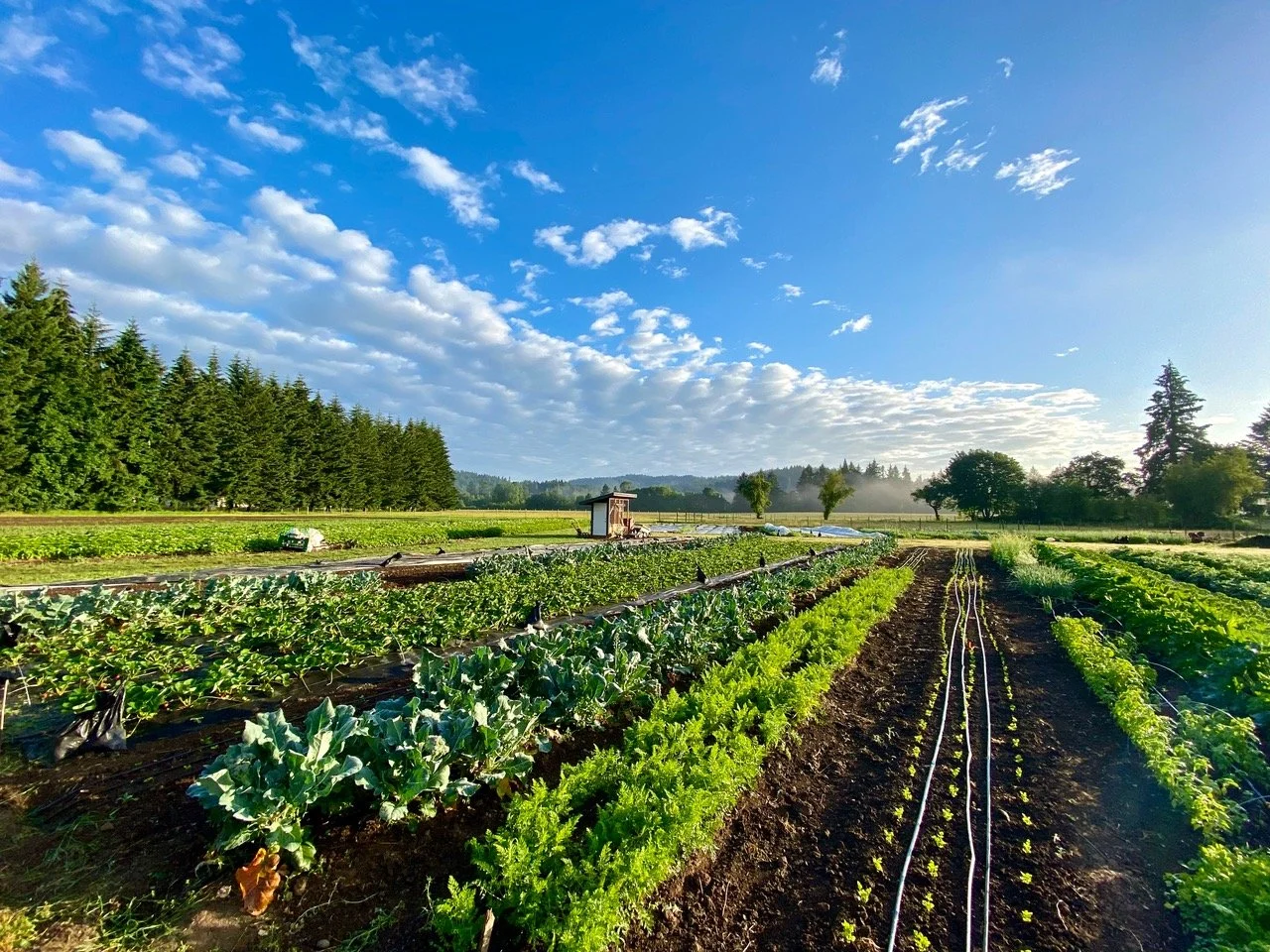
all current participating mentor host farms with Oregon Farm Corps farmer training programs
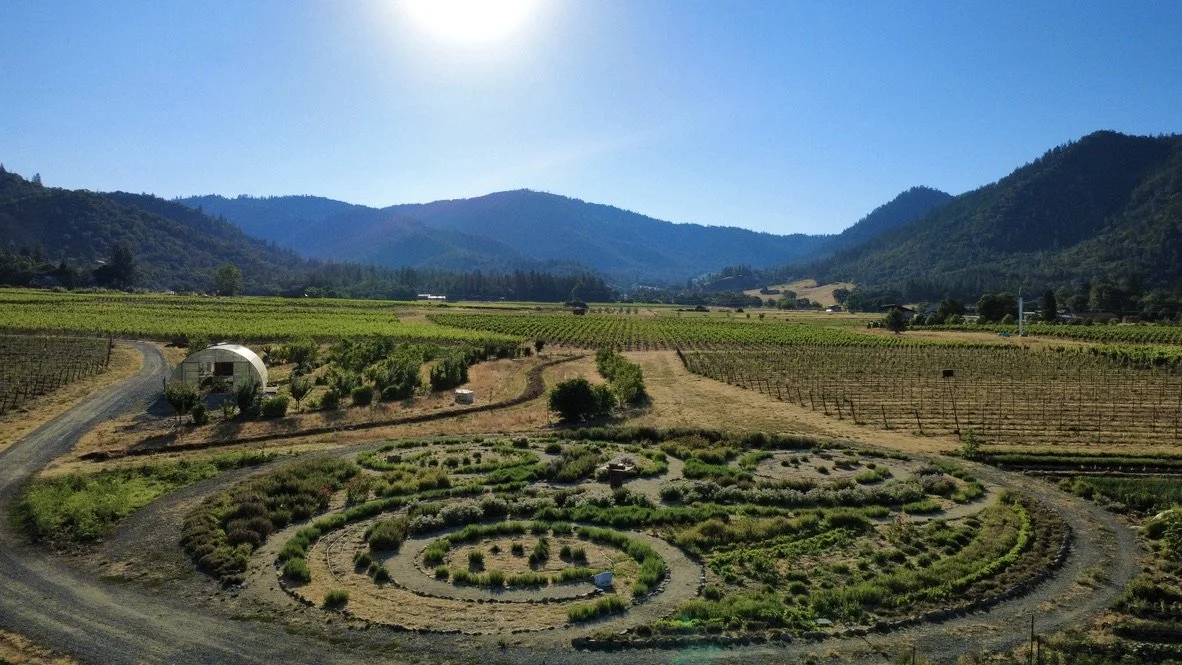
Troon Vineyard - Full for 2026
Troon Vineyard
1 APPRENTICESHIP
FULL TIME (40 hours/week)
APPROX START/END DATES: March - November
$15-$16/HR with housing
$19-$20/HR no housing
LOCATION: Applegate Valley (Rogue Valley Chapter)
YEARS IN PRODUCTION: 53
PREVIOUS YEARS HOSTING: New for 2026
PRACTICES: Biodynamic, Certified Organic, no-till,Rotational Grazing
ACRES IN CULTIVATION: ~100 total; main vegetable production 1.5acres
Diversified Vegetables, Fruit, Culinary Herbs, Medicinal Herbs, Vineyard
ON-FARM HOUSING? Yes
VEHICLE REQUIRED? No but highly recommended
LANGUAGES SPOKEN: English (fluent), American Sign Language (moderate proficiency)
Troon Vineyard is a historic (53 years old), Demeter Biodynamic® Certified and Regenerative Organic Certified™️ farm in Oregon’s Applegate Valley. From no-till farming, to Animal Welfare Approved certified livestock production, these robust frameworks transparently communicate our values and required practices. Apprentice’s main focus will be supporting production of vegetables, fruit, herbs and flowers from our various gardens and food forest on 1.5 intensively managed acres while being surrounded by a larger diversified farm.
Website: troonvineyard.com
Farm Overview
Troon Vineyard is located on the Kubli Bench, high above the Applegate River in the Siskiyou Mountains of Southern Oregon. Troon Vineyard is a biodiverse farm of ~100 acres that includes cider apples, a permaculture-style food forest, vegetable and herb gardens, re-wilded honey bees, sheep, chickens, dogs, wildlife, humans and, of course, grapevines planted on about half of the total acreage. We are located 20 minutes from Grants Pass and 30 minutes from Jacksonville, OR where you will find groceries, dining, and small town amenities.
Troon’s farm team (seven full-time employees plus one apprentice) manages 61 acres of crop production - 45 acres of winegrapes (with support from a vineyard mgmt company), 2.5 acres of cider apples, 1.5 acres of gardens plus food forest, 4.5 acres of hay, and sheep and chickens that rotationally graze pastures. The garden work is almost entirely done by hand due to limited tractor access. We strive for 100% no-till, although undervine cultivation occurs within the vineyards. Every fall, we plant cover crops across the entire farm, continuing to diversify, building soil health and feeding wildlife.
Troon wines are sold on-site in our tasting room and distributed nationally. Our produce is sold to local chefs and restaurants. We work primarily with Chef Carl Krauss (Wilder Cooking) who prepares meals for guests in our tasting room kitchen every Sunday, year round. Additionally, he preserves, ferments, and adds value to our produce, providing terroir-driven dining experiences. Lastly, we sell our produce in an on-site farm stand, which is especially busy on Sundays when we host a farmer’s market at Troon, featuring other farmers, artisans and vendors.
Mentor Farmers Garett Long started his farming journey as a WWOOFer at Apricot Lane Farms in Ventura Co., CA in 2012. After fulfilling his three-month commitment, he was hired full-time to run the Volunteer/Apprentice program. He hired, lived with, and directed the daily activities of more than 50 volunteers/apprentices in his 2.5 years in the position – and absolutely loved sharing these formative experiences with the next generation of farmers.
Garett then attended UC Davis for his M.S. in Soils & Biogeochemistry, continuing to research the practice of compost tea he first learned about at Apricot Lane. After completing his Master’s degree, he returned to Apricot Lane as the Research & Outreach Coordinator. He continued to learn about Biodynamics from incredible mentors, and fell deeply in love with farming.
After a brief stint establishing another biodynamic farm in St. Helena, CA during the pandemic, Garett agreed to take on his current position at Troon Vineyard in 2021. As a certified farm, organic is the foundation.
TRAINING AND EXPECTATIONS
Our Apprentice’s main focus will be supporting production of vegetables, fruit, herbs and flowers from our various gardens and food forest on 1.5 intensively managed acres. These tasks include seed saving and sowing, to bed preparation, transplanting, trellising, irrigation, weeding, fertilization, pruning, thinning, dead-heading, pest control, harvest and processing/packing.
Apprentices will receive training in gardening, fruit orchard management, continual development of a permaculture food forest, irrigation installation and maintenance, livestock husbandry, post-harvest value-added product development, biodynamic preparation making and application, compost building and turning, native plants / biodiversity, and other special projects.
This position will start out Monday-Friday for a couple of weeks, to support a thorough onboarding and acclimatization period. Once the apprentice is fully trained, they will be moved to a Sunday-Thursday schedule. After the dedicated training period, the Apprentice will also be responsible for the greenhouse, livestock and poultry care on Sundays, allowing the rest of the farm team one day off. As Sundays are the day we host a market on-site, this is an opportunity for mentorship in marketing and sales, VIP engagement, and a more complete picture of a vertically integrated business.
Farm design and plans are provided by the director of agriculture, which are performed by the rest of the farm team. Garett provides ultimate oversight and accountability for all aspects of agriculture, as well as the primary training and onboarding of all new staff. Weekly farm team meetings where the week’s priorities and plans are discussed. Farm managers are available for additional meetings and/or field walks throughout the week, and prioritize holding space for improving our apprentice’s experience. Instructions on new or specific tasks are given on a daily basis (or as needed).
Troon’s Safety Committee has created and enacted a Heat Illness Prevention Plan and Wildfire smoke plan, ensuring all employees - but especially those who work outdoors in the field - are safe during the most challenging environmental conditions. We provide several temperature controlled spaces to escape smoke and heat, including their own apprentice quarters.
QUALIFICATIONS
Minimum Qualifications:
● Prior experience working in a physically demanding job.
● Prior farming experience with farming vegetables, herbs, flowers, fruit trees, compost, and/or livestock (preferred).
● Must be able to lift, push, and pull 50 lbs.
● Must be able to sit, bend, crawl, kneel, and reach.
● Must be able to climb ladders and stairs.
● Must be able to navigate and traverse uneven terrain in adverse weather.
● Familiar with Google Workspace (e.g. Gmail, Drive, Docs, Sheets). We use these products daily to communicate and keep records.
Skills & Attributes:
● Demonstrate a willingness to learn, as well as receive direction and feedback. ● Independently motivated, with a strong work ethic.
● Efficient and detail-oriented.
● Able to work in a physically demanding environment, modeling endurance and a positive, upbeat attitude.
● Good communication skills.
● Able to work independently and as part of a collaborative team.
● Able to work well with diverse groups of people and skill sets.
Transportation: Although not required for the position there is no public transportation or nearby services including taxi, ride share app services. If necessary an Apprentice who does not have a vehicle may be able to use the farm vehicle for necessities like groceries to be discussed at hiring.
Site Visit before hire is not required, but they welcome and gladly accommodate an in-person visit. Prospective Apprentice could “test drive” their accommodations by staying overnight, if they please.
COMPENSATION / ACCOMMODATIONS
Starting hourly rate for Apprentice is $15.00-$16.00 with housing or $19.00 - $20.00 without housing. Paid on a bi-weekly basis by direct deposit. We also offer optional overtime hours at a rate of 1.5x regular pay. Apprentices have access to “staff produce” from our gardens and a full kitchen to prepare meals. We would also strongly consider offering reimbursement of the OFC Apprenticeship fee amount as a bonus at the completion of the season. Lastly, we offer health, vision and dental insurance after 90 days of employment.
On-site housing is located in our “Solar Barn”. Fully permitted and ADA-approved, construction was completed in early 2025. The fully temperature controlled common area has a kitchen for food preparation, a lounge area with TV and couches, a pantry, and storage closet for personal belongings. There are two bathrooms and three bedrooms that can accommodate up to five interns, although we do not expect to ever house more than four at once; we expect our vineyard harvest interns will overlap with the Apprentice but strive to give our Apprentice the private bedroom. Wifi is available, The farm team shares this common area during break times. As such, a weekly chores rotation was created for the Apprentice/Interns and farmers all share the responsibility of cleaning the shared space. No pets or overnight guests are allowed, we will review other Solar Barn House Rules if an offer is made. Sharing the land is Troon’s Director of Agriculture, his partner and their toddler son. We enjoy cultivating community by sharing good food and our favorite local experiences.
EQUITY AND INCLUSION
At a basic level, our farmers are progressive and socially conscious individuals. Everyday, we strive to be impeccable with our words, respect individuals and their personal identify, and welcome all at Troon.
In a more formal pursuit of social justice, we sought out ERGO certification by the Equitable Food Initiative (EFI), which helped us attain ROC at the Gold level. ROC and Demeter Biodynamic are two of the only farming certifications globally that incorporate farmworker fairness into their regenerative agriculture framework. ROC requires additional social fairness standards beyond EFI certification to be met, that include paying a living wage to all employees.
We have established a labor-management collaborative (LMC) team. The LMC allows management and workers to collaborate and share responsibility for complying with the ERGO Standards. The LMC is always available for employees to express concerns if they are uncomfortable approaching their direct supervisor or management.
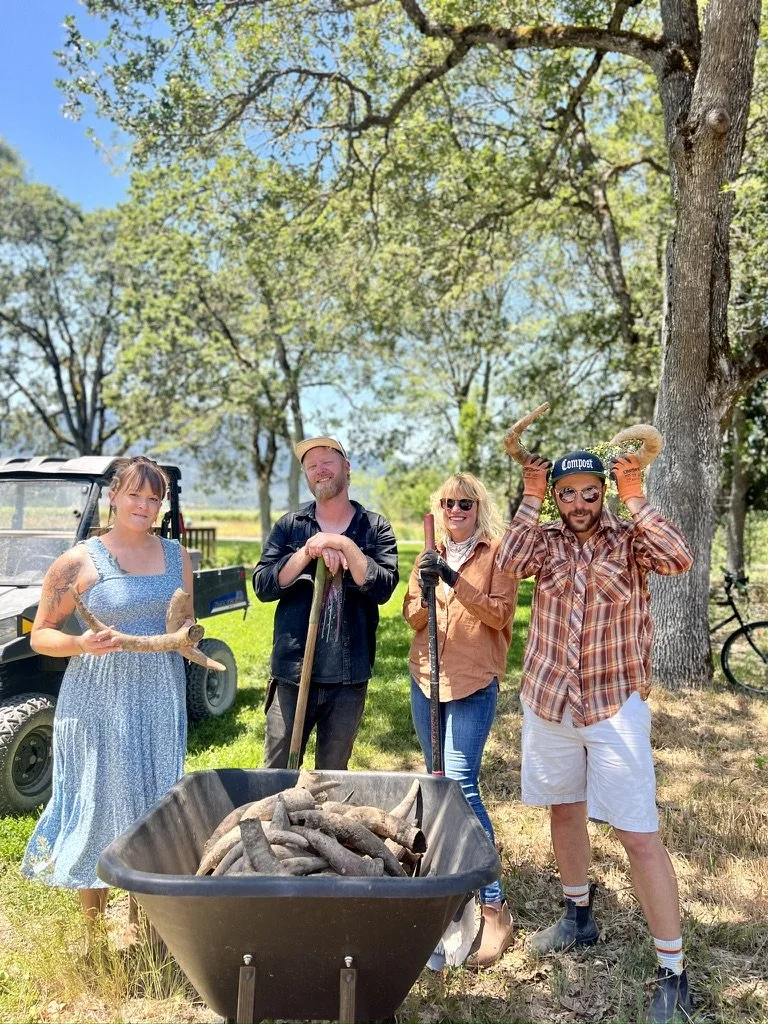
Far right Garett and Jennifer working on biodynamic installations with 2 others
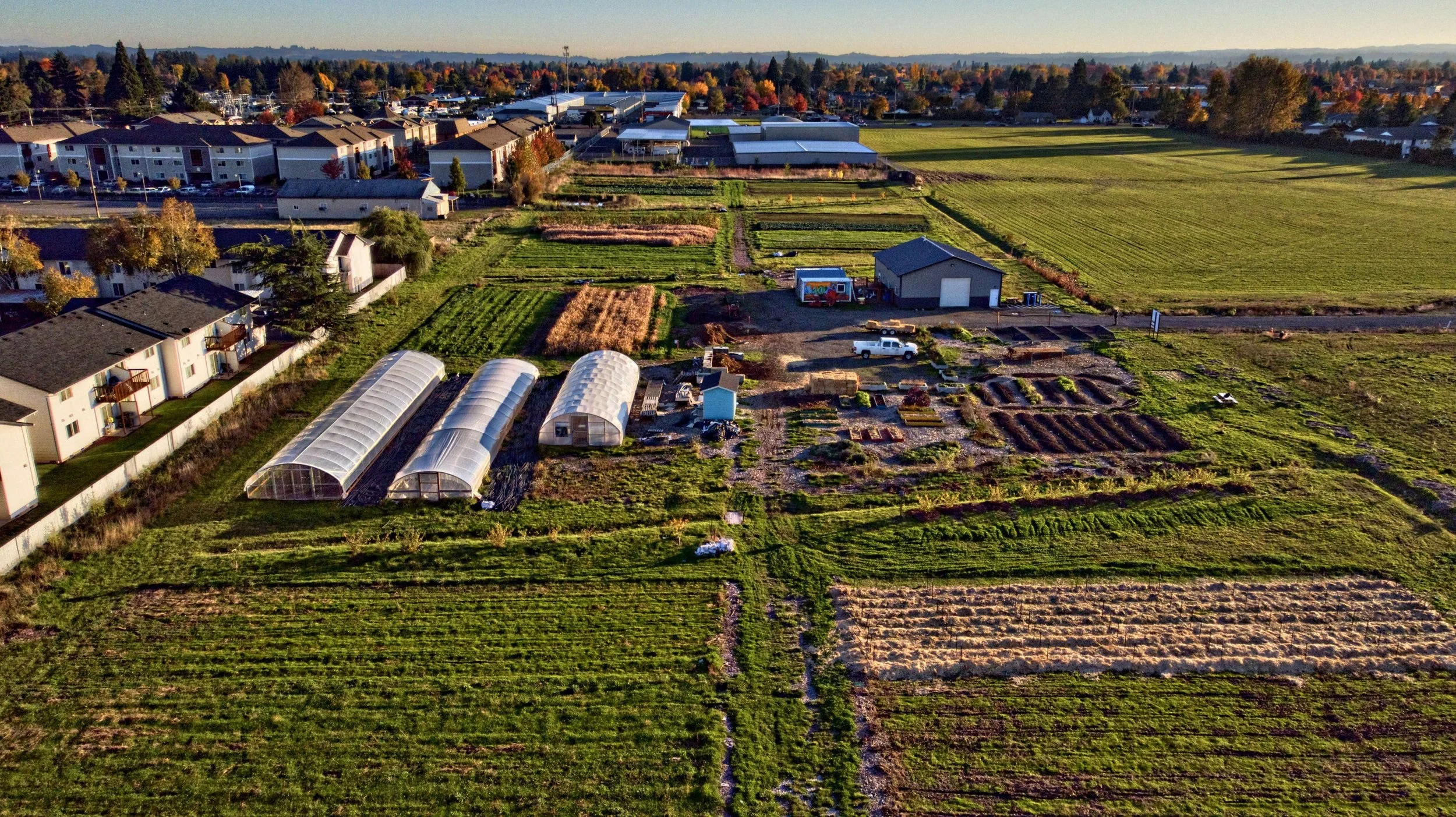
Marion Polk food share - Full for 2026
marion polk food share
1 APPRENTICESHIP
FULL TIME (32 hours/week) Monday-Friday 7am-3:30pm
Apprentices can choose to work four 8-hour says or five 6.4 hour days
APPROX START/END DATES: May- November
$18/HR
LOCATION: Salem (Willamette Valley Chapter)
YEARS IN PRODUCTION: 13
PREVIOUS YEARS HOSTING: New Host Farm
PRACTICES: Organic Practices (not certified), dry farming
ACRES IN CULTIVATION: 3 acres
Fruits, Vegetables, Culinary Herbs, Cut Flowers
ON-FARM HOUSING? No
VEHICLE REQUIRED? No
LANGUAGES SPOKEN: English/ Spanish
https://marionpolkfoodshare.org/
https://www.instagram.com/marionpolkfoodshare/
https://www.facebook.com/MarionPolkFoodShare/
FARM OVERVIEW
Marion Polk Food Share’s mission is to bring people together to end hunger and its root causes. We distribute nutritious food for individuals and families to more than 70 local partners, including food pantries and meal sites, and deliver Meals on Wheels to homebound seniors and adults with disabilities. We operate an urban youth farm and support a network of community gardens that connect people and their food, and mobilize community members to address systemic issues that lead to hunger.
The Youth Farm functions primarily as a youth leadership and empowerment initiative. Each summer, 25–30 high school students join our farm crew to build job skills, learn about food systems, and develop a strong sense of community. The food we grow is distributed through our Veggie Rx CSA, which serves 115 families for 18 weeks. These families are low-income, food insecure and at risk of diet related illness, and all produce is provided at no cost. Additional harvest is distributed through our network of food pantries.
We actively cultivate approximately 3 of our 6 acres, focusing primarily on vegetable and berry production. We also maintain a small orchard with Asian pears and cherries. In addition, we keep bees for educational purposes rather than commercial honey production. Our farming approach combines mechanization and hand labor: we use two tractors for tillage and bed preparation, while planting and most weeding are done by hand. We have a Tilmor Power Ox for help with weed management and a Jang push seeder for direct seeding.
We have been steadily improving our agricultural efficiency, producing just under 50,000 pounds of produce in 2025, up from approximately 20,000 pounds in 2023. We are committed to sustainable farming practices that support healthy soils, ecosystems, and people. While we are not certified organic, we follow organic methods, do not use sprays or herbicides, and strive to minimize tillage as much as our heavy clay soils allow. We dry farm all our tomatoes, potatoes, winter squash, and field melons as well as the occasional experiment (onions! garbanzos!). We have just begun to explore flower production and will continue to include flowers in our crop plan. We are no experts in this area, but it is an opportunity for us to learn and experiment together.
TRAINING AND EXPECTATIONS
The expected duties for this position are listed below. Youth Farm staff will provide you with hands-on training and guidance for each task. There will be ample time to ask questions and work alongside staff while you get the hang of things. We also have a large library of books on a variety of agricultural topics that you are welcome to use. We conduct a field walk each Monday followed by a team meeting to set the weekly priorities and assign tasks. Quick daily morning check-ins provide an opportunity to make any necessary adjustments.
Agricultural support: This position supports the Youth Farm staff and youth crew in growing 20,000-50,000 pounds of organic vegetables for community distribution.
Assisting with greenhouse transplant production.
Operating tractor for mowing, tilling, and bed preparation tasks.
Using a variety of hand tools and cultivation equipment to reduce weed pressure on crops.
Assisting with irrigation maintenance and installation on plantings.
Implementing organic pest & disease control methods.
Assisting with maintenance of farm facilities and equipment.
Landscaping and maintenance: This position helps to maintain accessible pathways, clear work areas, functional infrastructure, and beautiful public spaces at the Youth Farm.
Mowing main pathways.
String trimming around irrigation valves, fence lines, parking lots, seating areas and hedgerows.
Mulching and weeding farm gathering spaces and perennial plantings.
Youth program support: This position ensures a supportive and safe educational environment for the teen participants at the Youth Farm by assisting with supervision of the youth crew.
Demonstrating safe agricultural work to youth crew.
Helping youth crew leaders troubleshoot problems with agricultural work.
Supporting youth farmers in harvesting, washing, and packing operations to benefit Farm Share Rx
and other community food distributions.
Assisting with grocery and supply purchases.
Supporting summer program kitchen operations and supporting youth farmers in cooking lunch using farm produce.
QUALIFICATIONS
We are confident that we can teach most skills to folks who have a positive attitude and a willingness to learn. While prior farming experience is helpful, we are open to taking someone with less experience if they have good attention to detail and some experience doing physically demanding work outdoors (sports, trail crews, outdoor hobbies etc.). Work will regularly involve sustained periods of standing and walking and moderate to heavy manual labor, including bending, reaching, squatting, crawling, stooping and use of the hands, arms, and fingers. The apprentice will regularly be required to lift up to 50 pounds and push/pull up to 300 pounds. Apprentices should be prepared to work outdoors in all weather conditions (chilly and rainy to hot and sunny and everything in between). Must be experienced with or willing to learn to drive large trucks (pick up, dump truck) and use farm/garden equipment (small tractors, walk behind rototiller, weed eater etc.).
The person should have a strong interest in learning about small-scale vegetable production, youth education or community food security/food systems work. We want someone who is a team player and is willing to lend a hand wherever they are needed. They should be able to convey information clearly, listen actively, and collaborate with team members. They should not be afraid to ask questions when needed. We would like someone who is excited by the opportunity to be a positive role model for our teen youth farmers by demonstrating qualities such as responsibility, compassion, kindness, work ethic, and a commitment to sustainable farming practices.
Apprentice must have a valid driver’s license and be cleared to drive company vehicles and tractors. Additionally, because we work with minors, we do require all staff, apprentices and volunteers to pass a full background check which will include a driving record check. A drug screen (excludes THC) will also be required.
COMPENSATION / ACCOMMODATIONS
$18/hr
Paid sick and vacation time
Paid federal holidays (Memorial Day, Juneteenth, Independence Day, Labor Day, Indigenous Peoples’ Day)
Farm produce for personal consumption
We have plenty of community gear to borrow (rain gear, rain boots, gloves etc.)
EQUITY AND INCLUSION
Marion Polk Food Share’s mission is to bring people together to end hunger and its root causes. We believe that food is a human right and that everyone deserves to have nutritious and culturally relevant food. We recognize that systemic oppression is a root cause of hunger. Injustices including racism, sexism, ageism, and other forms of oppression create inequity and are major contributors to poverty. Our commitment to ending hunger means we must understand and challenge the systems that unjustly and disproportionately impact marginalized communities.
Because we cannot end hunger without addressing its root causes, the Food Share embraces the values of diversity, equity, inclusion, and justice. We carry these as core values of our work and culture by:
Striving to raise the voices of and be led by people with lived experience of systemic oppression and food insecurity.
Using an equity lens to influence decision-making, address disparities in services and undo the effects of systemic inequity throughout our organization.
Building partnerships with and advocating alongside groups focused on social and racial justice, poverty, and other forms of oppression.
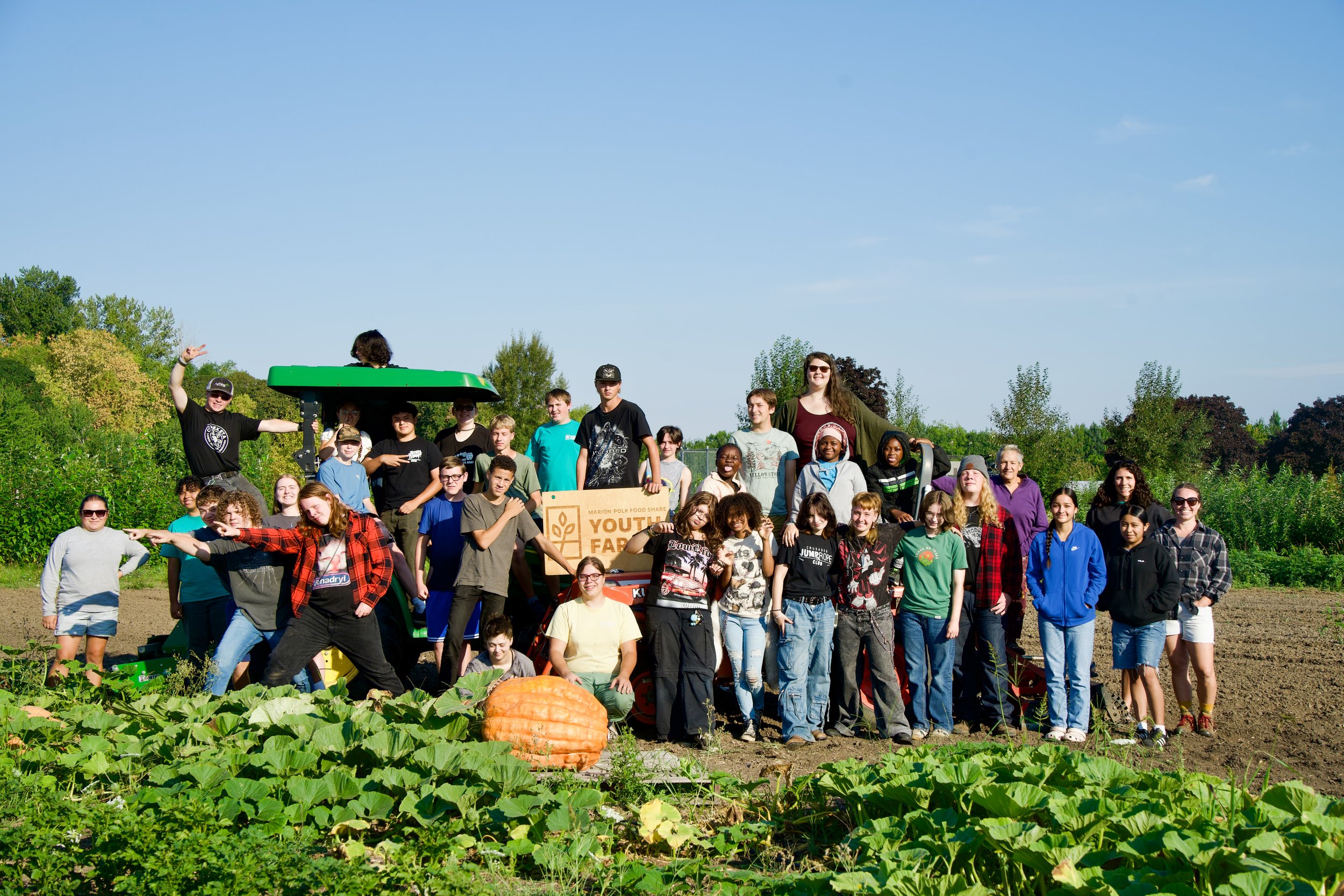
image description
Edible Stories Market Garden- Full for 2026
Edible Stories Market Garden-Full for 2026
1 APPRENTICESHIP
PART TIME average of 20 hours (hours can fluctuate between 15-25 hours per week over the course of the season)
APPROX START/END DATES: March - November
$17/HR
LOCATION: Hillsboro (Portland Chapter)
YEARS IN PRODUCTION: 13
PREVIOUS YEARS HOSTING: New Host Farm
PRACTICES: Organic Practices (not certified), Low-till
ACRES IN CULTIVATION: 1/3
Vegetables, Fruit, Culinary herbs, Medicinal herbs, Nursery stock, Crops with Cultural Significance to Asian Cuisine
ON-FARM HOUSING? No
VEHICLE REQUIRED? Yes
LANGUAGES SPOKEN: English, Hindi, Tamil, Marathi
BIPOC-Owned/Operated, Women-Owned/Operated
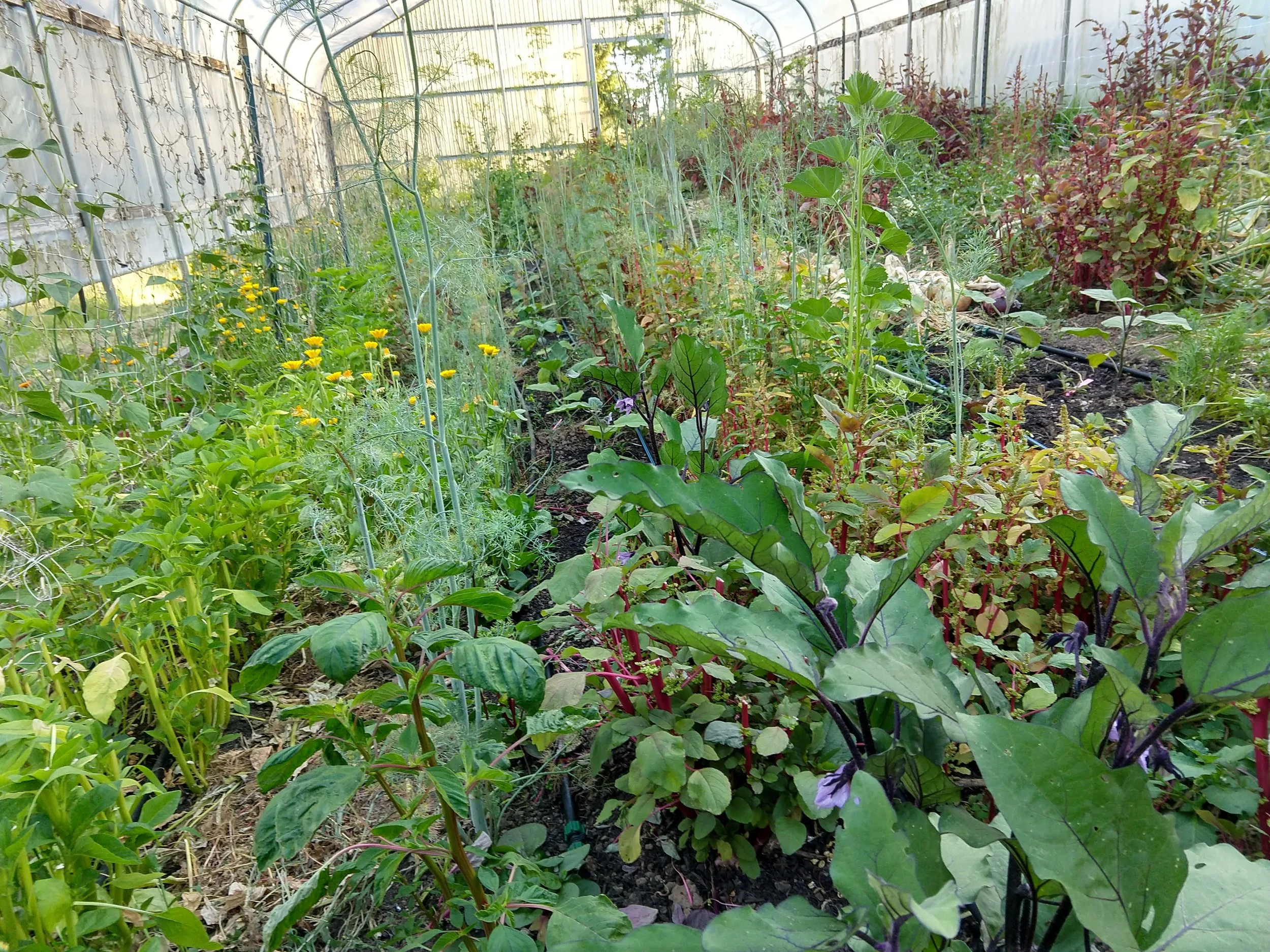
Edible Stories Market Garden is a ⅓ acre hand-tended Market Garden devoted to nurturing land and community. We use organic, no-till growing methods to produce specialty crops used in Asian cuisines. For us, food is more than nourishment—it carries memories, emotions, and a deep sense of belonging. Every crop we grow tells a story, connecting us to the South Asian immigrant community (to which we belong) and its cultural traditions that continue to shape our lives. These stories live in the sights and smells of our market garden and in the flavors of its harvests, reminding us of home, heritage, and the shared joy of growing and eating food.
https://www.helvetia.us/FARMPAGE-Edible-Stories
https://www.instagram.com/ediblestoriesmarketgarden/
https://www.pbs.org/newshour/show/family-farm-in-oregon-grows-crops-to-share-south-asian-cuisine-with-its-community
FARM OVERVIEW
Edible Stories Market Garden nestled in the scenic Helvetia area of Hillsboro, Oregon, is just five miles from Highway 26. Our growing space spans approximately one-third of an acre, with all cultivation taking place inside six high tunnels. We also have a greenhouse dedicated to seed starting and transplant production. The terraced garden sits on a gentle slope—hence the name ‘Edible Stories’ - a reflection of both the land’s contour and the many stories created and evoked by each crop we grow, harvest, and share. The garden is part of a five-acre property bordered by an undisturbed expanse of Douglas fir, maple, western cedar, and ferns, which enrich the garden landscape both visually and biologically.
At Edible Stories Market Garden, we employ organic growing practices—using no synthetic fertilizers or pesticides, and relying on compost and natural soil amendments. We also minimize tillage to nurture soil health and biodiversity, rely on drip irrigation to conserve water, and maintain pollinator habitats to support a thriving community of beneficial insects. Our work is primarily done by hand—using hand tools for seeding, transplanting, weeding, bed preparation, and harvesting—to ensure care and attention in every step.
We cultivate a diverse range of vegetables, with a special emphasis on crops that hold cultural significance to the Asian community. Using high tunnels allows us to extend our growing season and create ideal microclimates for these specialty crops. Growing them year after year is our way of celebrating our Asian heritage while contributing to the cultural diversity of locally grown produce in the Portland metro area.
Our growing season extends from March through November. We sell directly to our customers using a pay-as-you-go CSA model. We also sell our produce at local Indian grocery stores and to select Portland restaurants.
TRAINING AND EXPECTATIONS
The apprentice will participate in all stages of vegetable production, from seed starting to harvest and post-harvest handling. Responsibilities will include starting seeds in the greenhouse or directly in the ground, preparing and amending garden beds, applying compost, managing weeds in beds and pathways, operating the drip irrigation system, transplanting seedlings, harvesting, and packing produce for sale. All tasks will be demonstrated, and the apprentice will receive ongoing mentorship and guidance to develop practical skills and a deeper understanding of small-scale vegetable production
Our growing season begins in early March 2026, and we are seeking an apprentice to work an average of 20 hours (hours can fluctuate between 15-25 hours per week over the course of the season) extending through mid-November 2026. The apprentice will receive a 10-minute paid break every 1 hour and a one-hour unpaid lunch break each day. The work is physically demanding, and applicants should be prepared for tasks such as moving and spreading compost, as well as standing, bending, and squatting for extended periods.
The apprentice will begin by working alongside us as we demonstrate each task. They are welcome to ask questions during the work or afterward. We will check in and meet as often as needed to provide the apprentice with the required guidance and support.
QUALIFICATIONS
We are seeking an apprentice who is reliable, eager to learn about growing food and small-scale farming, with an interest in various plants and a keen attention to detail. The work is physically demanding, requiring the ability to stand, kneel, squat, and bend for extended periods. All tasks take place in high tunnels, which can become very hot during the summer, so the apprentice should be able to work safely in warmer conditions while taking reasonable breaks.
Safety and appropriate attire are essential: close-toed shoes must be worn at all times, and the apprentice should dress suitably for farm work. We encourage apprentices to adjust their work hours based on the season and weather, such as starting earlier on hot days. We value a respectful and professional work environment.
Employees are expected to treat team members courteously, remain sober while on the farm, and refrain from smoking or using drugs during work hours. Apprentices are also responsible for taking care of tools and returning them to their proper places. While much of the work may be independent, employees are welcome to bring a radio or music to listen to while working. Previous gardening or horticulture experience is a plus, but a willingness to learn and a strong work ethic are most important.
COMPENSATION / ACCOMMODATIONS
We offer $17/hour as compensation. Additionally the apprentice can take home a reasonable amount of produce for personal consumption.
We do not offer on-farm housing, but there are many rental options in Hillsboro and nearby towns such as Forest Grove, Cornelious, and Beaverton.
Apprentice needs to have their own transportation to get to and from the farm, as our farm is not accessible by public transportation system.
EQUITY AND INCLUSION
Edible Stories Market Garden welcomes and respects individuals of all genders, gender identities, sexualities, ethnicities, and ages, and strives to foster open and respectful communication.
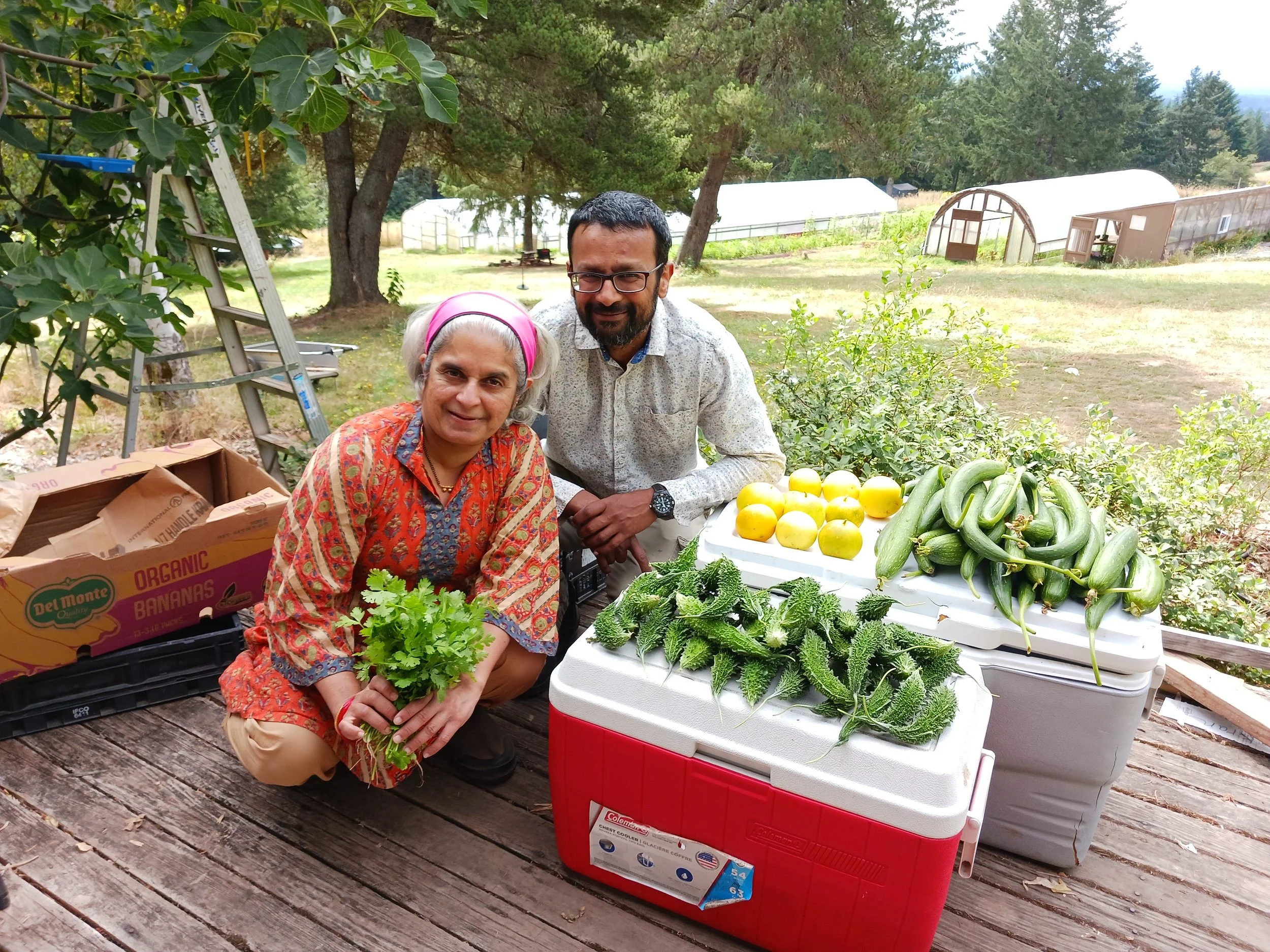
Farmers Lakshmi and Ganesh
Wild Geese Farm-Full for 2026
WILD GEESE FARM-Full for 2026
1 APPRENTICESHIP
PART TIME/FULL TIME (30-40 hours/week)
APPROX START/END DATES: Mid March - Mid December
$16.50/HR
LOCATION: West Linn(Portland Chapter)
YEARS IN PRODUCTION: 1
PREVIOUS YEARS HOSTING: New Host Farm
PRACTICES: Mechanized/Tractor Farming
ACRES IN CULTIVATION: 10
Vegetable Production, Cut Flowers
ON-FARM HOUSING? No
VEHICLE REQUIRED? Yes/No
LANGUAGES SPOKEN: English
Wild Geese Farm was started at the historic Luscher Farm in Lake Oswego by Braedon Kwiecien and Sidney Katz. Our mission is to care for the environment while we feed our community nutrient-rich food. We value delicious food, great friends, and a healthy planet. We’ve always felt a deep purpose to care for the planet. For us, farming is a way to contribute to our community while caring for the Earth. Over the years, we’ve grown a lot of vegetables, raised many kinds of animals, and cooked so much delicious food. We learned some of the best techniques to improve the soil and care for animals as we grow food for our community.
https://www.wildgeesefarm.com/about
https://www.instagram.com/wildgeesefarm/?hl=en
FARM OVERVIEW
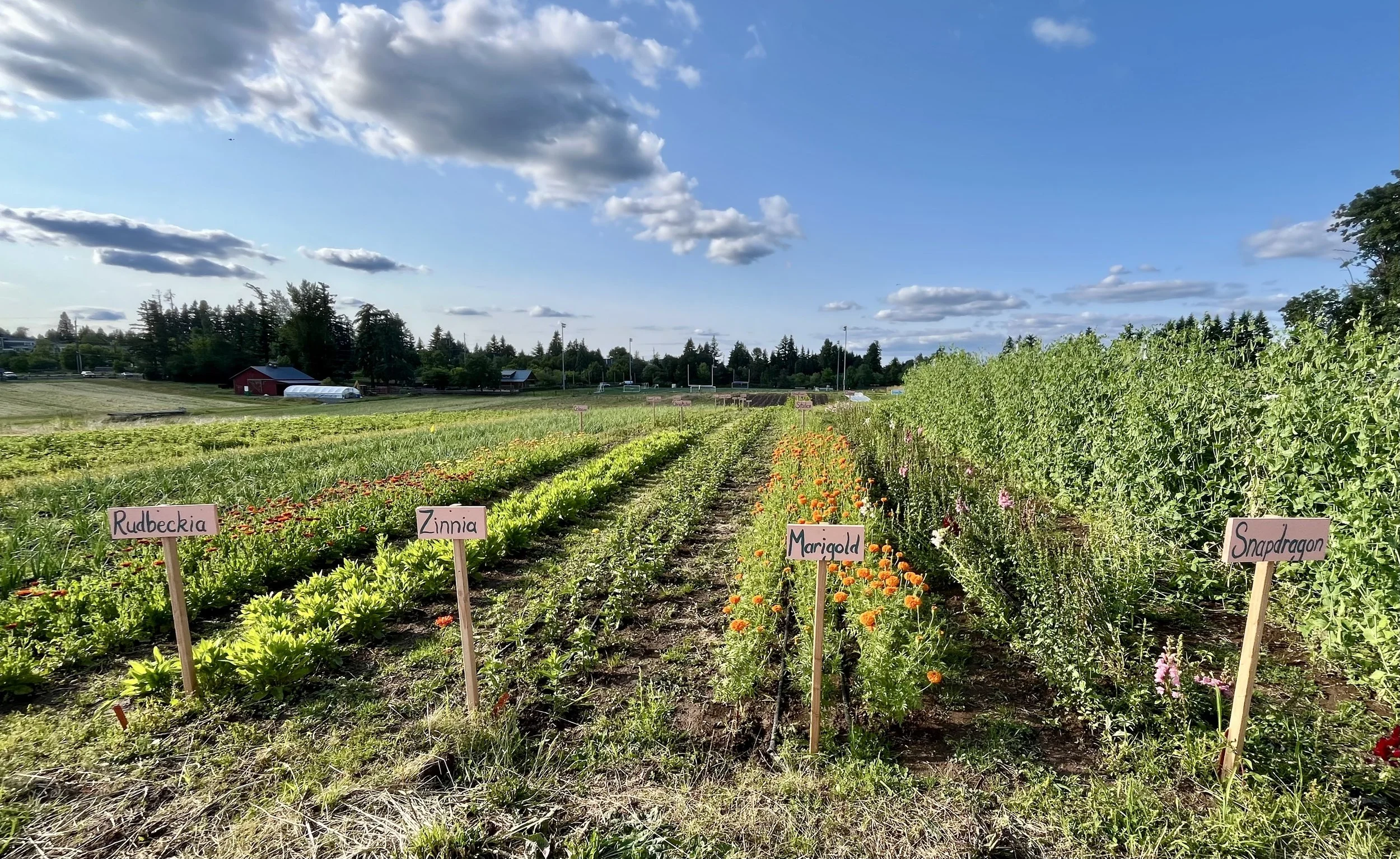
Wild Geese Farm is a 12-acre diversified vegetable farm on Lake Oswego city land that is surrounded by a park and community garden plots. From the fields, you can see children playing soccer, families walking together and 100s of locals tending their own gardens. It is a working farm that inspires people in the area, educates people on local food production, and encourages cooperation through volunteering. An urban farm comes with inherent challenges, but the opportunities to demystify food production for the public, collaborate with people, and grow hyper-local food make this location a unique business setting.
We grow vegetables on 12-acres of land without using conventional fertilizers or sprays. We cover crop to improve soil quality, reduce erosion and sequester carbon as much as we can throughout the year. We use tractors on the farm judiciously to be efficient, productive, and ease the strain on our bodies, while we try to reduce negative impacts like compaction, erosion, and consumption of fossil fuels. We use electric, light-weight machines as much as we can and continue to be mindful of our systems. Our vegetables are sold through a market-style CSA that is distributed at the farm so that no transportation is needed. And we will sell at the Lake Oswego farmer’s market this year. Our crew is a very small team consisting of 2-4 individuals throughout the year, which means we all do everything, work together and learn a lot over the season.
Braedon Kwiecien is the owner of Wild Geese Farm and has worked on nearly a dozen different farms before, learning best practices, new farming techniques and gaining a broad range of experiences over the years. He has worked on organic vegetable farms, in orchards, vineyards and has raised pigs, sheep and chicken. His philosophy and vision are inspired by closed-loop, integrated farming systems that mimic nature. He is interested in management-intensive grazing, silvopasture, no-till organic vegetable production, and community farming.
Wild Geese Farm is going into its second year of production and is focused on improving the following systems: stale seed bedding for effective weed management with less soil disturbance, irrigation monitoring to reduce water usage, improved soil health using bacteria and fungus, and diverse cover crop rotations. We’re excited to have a new electric cultivation tractor for the upcoming season to reduce time spent weeding and fossil fuel use. Hopefully we can spend more of our time planting, harvesting and taking excellent care of the land.
TRAINING AND EXPECTATIONS
Apprentices can expect to do almost every task on the farm: seeding, transplanting, amending, weeding, harvesting, washing, and distributing. With a small crew there will be plenty of opportunity to develop specific skills such as seeding in the propagation house, tractor driving, flame weeding and learning to use specialized tools.
At the beginning of the season, it will be understood that apprentices need time to learn about the space, the farm’s systems and to feel welcome and acclimated to the new job. Time will be dedicated to education and learning new skills. It’s our belief that taking time to teach more people skills is good for everyone and pays off in the long term. As the season progresses, focus will shift to honing skills, improving efficiency and exploring more facets of farming.
There is an expectation that apprentices will be fully integrated into the team, have a sense of responsibility, agency and are capable of carrying out their share of the operation with an adequate level of quality in their work. A lot of our work in this small crew is done together, and I will likely always be able to chat, offer feedback and facilitate education.
Farming is a physically demanding job and is exhausting. Apprentices are expected to work hard alongside everyone else. We also expect everyone to be safe and feel cared for. Particularly in the summer, we will take plenty of breaks, hang out in the cooler and reduce our time spent in the heat. In the winter, I will regularly check in to see if people are warm, dry, and if they are equipped with the right gear to feel comfortable in the elements.
We can offer apprentices time off as needed throughout the season for sick days, vacation, or emergencies. We have the capacity to be lenient and flexible when it comes to days off.
QUALIFICATIONS
We are looking for an apprentice who is passionate about farming, holds a sense of responsibility for their commitments, and has a deep desire to learn and improve their skills as a farmer. Previous farming experience is a bonus but not necessary.
COMPENSATION / ACCOMMODATIONS
We can offer $16.50 per hour at a minimum, or more with prior experience. We will also offer $100 gear stipend, flexibility for time off (24 hours of PTO/year) and a weekly CSA plus extra vegetables when available.
We do not provide on farm housing. However, the farm is located in an urban setting with a lot of housing opportunities within a very reasonable distance.
EQUITY AND INCLUSION
We welcome people of all ages, gender identities and races. And we are committed to teaching everybody the same skills. We recognize that historically non- cis-, white men have been overlooked to use heavy equipment, to be managers and to specialize. That’s one reason why we are committed to rectifying that pattern and encouraging opportunity and growth for everybody on the farm.
We are also committed to accommodate to abilities and adjust to conditions. We will regularly check in about how a tool fits someone’s body and how tasks are suiting them. We will always take feedback about what tasks are challenging and why, and how we can accommodate them. We will provide many options for adjusting the height and weight in many tasks and even change jobs that someone is uncomfortable in if it is reasonable.
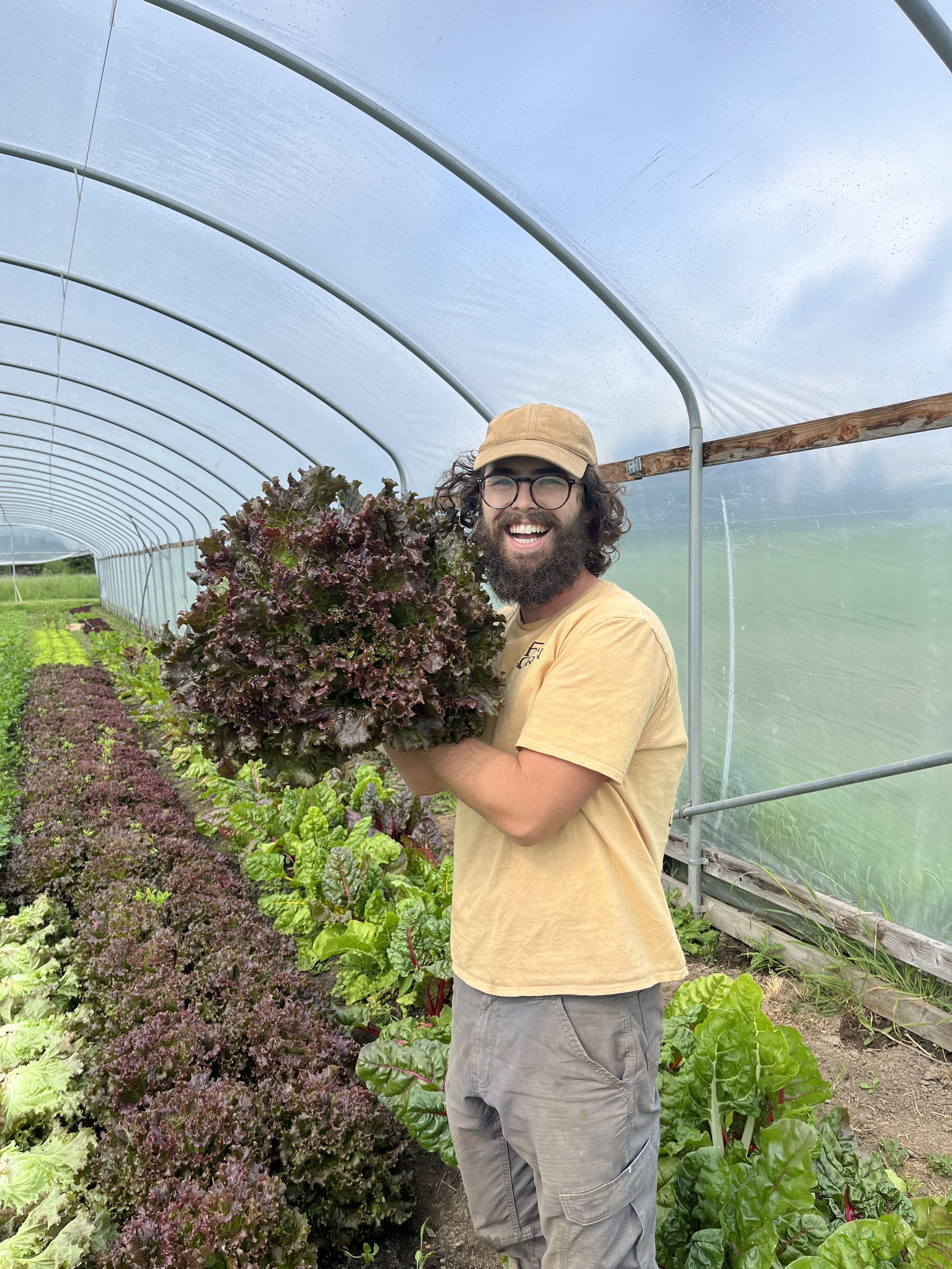
Farm Owner, Braedon

Goodfoot Farm- Full for 2026
GOODFOOT FARM
Full for 2026
FULL TIME (36-42 hours/week)
APPROX START/END DATES: May-November
$16/HR
LOCATION: Kings Valley/Philomath (Willamette Valley Chapter)
YEARS IN PRODUCTION: 14
PREVIOUS YEARS HOSTING: 2
PRACTICES: Biodynamic, Certified Organic
ACRES IN CULTIVATION: 2 vegetable, 1.5 berries, 0.5 tree fruit, plus forage
Vegetable Production, Fruit, Nursery Stock
ON-FARM HOUSING? No
VEHICLE REQUIRED? Yes
LANGUAGES SPOKEN: English
Women-Owned/Operated
The farmer and farm philosophy is aligned with biodynamic agriculture and sociocracy. Goodfoot Farm’s goal is to implement an agricultural model that is ecologically sound, socially responsible, and economically viable.
FARM OVERVIEW
Goodfoot Farm is located on the Luckiamute River in Hoskins, 20 miles west of Corvallis. We grow organic and biodynamic vegetables, fruits and berries year-round for farm members, farmers' markets, restaurants and local retail.
Our mission is to provide unconventionally grown food for the people of our local community. To us, unconventionally grown means we take a systems approach in our efforts to balance our food production with our responsibility for our local forest, field and river life and with the health of our planet and people. We work hard to minimum our use of off-farm and petroleum dependent inputs and practice a method of agriculture that strives to emulate a natural system. Fundamental to the success of our production system is the integration of animals for fertility and weed management, our selection of crops and cultivars for pest and disease control and our practice of “farmscaping” which provides habitat for native pollinators and natural predators of pests. In addition to our ecological practices, our goal on the farm is to implement farmer centered practices based on principles of sociocracy and collaboration. It is our belief that human labor is at the heart of ecologically responsible small-scale vegetable growing, and the care we express in our work on the farm and the health of our relationships with our co-workers and the earth is critical to the quality and vitality of the food we produce. .
Production on the farm is both human and tractor powered. A Kubota tractor is used for primary tillage, 2 BCS tractors are used for bed prep and cultivation. Most weeding, planting, and harvesting is people powered. Farm crew (in addition to farm owners) is 1-4 depending on time of year.
Kings Valley is a rural community 30 minutes outside of Corvallis, a college town; farm owners live on the farm. Apprentices will have access to forest and river. There is some farming in the local community; lots of neighboring parcels are in forestry.
TRAINING AND EXPECTATIONS
It is our belief and intention that work on a small scale diversified farm is a skilled occupation. Our farmers are integrated into most aspects of the farm production system and are expected to fully engage in their practice of agriculture. Significant time is spent orienting and training farmhands to tasks and practices and they are expected to act with agency and authority in these roles. Farm operations are conducted with a management system called holacracy which supports a high degree of autonomy and ownership.
Training methods include verbal instruction, modeling/demonstration, and written resources. Check-ins and field walks happen regularly.
QUALIFICATIONS
No prior experience necessary, however, Goodfoot has a desire to work with individuals who are seriously exploring farming as an occupation and have an appreciation for production agriculture. A compulsive need to grow food in relationship with the earth is desirable!
Qualifications include a high attention to detail, ability to manage competing priorities, being self-organized, a strategic thinker and systems thinker, having a high degree of professionalism in work and person, excellent communication skills, and an interest in meeting people where they are at.
COMPENSATION / ACCOMMODATIONS
$16-$18/hr. DOE, depending on experience. Indiciduals starting at $16/hr have access to free produce from the farm. Most work gear is provided. No on-farm housing is offered. Corvallis is a college town 30 minutes away; other communities are also about 20-30 minutes away. There are limited local, rural opportunities for housing.
EQUITY AND INCLUSION
We do not have traditional hierarchical labor systems; the farm operates on principles of sociocracy. We practice collaboration and transparency..
PAST APPRENTICE TESTIMONIALS
“I appreciated how available and communicative the mentorship was, and the focus on comprehensive training to inspire confidence and autonomy. I also appreciated the conscious choices around how we practiced farming, and I understood that there was a solid reason for why we did everything the way we did--always with room for experimentation and new ideas.” - 2024

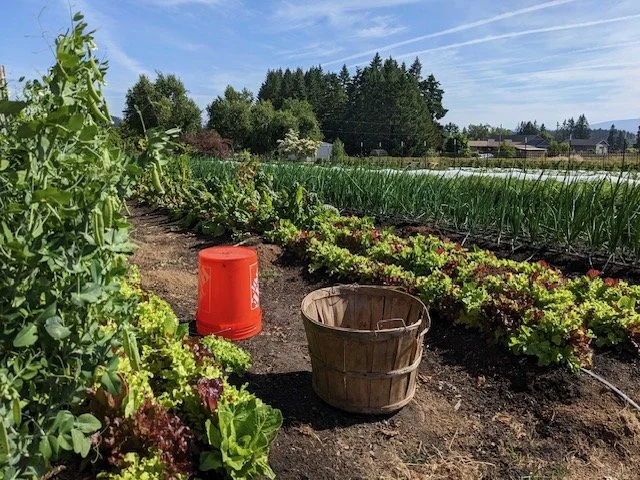
Beth Hoinacki
Thimbleberry Collaborative Farm-Full for 2026
Thimbleberry Collaborative Farm-Full for 2026
1 APPRENTICESHIP
PART TIME (30 hours/week)
APPROX START/END DATES: Mid-March - Mid-November
$18/HR
LOCATION: Boring (Portland Chapter)
YEARS IN PRODUCTION: 3
PREVIOUS YEARS HOSTING: 1
PRACTICES: Low-Till, Regenerative, Organic Practices (Not Certified)
ACRES IN CULTIVATION: 1/3
Vegetable Production, Culinary Herbs, Medicinal Herbs, Fruit, Poultry(Eggs), Cut Flowers, Orchard Production
ON-FARM HOUSING? No
VEHICLE REQUIRED? Yes
LANGUAGES SPOKEN: English
Non-Profit Farm, Educational Farm
2023 was our first year of production on this land, and we’ve been experimenting with no/low-till strategies for growing our annual vegetables to great success. This means there is a lot of hand work, including weeding, harvesting, and removing plants at the end of their cycle to leave roots in place whenever possible. Though we are not certified organic, we do not use pesticides or herbicides, and take a “from the soil up” approach - meaning we aim to build the appropriate soil biome for plants to thrive in using natural methods, and aim to keep the soil growing plants or in a protective cover as much of the year as possible. We are in the beginning stages of learning about the soil food web and how we can support this biome, and look forward to any experience or knowledge a potential Apprentice can contribute.
We believe farming is a constant learning experience that should be fluid, so we adapt our methods on a daily basis to account for the needs of the plants and those of us who tend them. In the winter, our fields are partially cropped to late-fall and over-wintered vegetables, cover crops, and partially covered with compost and tarps to ensure we have fertile ground ready to be planted in early spring. We have newly-established perennial native plantings along our learning garden and in blocks along our main field, as well as a small stand of mature blueberries and various herbs bordering our in-ground and raised beds. Finally, we have a mature orchard featuring apples, plums, pears and cherries.
www.thimbleberrycollaborativefarm.org
@thimbleberrycollaborativefarm
FARM OVERVIEw
We are situated on 5 acres just outside Boring, Oregon - 30 miles east of downtown Portland, 57 miles from Mt. Hood, and surrounded by some of the best natural beauty and recreational opportunities in Oregon. Approximately ⅓ of an acre of our farm is in no/low-till, mixed annual vegetables, and another ¼ acre is planted to boysenberries which are currently leased and managed by a nearby Organic certified farmer. We have a large learning garden with several raised and in-ground beds, as well as perennial native plantings, blueberries, and herbs, and a small, mature orchard of apple, plum, pear and cherry trees. There is a large shop which contains our packing/storage/refrigeration, a seed propagation greenhouse, and a home which serves as our office/communal kitchen/meeting space.
We are a 501c3 nonprofit organization, and our produce is provided at no cost to the recipients through donations to local food pantries in east Multnomah and Clackamas Counties, as well as through a farm-to-table meal delivery program that we piloted for two years. With this program, patients of Wallace, a medical clinic in Rockwood, received weekly meals prepared and delivered to them by Milk Crate Kitchen, a non-profit production kitchen. We also set up a weekly, free farm stand onsite at the clinic where patients receive fresh produce to take home. Our educational programs are constantly growing, so field trips and workshops involving school-age children as well as adults are a regular occurrence on and off the farm. Finally, we have 4 laying hens and 5 ducks, which we hope to incorporate into the fertility plan of the farm by utilizing manure and “chicken tillage” of cover crop residue, as well as their pest management capabilities.
So far, our farm crew consists of one full-time farmer (Drew), two staff on harvest and transplanting days as needed, a part-time farm assistant, and additional support from board members and volunteers during work parties and other events.
Drew is the primary farmer/Farm Operations Manager at TCF. We are a small team of just 1 part-time and 3 full-time employees (plus an awesome Board of Directors), so on any given day each of us may be helping out in the field, learning garden, orchard, or supporting each other with other tasks not directly related to growing food. Though TCF was established just 3 years ago (2023 being our first season on our current land), Drew has 10+ years of farming experience, having previously owned his own CSA/market farm south of Eugene, Oregon, where he also grew using natural methods but with a more traditional tillage approach. Drew noticed that repeated tillage had a very detrimental effect on the soil and thus the crops, but didn’t have the resources needed to implement some of the exciting low-till methods we use here at Thimbleberry. He believes that farming and tending plants comes naturally to most people, so his general philosophy is that there is no “right” way to do something. That being said, through repeated trial and error he has developed preferences for how to approach tasks, and will expect anyone helping on the farm to utilize these techniques unless agreed otherwise. We have found that it is easy to become myopic in farming, so we encourage questions about the “why” of any given task or technique. Generally, we find farmers to be some of the smartest, most ingenuitive people around, and have no doubt that we can learn much from even the greenest thumb. We value direct communication, consistency, punctuality, hard work, laughter/fun, and camaraderie amongst the staff and community that surrounds us at TCF. One of our favorite parts of working at the farm is our weekly staff meal, prepared mostly with ingredients from the fields!
TRAINING AND EXPECTATIONS
Apprentices will primarily be involved in the day-to-day physical operations of the farm, including, seed propagation, transplanting, weeding, cover crop establishment/management, drip irrigation installation and management, harvesting, washing/packing/delivering produce, small machinery/hand tool operation (BCS walk-behind tractor, mower, weed whacker, stirrup hoes, shovels, etc.), compost production, chicken/duck care, record keeping, and various other tasks related to the smooth operation of the farm. Occasionally, Apprentices may support other staff in activities such as field trips, workshops, or tabling at farm stands/farmer’s markets/events. In addition, Apprentices have the opportunity to engage in aspects of the non-profit side of the farm, such as supporting fund-raising events like our annual harvest celebration or community nights facilitated by local partners. Much of the farm management aspect of the farm such as crop-planning, seed ordering, and budgeting is done during the winter months, so exposure to learning experiences in these areas will be limited, though time can be set aside to discuss these aspects if desired. Since we are not a typical “market” farm, experience in the retail, direct to consumer aspects common with many small farm operations such as farmers markets and CSA programs won’t be provided, though our farm-to-table program will provide experience in setting up a farm stand and interacting with other nonprofits serving the community.
Typical start time is between 8-9am Monday-Friday, depending on the required task, and will generally end by 4:30pm, with Monday/Wednesday/Friday being harvest days and therefore requiring the most support. During peak season, harvest days may begin at 7am and end by 3pm. We do not generally work more than 8 hours on any given day. The majority of a prospective apprentice’s time will be spent supporting harvesting, washing, weeding, and transplanting crops. Essentially, every day is a “training day” in the sense that through repetition and working side-by-side with the Farm Operations Manager, the Apprentice will gain a thorough understanding of the day to day operation of the farm. Detailed training in other aspects of the farm will be determined through our regular check-ins and identifying gaps in knowledge or proficiency in real time. Questions about processes and techniques are encouraged to ensure work can be done safely and efficiently, and that the Apprentice ends the season with as comprehensive an understanding as possible.
Time off requests will be granted within reason and with 2 weeks advance notice, to ensure the workload can be covered by existing staff. At this time, we are unable to offer paid time off, and will need to limit time off to sick days and shorter duration absences. However, we are flexible and happy to work with prospective Apprentices to find a consistent schedule that works for everyone.
Occasionally, Apprentices may be asked to support staff during other activities that occur during irregular work hours, such as weekend volunteer days, evening events, etc., or in non-farming related events such as community workshops or field trips. These activities are an important part of TCF, and are integral to our function as a non-profit, educational farm serving the surrounding community.
Most instruction and learning will be through hands-on application of farming techniques in day-to-day operations. Support such as reading materials in specific areas such as soil test interpretation, low/no-till techniques, etc., will be provided throughout the season when appropriate. Regular check-ins with the Farm Operations Manager and/or our Executive Director will help narrow in on prospective areas of mutual growth and development, and additional support and time to focus on filling knowledge gaps will be provided. Depending on hourly availability, Apprentices may attend weekly staff meetings to stay engaged with overall operations when appropriate. Drew will be working closely with Apprentices on a daily basis in the field, so there will be ample opportunity to ask questions, explore and deepen technical abilities, and work together to ensure all learning goals are met. Regular evaluations and feedback will be provided on a mutual basis, both formally and informally.
COMPENSATION / ACCOMMODATIONS
We can offer $18/hour and access to food from the farm. We would also reimburse for OFC tuition.
Local housing options in case a placement is coming into the area and needs housing: Rentals in Portland are fairly expensive and can be difficult to come by, and would require a commute of 30 minutes to an hour, depending on location. The surrounding community of Boring may be somewhat limited as well due to its smaller size, but nearby Gresham may provide more affordable options and a quicker commute.
QUALIFICATIONS
Generally, a farm apprentice here at TCF needs to have a strong work ethic, good communication (direct and respectful), be punctual, and have an ability to be flexible and self-motivated to jump in and support wherever they are needed. An ability to work outside in various weather conditions, as well as tolerate days consisting mostly of physical labor and some repetitive tasks are essential. Consistency and attention to detail, as well as a desire to learn through trial and error are a benefit, and a desire to support our under-served community members is essential. A good sense of humor and ability to have fun while we work is one of the core values here at TCF, as well!
EQUITY AND INCLUSION
Equity and inclusion are at the core of our values and mission at TCF. Every aspect of our physical farm and learning garden space was created with accessibility in mind; From our semi-raised, permanent bed systems in the row crop area, to the permanent raised and ADA accessible beds and traversable paths in our learning garden, we’re making continuous improvements to ensure access for everyone. As collaboration is a key aspect of our organization, we treat each person we come in contact with as a potential partner/teacher and valued voice in the co-creation of our farm and the greater food system we inhabit. Our mission to increase access to free/affordable, healthy food for low-income, underserved communities is the guiding principle that ensures we are making the greatest impact on food justice and security that we can as a small organization. Partnerships with local schools and organizations that are already working to support these communities increase our potential to help create a strong and lasting network that can bolster existing efforts towards these goals. Undergirding everything is a sense of humility and openness to new ideas, perspectives, and educational opportunities. As a staff, we’ve incorporated weekly readings and film screenings in order to educate ourselves about the current and historical issues facing the various cultural communities that make up East Multnomah and Clackamas Counties, especially issues related to food systems and agriculture. We use what we learn in these weekly discussions to shape our programs, design our educational curricula and crop plans, inform our relationship-building efforts with community partners, as well as our team recruitment efforts, and more. Finally, we acknowledge that lived experience is a crucial component in an individual’s desire and ability to contribute to the work of food justice, and weigh it equally with other considerations when reviewing applicants for all positions within our organization.
PAST APPRENTICE TESTIMONIALS
“Very welcoming environment, felt at home immediately. Drew was a great mentor and I really appreciated getting to learn all aspects of the farm.” - 2024
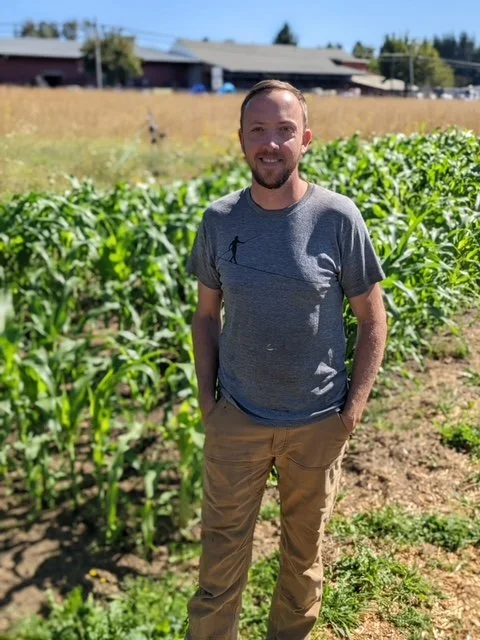
Drew
Tumbleweed Farm-Full for 2026
Tumbleweed FaRM-Full for 2026
2 APPRENTICESHIPS
FULL TIME (40 hours/week)
APPROX START/END DATES: April - October
$17/HR
LOCATION: Parkdale (Portland Chapter)
YEARS IN PRODUCTION: 14
PREVIOUS YEARS HOSTING: 2
PRACTICES: Organic Practices (Not Certified), Mechanized/Tractor Farming
ACRES IN CULTIVATION: 2.5
Vegetables
ON-FARM HOUSING? Yes
VEHICLE REQUIRED? Yes
LANGUAGES SPOKEN: English
Our strongest farming value is to add more to the soil than we are taking. Our goal is to continue to produce/sell more on the same amount of land each year. We strive to achieve this by improving our strategies, infrastructure and equipment to make things easier, simpler, smoother and faster. Off the farm our interests include raising two wonderful girls, cooking, skiing, trail running, golf, pond hockey and whackin’ a few beers whenever the opportunity presents itself.
FARM OVERVIEW
Taylor and Andrea Bemis have owned and operated Tumbleweed Farm since 2012. We learned how to farm on Taylor’s family’s 60 acre organic vegetable and fruit farm in Massachusetts. We started out on our own on leased land up the road from us, then purchased this land in 2013 and have been farming here ever since.
We are on a 6 acre parcel on the North side of Mount Hood. We cultivate 2.5 acres of that. We have one propagation house and 2 unheated hoop houses (20x96 and 30x96). The East Fork irrigation canal is our Eastern property line and our irrigation source. We are a 6 minute drive to Parkdale and a 15 minute drive to Hood River. Lots of recreational opportunities nearby. The Mount Hood Parkdale community is fun, welcoming and supportive.
We grow a diverse array of vegetables (along with melons and strawberries) for our 150 share CSA and the Hood River Farmers Market. Though we have not pursued certification we grow organically and are committed to a zero spray policy. For pest control we use row cover and crop rotation. For soil health we incorporate 150 yards of compost and 6 tons of chicken manure every Spring. For field prep we use a spader and rototiller behind a 23 horse power tractor. For final bed prep/stale bedding we use a BCS 853 with a power harrow. For weed control we use scuffle hoes, trapezoid hoes and tractor mounted basket weeders, finger weeders and sweeps. We do 75% overhead irrigation, 25% drip. Our farm crew is typically made of four members on harvest days and 2-3 on other days.
TRAINING AND EXPECTATIONS
The primary tasks our crew members are responsible for are propagation, planting, deploying row cover, hoeing/weeding, harvesting, washing, packing and the farmers market. Irrigation, some BCS work, flame weeding and direct seeding are tasks that can be explored. Additional duties arise throughout the season including thinning carrots/beets and cleaning garlic and onions.
Start and end dates are flexible within 1 week. The work day is generally 7-4 with a one hour lunch break. The focus of work is on quality initially and speed once quality is understood. Crew members are expected to be able to carry and stack heavy crates. Time off is ideally avoided but is allowed for crucial circumstances.
We will be working alongside the crew a lot of the time but not always. We always include the crew in the full picture of what is going on and what is happening to the field before and after the crew’s roles. There is always time to ask/answer questions and to accompany the pre-harvest field walks.
QUALIFICATIONS
We are most excited by applicants who are enthusiastic about farming and motivated to work hard and fast. Previous farming experience is not required. Previous experience working in fast-paced and sometimes stressful situations is preferred.
Our housing opportunity is a 7 minute drive to the farm so some form of transportation is required.
COMPENSATION AND ACCOMMODATIONS
Compensation is $17/hr plus any and all produce you’d like to bring home.
On-farm housing is offered for both Apprentices. The housing we are offering is a 2 bedroom ADU on 4th Ave in downtown Parkdale. It’s a 7 minute drive from the farm (5 miles away), and an extremely short walk to the grocery store, laundromat, coffee shop, and restaurants. For employees of the farm, rent is $300/room, utilities included.
EQUITY AND INCLUSION
Anyone willing to put forth their best effort is welcome here. We stay in constant communication with crew members directly as well as our crew leader about how everyone is getting along and will address issues as they arise. We have employed a crew for seven seasons now and have found farming to be a great uniter.
PAST APPRENTICE TESTIMONIALS
“He knows his systems, and he knows why they work. He's always willing to explain, unhurriedly, if you ask, and he'll encourage efficiency without rushing. He trusted us with new tasks and let us work independently often, but was ready to jump in when needed…
Taylor was still learning how to be a mentor this season, and I think he is searching for the right balance of exposure to new and interesting farm tasks, and the repetitive grunt work of the farm. I think with more practice he'll strike the right balance.” - 2023
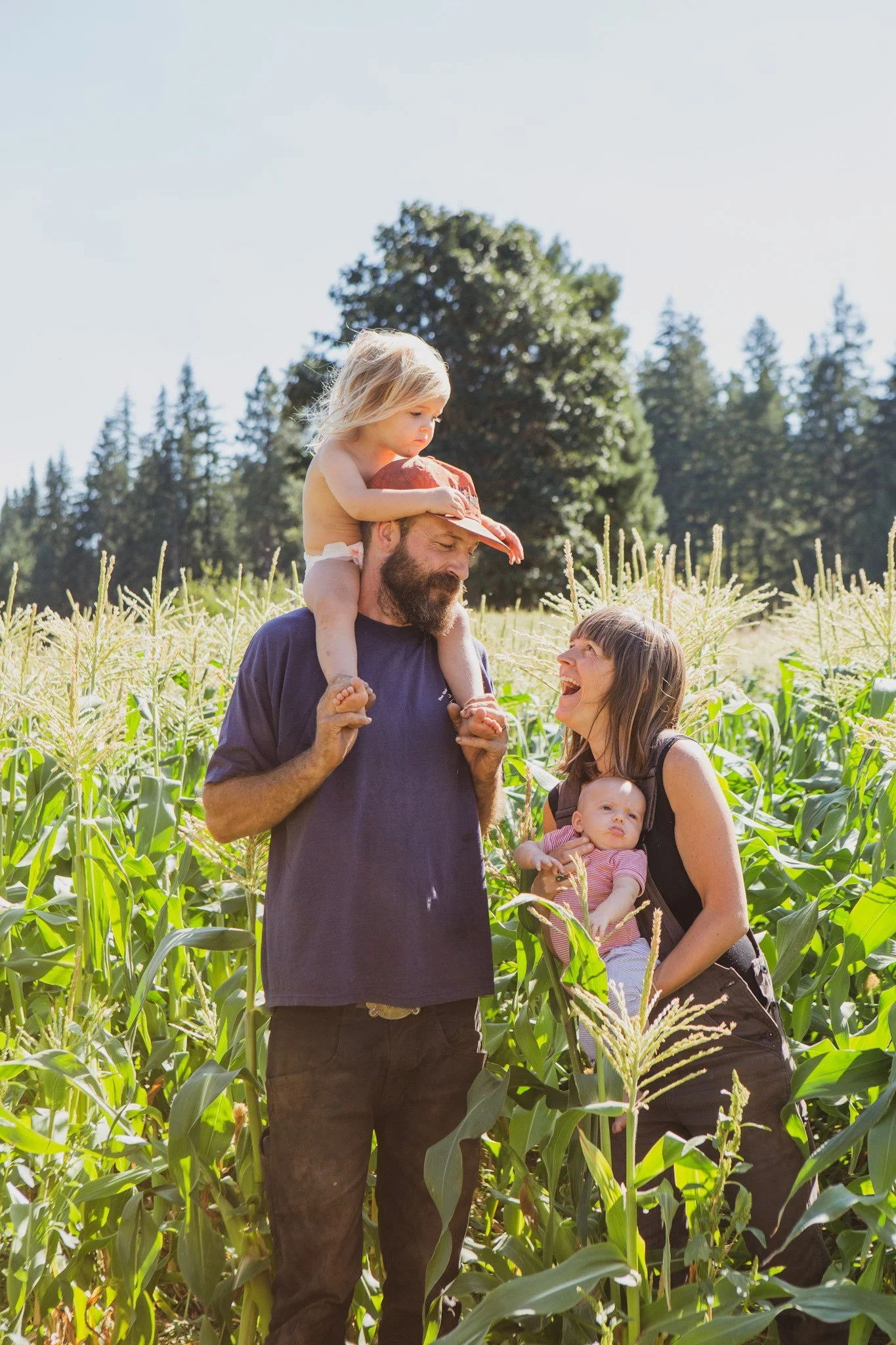
Taylor, Andrea, and kids
Harbinger Farm - Full for 2026
HARBINGER Farm
1 APPRENTICESHIP
PART TIME/FULL TIME (30-40/week)
APPROX START/END DATES: April - October
$16/HR
LOCATION: Myrtle Creek (Umpqua Valley*)
YEARS IN PRODUCTION: 5
PREVIOUS YEARS HOSTING: 2
PRACTICES: Organic Practices (Not Certified)
ACRES IN CULTIVATION: 2
Vegetables, Fruit, Culinary Herbs, Value-Added/Processing
ON-FARM HOUSING? No
VEHICLE REQUIRED? Yes
LANGUAGES SPOKEN: English
Women-Owned/Operated
*While outside of the Rogue Valley Chapter, some in-person educational events will be within a 90-minute drive from this Host Farm. Attendance at these events is highly encouraged.
Harbinger Farm’s main goal is to successfully grow a wide variety of seasonal foods without the use of pesticides, herbicides or synthetic fertilizers. We believe that our environment shouldn’t suffer from our cultivation of this space, it should only benefit and flourish because of it. Our intent is to let the seasonal changes in our natural surroundings signal our actions, allowing the earth’s cycle to determine the unique timing for the growing season. While keeping permaculture methods in mind, we wish to find balance between stewarding the land with thoughtfulness and care while also maximizing its growing potential so we can serve more outlets within the local community.
https://www.harbinger-farm.com
https://www.facebook.com/harbinger.farm
Farm Overview
Harbinger Farm is located about 10 miles (15 minutes) outside of Myrtle Creek. Property owners, Matt and Lucie, are the sole residents, operating the farm business out of their home. The property itself is 12 acres in total with 2 acres currently in crop production. It has about an acre of cultivated space dedicated to annual row crops, the rest being a fruit tree orchard and other perennials which were planted when they bought the property in 2020. North Myrtle Creek runs through the property, leaving about 500 ft of creek frontage–the creek runs year round and is a great place to cool off in the summertime. As of 2023, the farm also began leasing a field from a neighbor down the road, increasing production space by another half acre.
The farm currently raises annual vegetable, fruit and herb crops–a versatile assortment of 50+ items over the course of the growing season. Value-added products are also produced when time and quantity permits, including cottage foods, vegetable ferments and dehydrated goods. Harbinger Farm vends at a local farmers market, utilizes an online sales platform for curated pre-orders, offers a 20+ week CSA, and wholesales to a local restaurant, as well as several private chefs.
The only time mechanization is utilized is during bed-prep when a walk-behind tractor does some mowing, shallow tillage and bed-shaping. Otherwise, weeding, cultivation and harvest is all done by hand. Field blocks are cover cropped over-winter and crop families are rotated between seasons. All transplants are started from seed in a propagation nursery on-site and a total of 10,000 sq.ft. of field tunnel space will be utilized for row crop cultivation in 2026.
Matt and Lucie serve as the core farm crew. An Apprentice would fill an assistant position to them in almost all necessary field tasks. A few part-time seasonal staff may join for harvest days or big projects during peak season.
Matt and Lucie share over a decade of previous farming and marketing experience combined and were duly inspired by the rewarding nature of the lifestyle, enough to find their own land to tend. Harbinger Farm was founded in March 2020 and the couple immediately began breaking ground and creating growing space. They joined the winter market in Myrtle Creek that November and have continued marketing while expanding their business ever since.
TRAINING AND EXPECTATIONS
An Apprentice would receive a relatively well-rounded hands-on experience, encompassing most aspects of small-scale produce farming. The bulk of their hours logged will be spent on field production-related tasks, including but not limited to seeding, planting, cultivation, irrigation, harvesting, washing/packing and taking inventory. Heavy equipment usage is limited; however, an apprentice would certainly be trained to use the BCS walk-behind tractor, if interested. Farm business management methods will be conveyed when it comes time for decision making regarding crop planning, weather and climate, seasonal production trends, market demands, etc.
Being that we are operating a newly-established farm, there is much value to be gleaned from learning the progression of a small-scale farm in “real-time”. An Apprentice would have the opportunity to actively engage as we grow our business, develop new systems, problem solve and overcome challenges for the first time, capturing a unique involvement that can only be enhanced by our varied previous farming experiences.
An Apprentice should expect to work maximum hours in the given 30-40 hour range per week during peak season (May-September) and closer to the minimum hours in the range per week on the front and tail ends. Ideally, hours per day and days per week would be flexible depending on fluctuating needs. However, if a set schedule is preferred, that can also be arranged. On average, one should expect to complete 8-hour workdays. During peak season, the expected daily start time would be 8am. Time off should be requested as far in advance as possible, but at least two weeks prior. No more than three consecutive days off will be allowed during peak season (unless an exception is agreed upon during the interview process). All time required for OFC training/events off-site, including commuting, will be gladly accommodated.
Introduction to the farm will take place initially, including lay of the land, basic farm practices and principles, familiarity with mentors, and general expectations. Detailed training will occur with each new task, even if the Apprentice has prior experience. Guaranteed demonstration of assigned duties and continually working alongside the apprentice until both parties are confident in adequate completion of the task at hand. The teaching of core concepts will take place over appropriate periods of time, with mentors helping the apprentice hone their skills and become comfortable in their position as they acquire more knowledge and experience.
Questions and constructive feedback will be welcome at all times. Field walks will occur each week after days off. Check-ins will take place monthly. Evaluation sessions will be scheduled at the end of the 30-day trial period and again around the end of September.
QUALIFICATIONS
Applicants with previous farm experience are preferred but not required–as long as the desire to learn and motivation to excel are clearly present.
Outdoor physical work experience is a must–our summer daytime temps average between high 80s and low 100s.
Ability to comfortably lift and carry 50 lbs is required, accompanied by repeatedly bending, kneeling, squatting and standing throughout the day.
Adeptness at learning new skills while pertaining the ability to override previous learned experiences with newfound direction.
Exhibits attention to detail and thoughtful predictability.
Exercises strong listening, comprehension and communication skills.
Ambition to pursue a demanding lifestyle and arduous career path within an industry struggling against countless social and environmental challenges.
Appreciation for and respect of natural science and organic chemistry.
Practices a favorable attitude and a pragmatic outlook; is flexible, adaptable, open minded, down-to-earth and easy-going in nature.
COMPENSATION / ACCOMMODATIONS
$16/hour to start, plus access to ample farm-produced food (seconds) to take home each week.
Housing is not provided. Opportunities are available for rent in our neighborhood, Myrtle Creek and the surrounding area, including Roseburg.
There is no cell service within about 5 miles of the property; however, wi-fi connectivity is available within 20ft of the private residence.
Introducing an Apprentice to other local farmers in the area is absolutely intended–especially to some who are raising livestock and/or different crops, such as cut flowers. They would certainly be welcome to attend local farmers markets and other networking opportunities and, depending on their scope of interests, we will assist in making connections with persons involved in the local food system.
EQUITY AND INCLUSION
Folks from all walks of life are welcome to join our farm crew–as long as we share the same drive and determination for the work, how we got here doesn’t matter. We strive to treat every person we encounter with dignity and respect, with our only expectation being to receive the same from them in return. Simply put, discrimination of any kind will not be tolerated.
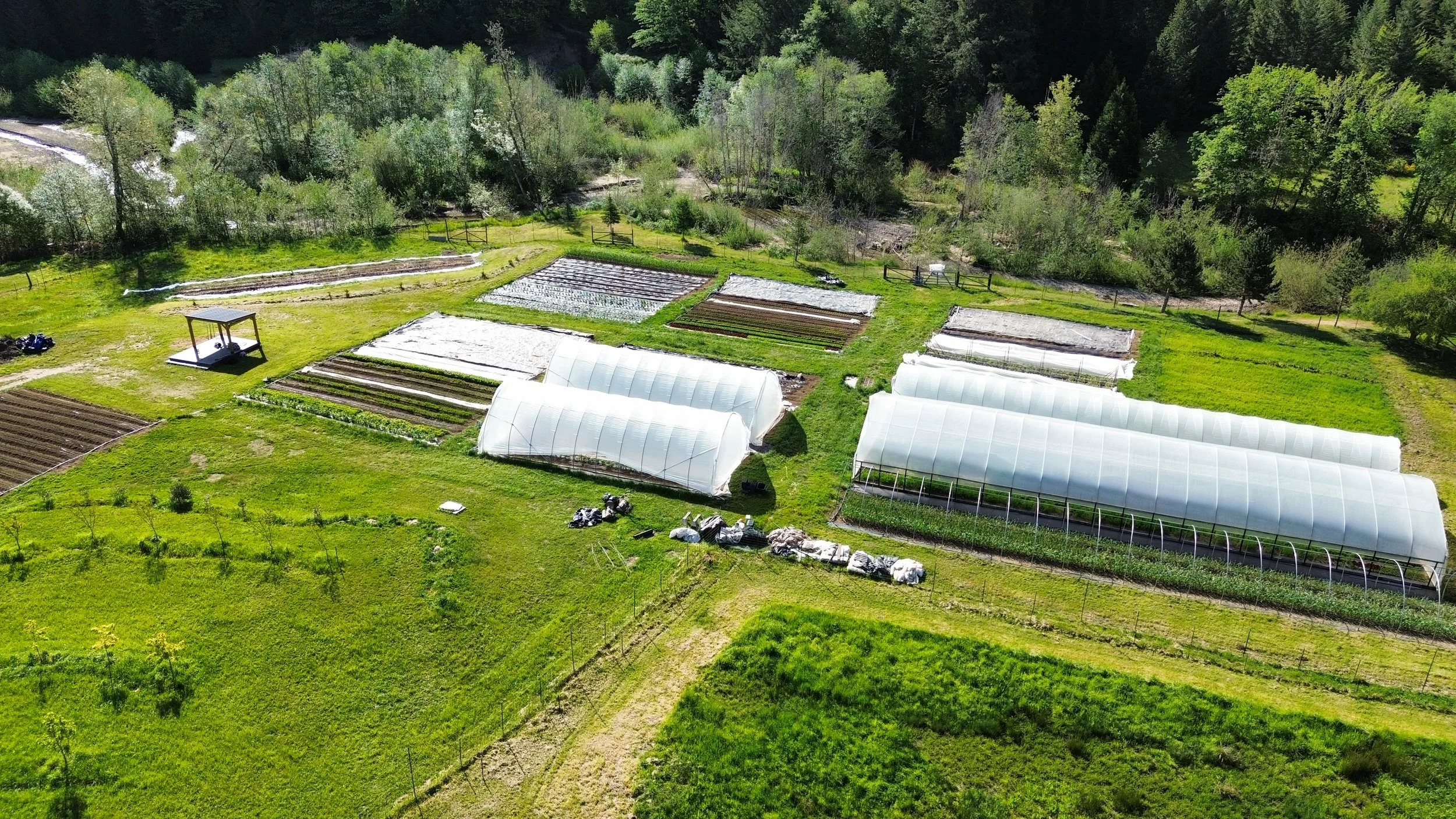
Farm Owners & Mentors Lucie and Matt Day

Good Rain Farm-Full For 2026
Good Rain Farm-Full for 2026
2 APPRENTICESHIPS
PART TIME (32 hours/week) Full Time (40 hours / week) considered
APPROX START/END DATES: May - October
$18/HR
LOCATION: Troutdale (Portland Metro Chapter)
YEARS IN PRODUCTION: 10
PREVIOUS YEARS HOSTING: 1
PRACTICES: Low-Till, Organic Practices (Not Certified)
ACRES IN CULTIVATION: 1
Vegetables, Culinary Herbs, Meat Production, Seed Production
ON-FARM HOUSING? No
VEHICLE REQUIRED? Yes
LANGUAGES SPOKEN: English
BIPOC Owned/Operated, Women Owned/Operated
Good Rain Farm is a diverse operation focused on vegetable production, native plant propagation, and Indigenous First Foods. We primarily grow mixed vegetables and Indigenous crops, cultivating them through sustainable practices such as low-till methods, cover cropping, and regenerative soil care. Our marketing and sales outlets include a CSA program, local farmers markets, and direct-to-community sales. Our CSA, Save Our Seed, prioritizing culturally relevant foods and education.
Training future farmers is essential to sustaining our food systems, and it’s critical to build a qualified, skilled workforce that values sustainable, culturally rooted practices. Mentoring Apprentices aligns with our mission to strengthen the community through hands-on education and cultural stewardship, helping to ensure a resilient, knowledgeable, and inclusive agricultural future.
www.GoodRainFarm.com
FARM OVERVIEW
Good Rain Farm is located on 13.5 acres within the Urban Growth Boundary (UGB) and designated rural agricultural reserves, just 10 minutes from Gresham and Troutdale, Oregon. The farm includes 10 open-field acres dedicated to mixed vegetable production, providing a spacious and productive setting for diverse crops. Our proximity to the Sandy and Columbia Rivers adds to the richness of the environment, offering opportunities for recreational activities and connection to local natural resources. The setting provides both a quiet, rural atmosphere and convenient access to nearby communities, making it ideal for sustainable farming and community engagement. Currently farm owner Michelle Week and partner live on site with 1 dog, several cats, poultry and meat rabbits.
Our production is a blend of mechanization and hand labor, using tools like a BCS walk-behind tractor for efficiency while maintaining soil health. We use cover crops to enrich soil and support biodiversity, and we are committed to organic practices, exploring organic certification to enhance transparency.
Our typical farm crew includes Michelle and seasonal Apprentices who engage in all aspects of the farm’s operations. We prioritize training Apprentices in sustainable methods, food sovereignty, and cultural revitalization, aiming to foster skilled farmers who carry forward these values. Community volunteers also join us seasonally, helping with planting, harvesting, and community events that support our broader mission of sustainable, inclusive agriculture.
Farmer Michelle Week, founder and steward of Good Rain Farm, is a first-generation farmer from the sngaytskstx (Sinixt) Arrow Lakes Peoples. With a foundation in outdoor recreation and gardening, she refined her skills through a Farm Apprenticeship at Zenger Farm, which led her to establish Good Rain Farm to increase access to Indigenous First Foods.
Michelle’s philosophy centers on food sovereignty, cultural revitalization, and environmental stewardship. Good Rain Farm was established in 2018 to blend traditional knowledge with sustainable farming, fostering ecological health and community resilience. Michelle’s goals include creating an inclusive food system, expanding education, and training future farmers who prioritize community and sustainability.
TRAINING AND EXPECTATIONS
Apprentices at Good Rain Farm will engage in a variety of tasks throughout the six-month Apprenticeship, such field work includes planting, cultivating, weeding, and harvesting, as well as care for livestock, including feeding and cleaning of our meat rabbits. About 48 hours of On-Farm orientation (typically offered in 3hr weekly chunks)will occur . Apprentices will also learn practical skills in washing and packing produce, basic marketing principles through CSA interactions, and safe equipment use and maintenance. Additionally, they will contribute to social media marketing and newsletter writing, enhancing their communication skills and understanding of farm promotion. While the focus is more on agricultural skills than business operations, Apprentices will have access to a list of resources and recommendations for additional entrepreneurial education, and time to attend workshops can be accommodated. The program aims to provide a well-rounded experience, fostering both hands-on agricultural skills and an understanding of sustainable farming practices while encouraging collaboration and active participation.
Apprentices at Good Rain Farm are expected to commit to four eight-hour days per week, starting around 7-8 AM and ending around 3-4 PM, with appropriate breaks included. Farm activities are predominantly performed outdoors in various weather conditions, so employees must dress appropriately each day and wear closed-toed shoes. The role involves significant physical exertion, requiring frequent bending, lifting, and handling of heavy equipment and supplies, with the ability to lift up to 50 pounds repeatedly throughout the day and stand for extended periods outdoors especially during soil amendment & cover cropping days. Reasonable accommodation may be provided upon request to support apprentices in meeting these physical demands.
To provide effective instruction and mentorship to an Apprentice, Michelle will use a hands-on approach that combines lecture, demonstration, collaboration, and open communication. Michelle will teach core concepts and skills through practical work, engaging the Apprentice in daily tasks while guiding them with clear explanations. Regular field walks will facilitate discussions about observations and questions, enhancing their understanding. Michelle will schedule regular check-ins to assess progress and address challenges, fostering an environment where the Apprentice feels safe to share concerns. Michelle aims to provide consistent positive reinforcement alongside constructive criticism, balancing firmness with gentleness. While the work is urgent, Michelle emphasizes that growth and learning are ongoing processes. Evaluation sessions will reflect on progress and set goals, ensuring the Apprentice gains confidence and independence as they develop their skills.
QUALIFICATIONS
We are seeking applicants with a minimum of one year of outdoor field work or farm experience that includes direct involvement in farm operations, with a focus on supporting and executing activities directed by the Lead Instructor or Farm Managers. Ideal candidates should have a working knowledge of organic, sustainable, small farm practices and a passion for learning about Native First Foods, alongside a commitment to land stewardship. Excellent verbal and written communication skills, competency with mathematics, and the ability to follow verbal instructions are essential. Additionally, applicants should be comfortable within a community-driven management process and demonstrate a strong work ethic, enthusiasm for lifelong learning, and an open mind. A food handler's card is preferred but not required.
COMPENSATION / ACCOMMODATIONS
For our Apprenticeship position(s), we offer $18 per hour for four 8-hour workdays weekly, plus several benefits to enrich the experience. Apprentices receive a seasonal CSA box, Paid Time Off, Paid Sick Days, and a Gear Stipend to ensure they’re well-supported. We maintain a Hydration Station and snack basket (“snasket”), provide occasional hot lunches, and offer access to a network of educational and farming opportunities. Technical support for scholarships, grants, and other resources is available, along with comprehensive on-the-job training that emphasizes both practical farming skills and Indigenous approaches to agriculture. Together, these benefits create a holistic, supportive environment for Apprentices to thrive and prepare for futures in sustainable agriculture.
EQUITY AND INCLUSION
At Good Rain Farm, equity and inclusion mean fostering a safe, welcoming, and empowering environment for all, particularly BIPOC and Queer individuals. Our Apprenticeship offers specialized training from an Indigenous-led perspective, promoting diversity and skill-building. We ensure accessibility with 50% of CSA memberships offered at reduced or no cost and by providing home delivery for those in need. Through culturally relevant programs like our Save Our Seed initiative , which teaches seed saving and sustainable agriculture, we advance food sovereignty and social justice. Our commitment to fair treatment, accessibility, and cultural reclamation reflects our belief that equitable food access and environmental stewardship are essential for a just community.

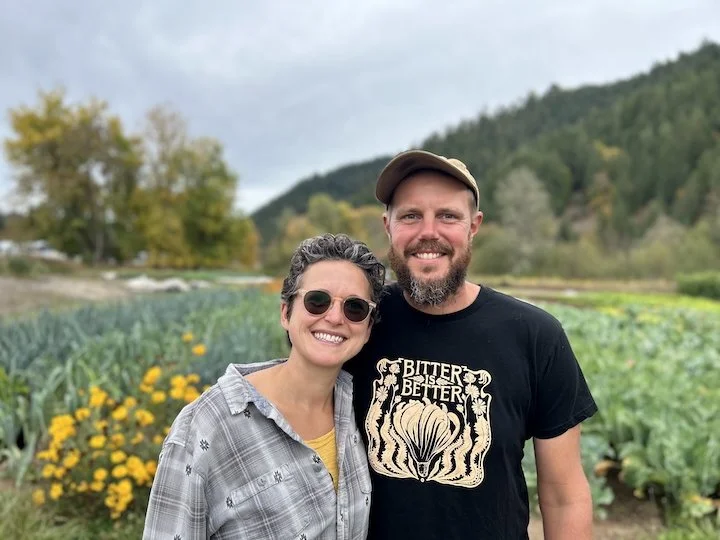
Michelle Week (Photo Credit: Jaimie Thrower)
Sweet Union Farm - FULL FOR 2026
Oregon Farm Corps Apprentice Position at Sweet Union Farm
At Sweet Union Farm, we believe that vegetables are beautiful, land is to be respected and community is our strength. We are passionate about growing the highest quality vegetables for our community and making them accessible to everyone. We seek balance, intentionality and excellence in all we do ecologically, socially and economically.
SWEET UNION FARM
1 APPRENTICESHIPS - FULL FOR 2026
PART TIME (20-24 hours/week)
APPROX START/END DATES: Mid April - Late October
$17/HR
LOCATION: Klamath Falls (Southern Oregon* / Satellite)
YEARS IN PRODUCTION: 9
PREVIOUS YEARS HOSTING: 2
PRACTICES: Low-Till, No-Till, Organic Practices (Not Certified)
ACRES IN CULTIVATION: 1
Vegetable Production, Nursery, Sheep
ON-FARM HOUSING? No
VEHICLE REQUIRED? Yes
LANGUAGES SPOKEN: English , Spanish
*While outside of the Rogue Valley Chapter, some in-person educational events will be within a 90-minute drive from this Host Farm. Attendance at these events is highly encouraged.
At Sweet Union Farm, we believe that vegetables are beautiful, land is to be respected and community is our strength. We are passionate about growing the highest quality vegetables for our community and making them accessible to everyone. We seek balance, intentionality and excellence in all we do ecologically, socially and economically.
Katie Swanson has been farming for 10 years and just completed her ninth season owning/operating Sweet Union Farm. Sweet Union’s farm Enterprises are diversified vegetables. Our sales outlets include Farmer's market, restaurants, farm-to-school and the local food hub Klamath Grown. Sweet Union is a very intensively managed and productive small farm. Sustainability is a top priority in making this farm healthy for all the species that live here, emphasizing diversity, soil-building, and water saving.
FARM OVERVIEW
Sweet Union Farm sits on the occupied land of the Klamath and Modoc tribes who cared for this beautiful place since time immemorial. Currently, what the community refers to as “The Tribes” are the Klamath, Modoc and Yahooskin tribes which are headquartered about 25 minutes north of the farm. Since federal recognition was restored in the 80s, The Tribes have been doing incredible community-building work, leading public health and environmental efforts that make Klamath Falls a better place to live.
I, Katie Swanson, have lived in Oregon my whole life, growing up in Gresham and Boring. My husband and I live in our home on the farm. We had our first child, John River, born August 2024. The Farm is about 10 minutes southeast of the metro area of Klamath Falls. The property is 7.5 acres total with about 1 acre in vegetable production and the rest is a mix of pasture, outbuildings, a home garden, irrigation pond and riparian habitat along the river. Our property is surrounded by a mix of similar sized hobby farms and a few much larger farm operations with hills in the distance and the Lost River running alongside the north edge. It’s very peaceful with lots of birds but is also very close to town.
Klamath Falls is a small city of about 45,000 people and the county seat for Klamath County, which has a population of about 70,000. Klamath has a small town feel, but because it’s the city center for a remote region, it has an energy to it with lots of great small businesses. It’s surrounded partially by wide open spaces of agricultural land (mainly hay, grain, potatoes, cattle, horseradish, garlic, etc.) as well as lakes, mountains and forests which provide endless outdoor recreation. It’s a mountain biking destination and the lakes provide lots of opportunities for canoeing, sailing, kayaking, SUP, etc. Crater Lake National Park is about an hour away to the north and the Lava Beds National Monument is 45 minutes to the south. The wide open skies make for some great sunsets and the high desert climate means lots of dry, sunny days. Klamath Falls is definitely experiencing an increase in population; some people like to say we’re the next Bend, but I like to think our grit gives us our own, unique character.
Living in a dry, drought-prone climate, water-saving efficiencies have become more and more of a focus every year on the farm. One of the main focuses is increasing the water-holding capacity of the soil through building organic matter with cover crops and compost and minimal tillage techniques. We use compost, cover crops and natural fertilizers to build the soil and are working to mitigate the compaction that has occurred due to the practices of previous owners.
We do a mix of hand work and mechanized with the tractor and BCS. We transplant by hand as well as use the Paperpot transplanter and use a jang seeder for direct seeding. We use tarps to suppress weeds and break down old crops. Drip tape is mostly used for irrigation, plus some overhead (micro sprinklers and handlines) for specific uses. We have one unheated high tunnel and are building another minimally heated tunnel this winter.
A few other production methods we use are crop rotation, planting hedgerows and borders of pollinator-friendly flowers and herbs, interplanting, natural fertilizers and various Integrated Pest Management techniques. We are always experimenting and trying new things. Pigs are raised on pasture and get lots of farm scraps.
About Katie: Katie believes growing good food and making it accessible while taking care of the land is the best thing she can do for her community. Besides farming, Katie loves to be with her family, paddle on the water (canoe, kayak, SUP), search for wildflowers, camp, cross country ski, drink tea and cuddle with Kitty Ben.
Katie did not grow up farming, but always had a garden and some animals. She taught high school for five years, but fell in love with farming thanks to the thriving women-led small farm scene in the Portland area. She worked on a few different farms, including WWOOFing in Peru and working at 47th Avenue Farm in Portland. Katie started Sweet Union Farm in 2016 on one of the busiest roads in Klamath while working at Blue Zones Project as a food systems manager. Starting on about a quarter acre, she grew over 100 varieties of vegetables for CSA and restaurant customers and slowly expanded by leasing land. In the winter between the 2021 and 2022 season, she and Dallas were fortunate enough to move to their current property. During the 2022 season on the new property, Katie scaled down, got to know the land and built infrastructure, then re-started full farm operations again in 2023. Katie also co-founded and is heavily involved in Klamath Grown, a non-profit food hub that aims to build a strong and equitable local and regional food system.
TRAINING AND EXPECTATIONS
For the 2026 season, The crew will mostly consist of myself, one returning full-time employee and one OFC Apprentice. There may be one other part-time employee that runs the farmers market booth. .
The Apprentice will gain experience in annual vegetable production in the following ways: flipping and prepping beds (hand tools, tarps & BCS), direct seeding (Jang), transplanting (by hand & Paperpot), greenhouse seeding, cultivation and weed management, season extension techniques, irrigation, harvest, wash & pack. Tractor training can be discussed, although this is typically reserved for one crew member per season who has at least one season on the farm. Apprentices will learn about the various sales outlets and have opportunities to work the farmers market booth. There may also be opportunities to work on other projects around the property, such as managing and expanding the native plant hedgerows and riparian habitat. We will also have a few sheep that they can help take care of. The apprentice will also be involved in our spring plant sale where we sell veggie starts and native plants. Additionally, there will be opportunities to learn about the back end of farming and how we manage the business. We also typically host a few field trips every year, so the Apprentice can learn how to lead a class field trip on the farm. If the apprentice has another particular area of interest, I will do my best to arrange the schedule so that they can participate in that aspect of the farm.
In addition to farm work and farm business management, the Apprentice will have the opportunity to learn about community food systems work and how to develop partnerships in order to increase access to produce. Katie is the co-founder of the local food hub, Klamath Grown, so there is ample opportunity to get involved in that work.
The specifics of the schedule for 2026 are still being worked out. The days per week may vary between 2-3. The average day is 8 hours, although it can range from 6-10 hours depending on a variety of factors. There is the option to apply for the farmers market position which involves 1 day/week running our Saturday farmers market booth. All state laws regarding breaks and lunch are observed.
The Apprentice is expected to be able to do physical work in all types of weather and be on their feet for the hours described above with the ability to lift 40 pounds repeatedly. Provided training, the ability to operate equipment such as the BCS is important as well as other hand tools used on the farm.
More than anything, a positive attitude, willingness to learn and ask questions, and open communication would be expected of the apprentice. Beyond the on-farm communication, the Apprentice would be expected to communicate kindly and clearly to customers.
We tend to utilize the “I do, we do, you do” format where we show the mentee how to do a task then do it with them providing feedback and answering questions. Once it feels like they have the hang of it, we give them space and do something else then come back to check in to see if they have any questions. At the beginning of the season we would expect to be doing more tasks side by side and as they learn more and fewer tasks are new, they would work more independently.
We typically have a weekly check in and review the plan with the whole crew once a week, plus daily morning check-ins to clarify who is doing what and to provide any explanations.
A lot of discussions and mentoring naturally happen while we are working, but Katie also schedules individual check-ins with each staff member at least 2-3 times per season to discuss how they are doing physically, mentally and emotionally on the farm. These will also be times to touch base on what they are learning to make sure their goals are being met.
The Apprentice would have access to the farm library of 20+ farming books. Plus, we will inevitably share online resources with each other, podcasts, watch videos, etc. which would fuel great discussions in the field. I also recognize that people come from a diversity of backgrounds with different communication and learning styles, so I would ask them about their preferences at the beginning of the season and adjust accordingly. The apprentice is also welcome and encouraged to take on a project of their own on the farm. Once they arrive and get a feel for the place, we can talk about their ideas, see how they fit into the existing farm systems and discuss how to best support their project.
QUALIFICATIONS
At least one season of agricultural experience is preferred but not required. Most important is experience doing physical labor outdoors.
Strong communication skills, ability to self-advocate and communicate needs
Ability to work efficiently and consistently with others and independently
Ability to follow instructions, open to constructive feedback
Positive attitude and ability to have a good time while being productive.
Learner mindset, asks questions and shares ideas from own experience.
Observant, attention to detail and takes initiative to fill needs or solve problems
Strong work ethic, desire to do high quality work
Ability to do physical work in all weather
Provided training, ability to operate hand tools and equipment, including the BCS.
Ability to lift 40 pounds repeatedly
Clean drivers license and reliable vehicle to get to work on time
An in-person visit is preferable, but if that is not possible, we can work around that.
COMPENSATION / ACCOMMODATIONS
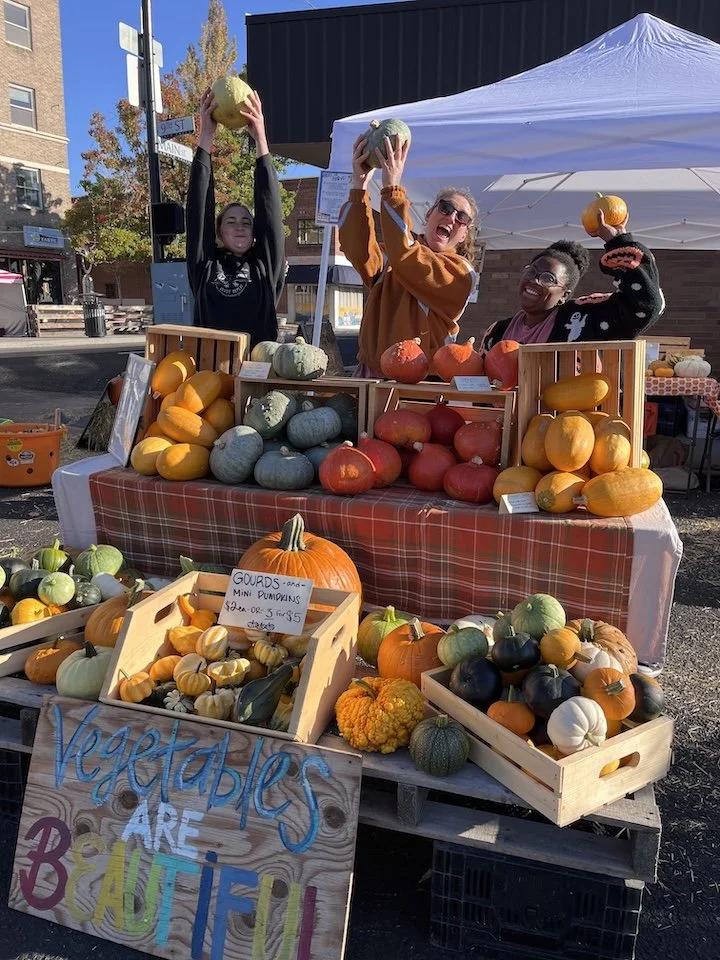
$17/hr.
$150 equipment stipend after 60 days
Paid PTO (accrual rate 1 hr per 30 hrs worked plus 4 additional hours after 60 days)
Access to lots of farm veggies
$200 bonus when the season completed
Limit of 3 personal days off during peak season (late May - mid September), not including sick time, approved in advance. Vacation requests need to be scheduled at least 2 weeks in advance and coordinated with the farm schedule and rest of the crew so that no two people are off at the same time. Unless discussed at least 2-3 months in advance, time off requests are not likely to be approved during May and September.
No Housing Offered.
EQUITY AND INCLUSION
At Sweet Union, we strive to maintain a welcoming spirit and create a safe and inclusive environment where everyone is valued and respected for who they are. We do that by caring for each other and seeing each other as more than a laborer, but a whole, complex and unique human being. We help each other out, encourage each other, use kind and respectful language, and take a collaborative approach to solving problems on the farm. We stretch together before each harvest and check in with how our bodies are doing, making adjustments to the work plan as needed to allow for self care. We do a lot of check-ins to make sure each individual’s needs are met, they feel supported and that they are finding joy in their work. We welcome people of all backgrounds and strive to be open and honest about our faults while constantly doing the personal, inner work that we see as our own responsibility.
Klamath Falls is a place that struggles with poverty, water scarcity, and white supremacy among other things. In that context, I take the role of a farm business like Sweet Union very seriously. As a white woman in agriculture, I have a responsibility to speak out against white supremacy and inequity of all kinds. At a community level, I am working with the non-profit, Klamath Grown, to prioritize social justice within the organization and the broader local food promotion work. The farm also supports the local Pride Festival every year. Ag and inclusivity haven’t always been paired together in this community, but the hope is to start changing that and for there to be no doubt where Sweet Union Farm stands on the Black Lives Matter movement, Indigenous rights, LGBTQ+ rights or other social justice issues.
Farm values & philosophy:
At Sweet Union Farm, we believe that vegetables are beautiful, land is to be respected and community is our strength. We are passionate about growing the highest quality vegetables for our community and making them accessible to everyone. We seek balance, intentionality and excellence in all we do ecologically, socially and economically.
At Sweet Union Farm, the vegetables are beautiful. We share that beauty with the community when we:
Produce vegetables that are beautiful inside and out. This means that we provide consistently fresh, high-quality, diverse and delicious vegetables that thrive in our climate through sustainable and efficient farm management practices.
Inspire our customers to cook with and enjoy the uniqueness of fresh and local vegetables.
Maintain a tidy and beautiful environment that serves as an inspiration for all who visit the farm.
Prioritize professionalism, kindness and trust in all our community relationships.
Always seek to improve our systems with a holistic lens.
At Sweet Union, the land is respected. We are grateful to grow in such a beautiful place. In our efforts to be respectful and filled with gratitude, we:
Relish in working within the boundaries of our place, considering the climate and natural resources of the high desert (formerly a wetland basin, which is now drained and irrigated farmland and desert). We pay particular attention to soil health, efficient water management, and plant varieties that thrive in this environment.
Value all parts of the farm ecosystem, including those that don’t produce cash crops by planting flowers for pollinators and implementing no or low-till systems that respect the microbial life in the soil.
Recognize and seek to better understand the reciprocal relationship between the land and ourselves. We have much to learn from the natural systems around us.
Are always improving, testing, innovating, learning and questioning our farm management practices with the goal to become more sustainable and regenerative. We are grateful for the teachers in our lives.
We recognize that none of these practices are new and most sustainable farming methods were developed long ago by the original, Indigenous stewards of this land.
Our community is strong and we are fortunate to be a part of it. We feel a strong sense of purpose and as part of our commitment to community-building, we:
Maintain a welcoming spirit and strive to create a safe and inclusive environment where all customers, employees, volunteers and visitors to the farm feel valued, respected and are treated as equals.
Seek to build a stronger, more equitable and inclusive food system through collaboration and partnership with people and organizations who share these values.
Increase access to nourishing and regionally appropriate food for the people of Klamath Falls as well as connect them to the land and each other through food.
Choose to fight against an oppressive food system which has systematically disenfranchised Black, Indigenous and People of Color. We choose to be honest about our supporting role in this violent system, both historically and presently, as we seek to educate ourselves so we can do better and move ourselves and our farm towards justice.
Prioritize balance in our lives and time to care for ourselves, which in turn allows us to care for those around us.
Do not see decolonization as a metaphor. We acknowledge we farm on the occupied land of the Klamath & Modoc Tribes. We have not resolved the conflict between the unjust roots of our land ownership and our desire to be in a respectful and mutual relationship with the current tribal members who are survivors of the attempted genocide against their ancestors. Within this tension, we hope to find our proper role through partnership and the transfer of power.
PAST APPRENTICE TESTIMONIALS
“I learned a lot from Katie and her farm business, and I think Katie is a smart and thoughtful farmer, with lots of knowledge to share.” Three things that went well were “one-on-one time; regular discussions about issues in the small farms world; giving opportunities to take responsibility.” - 2021
““The environment that you find at Sweet Union is so very welcoming, honest, passionate, and gracious. You learn so much about caring for the land, the produce, yourself, and your community. I have gained such a deep appreciation and sense of gratitude towards our food and the many hands and hearts that grow it.” - 2024
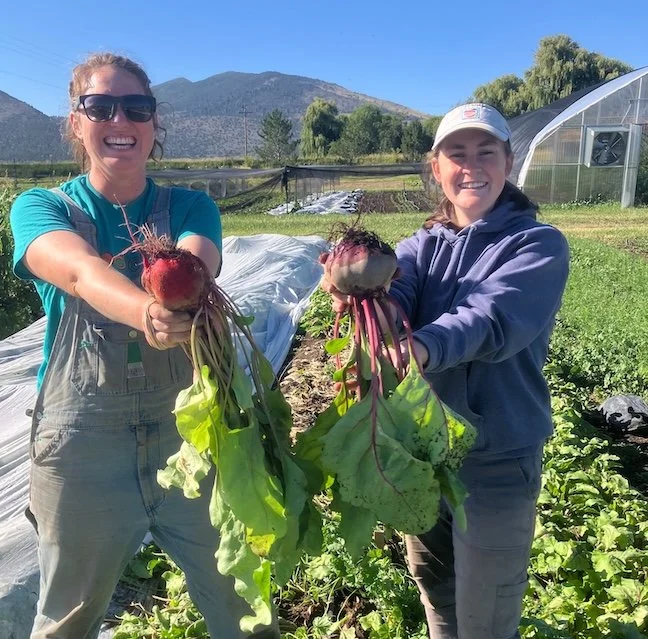
Farm Owner Katie Swanson and Staff with Beets

Runnymede Farm - Full for 2026
Runnymede Farm
1 APPRENTICESHIP
PART TIME/FULL TIME (24-40 hours/week)
APPROX START/END DATES: March/April - November
$15.50/HR
LOCATION: Rogue River (Rogue Valley Chapter)
YEARS IN PRODUCTION: 26
PREVIOUS YEARS HOSTING: 6
PRACTICES: Organic Practices (Not Certified), Mechanized/Tractor Farming, Winter Farming
ACRES IN CULTIVATION: 9
Diversified Vegetable, Fruit, Dairy, Poultry (Eggs), Cut Flowers, Nursery Stock, Value-Added / Processing
ON-FARM HOUSING? No
VEHICLE REQUIRED? Yes
LANGUAGES SPOKEN: English
Women-Owned/Operated, Veteran-Owned/Operated
Runnymede Farm is well known for our fresh produce and nursery business in the local Rogue River community. We strive to provide the Rogue Valley with high quality, local food while being good stewards to our land. The farm uses intuition and intensive, chemical-free, non-certified organic practices to produce a wide variety of crops on their 10 acres, including vegetables, fruit, cut flowers, nursery plants, eggs, and dairy.
FARM OVERVIEW
Runnymede farm is located in the beautiful Evans Valley of Southern Oregon, just 2 miles outside the town of Rogue River, a 10 minute drive to Grants Pass and a 20 minute drive to Medford. The 10 acres comprises 5 acres of pasture, 1 acre of wooded forest, 3 acres of hoop houses, nursery space, and growing fields, and 1 acre of living quarters. Teri and Arthur White, the farm’s owners, live on the farm with their dog Leche and the other farm animals. The Rogue Valley is a beautiful place at all times of the year, with plenty of hiking, river floats, and nature to explore.
Runnymede grows row crops and flowers in our fields and hoop houses. We also have a small orchard of pear trees and blackberries, as well as a nursery with annual and perennial flowers, vegetable starts, fruit trees, bushes, and ornamental bushes and trees.
Each year, Runnymede raises a new round of chicks for egg production. There are about 15 goats bred for raw goat milk.
Produce, eggs, nursery starts, and plants sell at 3 local farmer’s markets (Ashland, Medford and Grants Pass), as well as selling produce for a few other local farms. We do a 5 week CSA in the winter months. We also do on farm sales of our raw milk, eggs, and nursery stock.
Due to the scale and intensity of the plantings, field prep is done with a tractor, while all other tasks are performed by hand with basic tools. The farm employs 2 full-time employees, 1 part-time employee, and hires additional seasonal help as it’s needed.
The farm is owner by husband and wife team, Arthur and Teri. Together, they have over 25 years of farming and marketing experience. They have been on the farm since 1999.
Nora Kendall is the primary mentor for the Apprentice and was once herself a OFC Apprentice! Nora started working at Runnymede in 2021. She is now the field manager, organizes the daily on-farm operations, as well as works 2 of the 3 markets. Nora enjoys the diversity farming brings to each day, and appreciates being able to spend the days on her feet being active. She is in the beginning years of starting her own farm, and loves educating others about farming and the importance of local food. Nora also lives in Rogue River with her husband and looks forward to growing her own farm business in the years to come.
TRAINING AND EXPECTATIONS
Apprentices joining the crew at Runnymede can expect to be exposed to all tasks involved in operating a small-scale, diverse, mixed production farm. Those tasks will include animal husbandry (including milking and milk handling) and planting, cultivation, harvesting, packing, and farmers market sales of produce, fruit, and nursery products. On-farm training time consists of between 24-40 hours/week for an Apprenticeship position, depending on the applicant, and will include some weekends and holidays. Apprentice will work alongside the host farmers and employees, with some independent work as well, especially as the season progresses. The farm has many facets, and Apprentices are welcome to gravitate toward the areas that interest them.
The Apprentice will have tasks demonstrated to them clearly and thoroughly. We require applicants come with no prior bias, and we may explain tasks that they have previous experience with to ensure it is done the way we like it. We are not providing instruction in biology, botany, or zoology. We are providing on the job experience from which apprentices will have to use their own initiative to further or codify their education.
QUALIFICATIONS
Applicants seeking employment at Runnymede Farm must be mature, serious in their pursuit of farming, and physically capable of lifting heavy objects and being active and on their feet for long days. They must be capable of working independently without constant supervision. A positive attitude that brings a calm presence amongst the employees and animals is a must.
We encourage Apprentices to explore and enjoy Southern Oregon’s beauty, its proximity to the coast, the redwoods, the cascades, and the desert. We encourage Apprentices to make friends in the wider Rogue Farm Corps community and share experiences to fully understand that farming, like life, has many paths.
We prefer an applicant who can stay from March - November but can be flexible on start and end dates as needed. We prefer an applicant to visit in person before a placement decision is made. If you will hire on without an on farm visit, we will have an interview, perhaps multiple interviews.
COMPENSATION / ACCOMMODATIONS
Apprentices will start at $15.50/hr.
We do not provide On-Farm Housing. Housing can be tight, but rentals are available in the area. Non-local applicants are encouraged to come early to get settled. We can provide a reference for employment and character for housing applications.
EQUITY AND INCLUSION
Our farm encourages and supports applicants from all backgrounds and is committed to creating a safe and supportive work environment. Runnymede is happy to share our knowledge of farming with anyone with an open mind towards learning and the world around them.
One of the foundations of nature is variety, and as such, Runnymede Farm also welcomes all souls committed to tolerance, non-violence, and ethical and moral human values.
PAST APPRENTICE TESTIMONIALS
“[Arthur and Teri provided] a clear schedule and list of tasks. [They hosted] a welcoming environment and awesome coworkers… open to ideas and feedback from employees.” - 2021

Teri and Art White (Photo: David Hampton Photography)

Farm Mentor Nora Dennehy with one of the Goats at Runnymede

Valley Flora Farm - Full For 2026
VALLEY FLORA FARM
1 APPRENTICESHIP - FULL FOR 2026
FULL TIME (40 hours/week)
APPROX START/END DATES: May - December
$15/HR
LOCATION: Langlois (Satellite Farm)
YEARS IN PRODUCTION: 19
PREVIOUS YEARS HOSTING: 2
PRACTICES: Organic Practices (Not Certified), Mixed Power (Draft Powered, Mechanized/Tractor Farming), Low-Till
ACRES IN CULTIVATION: 6
Vegetables, Fruit, Culinary Herbs, Medicinal Herbs, Value-Added, Agrotourism
ON-FARM HOUSING? Possibly
VEHICLE REQUIRED? Yes
LANGUAGES SPOKEN: English, Spanish
Women-Owned/Operated
Valley Flora is a highly diversified fresh produce farm located 2 miles outside of the small town of Langlois (population 300) on the beautiful southern Oregon coast. The farm is deeply dedicated to ecological, climate-forward farming principles and practices, and we play a central role in our local food system in this rural corner of the state. Our crew is tight-knit and hard-working, and we strive to create a fun and supportive workplace for everyone here.
https://www.valleyflorafarm.com/
FARM OVERVIEW
Valley Flora Farm encompasses 90 acres in a beautiful, quiet river valley, 4 miles inland from the Pacific Ocean. Of that acreage, 40 acres are upland forest, 30 acres are in pasture, and the remaining 20 acres is rich river bottomland where we cultivate all of our row crops and orchard crops. The farm is nestled in a special microclimate where cool-weather crops thrive, but where we also have enough summer warmth to grow eggplant, sweet corn, peppers, and tomatoes outdoors - in spite of our proximity to the ocean. It’s a lovely climate to work and play in.
The farm is surrounded by natural beauty, with numerous coastal rivers running undammed from the coast range to the sea; uncrowded beaches; wild dunes and forests. The farm is 20 minutes from the picturesque coastal towns of Port Orford (to the south) and Bandon (to the north). We’re five miles from Floras Lake, an epicenter of kite and wind-surfing. There is also nearby mountain biking, surfing, hiking, fishing, and horseback riding. Floras Creek, which runs the entire length of the farm, offers numerous summertime swimming holes and wintertime salmon spawning grounds.
Valley Flora’s production is highly diversified, and so is our marketing. We distribute our food via four distinct sales channels:
Community Supported Agriculture (CSA): Valley Flora operates a 140-member CSA from June through December during our main season, and a 70+ member winter CSA from January to May. We participate in the Double Up Food Bucks program to help break down barriers to fresh produce in our low income community.
Farmstand & U-Pick: We have a bustling onsite farmstand that’s open from May to December, and a busy strawberry and flower u-pick that’s open to the public from June through October.
Direct Sales: We harvest and pack orders for local stores, co-ops, and restaurants year-round.
Foodbanks: Thanks to an Oregon Foodbank grant and some long-standing local partnerships, we distribute produce to four local foodbanks and community fridges every week.
The farm adheres to all the standards, rules, and principles of organic production but are not third party certified. We practice reduced tillage, have an unbridled passion for cover crops and biodiversity, and we do everything we can to minimize our carbon footprint and avoid waste. We’re a mixed power farm, relying on a combo of tractor power, solar power, human power, and draft horse power (Jack and Lily are Zoë’s team of Belgian/Morgan draft horses who work in harness on the farm). Our farm infrastructure is powered by a 12kW solar array that sits on the roof of our barn and runs our greenhouses, walk-in coolers, irrigation pumps and more.
We typically have six folks on our crew during our main season (some part-time, some full-time), from May through December. In the winter, we work a scaled-back schedule, employing 3-4 employees who stay with us year round but reduce their hours in the winter months.
Zoë has been farming for over 20 years, first as a hired hand on farms in Massachusetts and California, then as the crew manager at Sauvie Island Organics near Portland. In 2008 she returned to her birthplace on Floras Creek to start her own farm business in collaboration with her mother (Betsy) and sister (Abby), who both grow produce on the same family land. Abby grows salad greens and manages the orchard. Betsy focuses primarily on greenhouse production of peak-of-summer crops (tomatoes, basil, zucchini). Zoë and her crew round out the rest of the production, from artichokes to potatoes to strawberries to broccoli (and much, much more). Together they market collectively as Valley Flora. After 18 years in business, the farm is thriving and ever-evolving
TRAINING AND EXPECTATIONS
Every person at Valley Flora is a crucial, invaluable part of our team. We all work hard, with the crew usually putting in 8-10 hours per day during our summer peak. Apprentices typically start in May and work full-time through October with us. By the end of October things ease up a bit and we sometimes reduce hours slightly for November and December.
At Valley Flora, we “train-by-doing” and there is education built into every day, particularly when new employees are diving into a task for the first time. We always try to ensure that our crew members feel confident and capable before being set loose on a project. New employees spend a lot of time working alongside our seasoned crew to learn the ins and outs of everything we do.
Because the farm’s production and marketing are so diverse, our daily to-do lists are ever-changing and multifaceted, which helps mix up the physical and mental demands of the job. That said, it is very physical work with certain intense seasonal peaks (for instance, harvesting the heavy storage crops of fall, or the constant weekly transplanting of spring/early summer). To help build strength and physical health, we train our employees not only in farming techniques, but also in proper body mechanics (we are fans of a set of body weight exercises called Foundation Training to keep our backs healthy and strong).
Apprentices work as a member of the field crew on all manner of tasks that are part of operating a diversified produce farm:
Daily harvest for our 140-member CSA, farmstand, and direct sale accounts. The farm grows over 100 different crops, each requiring its own technique, tools, and skill set for harvest. Valley Flora has a long-standing reputation for high quality produce and we strive to uphold that. We’re sticklers for quality and consistency, so Apprentices are taught standard bunch size, standard weight, and quality control for every single crop in ever-changing conditions. We need Apprentices to achieve these quality standards while moving as efficiently and quickly as possible. It’s a steep and challenging learning curve that requires keen attention to detail, awareness of pacing, fast and nimble hands, and a willingness to accept and integrate constructive feedback throughout the season. We are at core a lean commercial operation (not a hobby farm), and hustle is part of every single day.
Post-harvest handling: Apprentices are part of processing and packing the 100+ crops we harvest for four distinct sales channels, including CSA, farmstand, direct sales and foodbanks. Similar to harvest, the wash/packout process is distinct and unique for each crop and it changes with each season, as well as with daily weather conditions. Apprentices will learn post-harvest handling skills that rely on our dunk tank, wash table, sorting tables, dry curing room, and three climate-controlled walk-in coolers. You’ll learn to use various scales, different wash techniques, specific packout systems, and be trained in the selection of appropriate packaging materials, standards, and organization. Everyone receives annual food safety training.
Weekly Fieldwork: These tasks include transplanting, fertilizing, trellising, mowing, weed control, pest management, irrigation, and plant care. Apprentices will be trained in operating the equipment necessary to perform these tasks safely and efficiently, including mowers, weedeaters, wheel hoes, oscillating stirrup hoes, collinear hoes, Japanese hand weeders, drop spreader, flame weeder, pressure washer, and hand trucks. Other than our delivery van, all our farm vehicles have manual transmissions so Apprentices will learn to drive stick if they don’t already know how.
Weekly Delivery: Apprentices will be trained to safely load, drive and complete our delivery route in our Sprinter van (weekly deliveries to wholesale customers and CSA pickup sites).
U-Pick Management. Apprentices will be responsible for overseeing flower and strawberry u-pick operations one or two days/week. This includes setting up the u-pick stand, communicating and interacting with customers to orient them to the u-pick, answering questions, and being the public face of the farm.
Farmstand Management: The Apprentice might help manage our biweekly farmstand, including packing orders, setting up the farmstand display, selling produce, and tending the till. Our farmstand manager is a very public-facing role, involving lots of interaction with the public.
QUALIFICATIONS
Farming can be likened to an endurance sport that has some sprinting thrown into the mix (except our “sporting event” happens every day for a solid 8 months of the year). We try to cultivate physical and mental strength amongst our team so that we can “do hard things.” We are looking for someone who is up to this challenge and:
Is a hard worker who loves spending their day outside, regardless of the weather (and has significant previous outdoor physical work experience on their resume).
Knows how to hustle and optimize efficiency in their work.
Demonstrates keen attention to detail, excellent observation skills, and an awareness of pacing.
Is reliable, on-time, honest and kind.
Has strong communication and listening skills.
Has a good sense of humor and team spirit.
Can gracefully accept and integrate constructive feedback whenever it’s provided, without the ego getting in the way.
Is equally comfortable and productive working on a team or independently.
Is calm and adaptable in the face of the unexpected.
Is not inclined to stir up human drama (plants and the weather provide drama enough on a small farm!).
We don’t require previous farming experience but a passion and deep curiosity about sustainable agriculture is very useful. For us, it’s more important that someone has the grit and good humor to learn new tasks and stick with it through the challenges of an entire season than it is to already know how to do the job (often folks who have previous farming experience have to relearn our systems anyway).
Applicants should be in strong physical condition, capable of safely lifting 50 pounds, and able to squat, bend, lift, carry, and kneel for prolonged amounts of time over an 8-10 hour work day, five days a week, for the entirety of the season. Ability to drive a stick shift is VERY helpful, since our primary farm truck has a standard transmission.
We strive to be a warm, fun, welcoming workplace where our sense of team is paramount. To that end, it’s super important that new employees are team-oriented, but they also need to be able to work independently and productively on their own (there are plenty of tasks that crew members tackle solo throughout the week).
We are all constantly striving to improve ourselves, our efficiency and the farm’s productivity, so good problem-solving skills, innovative creativity, humility, and critical thinking are exciting traits in a Valley Flora applicant.
COMPENSATION / ACCOMMODATIONS
We work closely with our local Small Business Development Center, which offers a three month On-the-Job Training wage subsidy for new hires. Applicants who qualify for that program will start at $15/hour. Otherwise, new hires typically start at the local minimum wage (currently $14.05/hour), with a wage reevaluation after the first month to assess the possibility of a performance-based raise.
All employees have access to farm produce, and between June and December get a weekly CSA share from the farm, valued at $1000+/season. Employees also have unlimited access to “house” produce (seconds or grade B produce that doesn’t meet our sales standards), as well as gleaning opportunities throughout the season. For employees who complete the entire season we give out an end-of-year bonus, calculated based on the farm’s profitability and the number of hours worked. The farm will also reimburse half of an Apprentice’s RFC tuition if they complete the season.
Local housing options are somewhat limited, however we are well-networked in the community so it’s very possible that we could help a new employee find housing if on-farm housing is not available.
There is limited cell service at the farm, depending on the cell carrier. We have Wi-Fi that is available to everyone on the farm.
EQUITY AND INCLUSION
Valley Flora is committed to open, non-violent communication and does not tolerate any form of bigotry, racism, sexism, homophobia, transphobia, or discrimination, ever.
Since the beginning, the farm has been a bilingual workplace. English and Spanish are both spoken everyday and Zoe makes a concerted effort to ensure that language never leaves anyone out of the loop. We are owned and managed by women, and we make our absolute best effort to give everyone on our team opportunities to take ownership of various aspects of the farm and to feel appreciated for their contribution to the farm. We try to assign tasks based on what people are excited and qualified to work on and never along gender-biased lines. We actively solicit input and feedback from the crew to make sure that the farm is being managed in a way that feels good, fair, inclusive and respectful.
Being a small farm, our crew is very familial, which gives us a lot of opportunity to grow and learn together in wonderful ways.
PAST APPRENTICE TESTIMONIALS
“Zoe worked alongside us and trained us on a number of things, which I really appreciated. The two other long-term farm crew members have been great in teaching/training me as well, but I know Zoe made an effort to be there with us as much as she could. That showed me that she cared about my learning and progression as a farmer, and she always made time to thoroughly answer any questions.” -2023
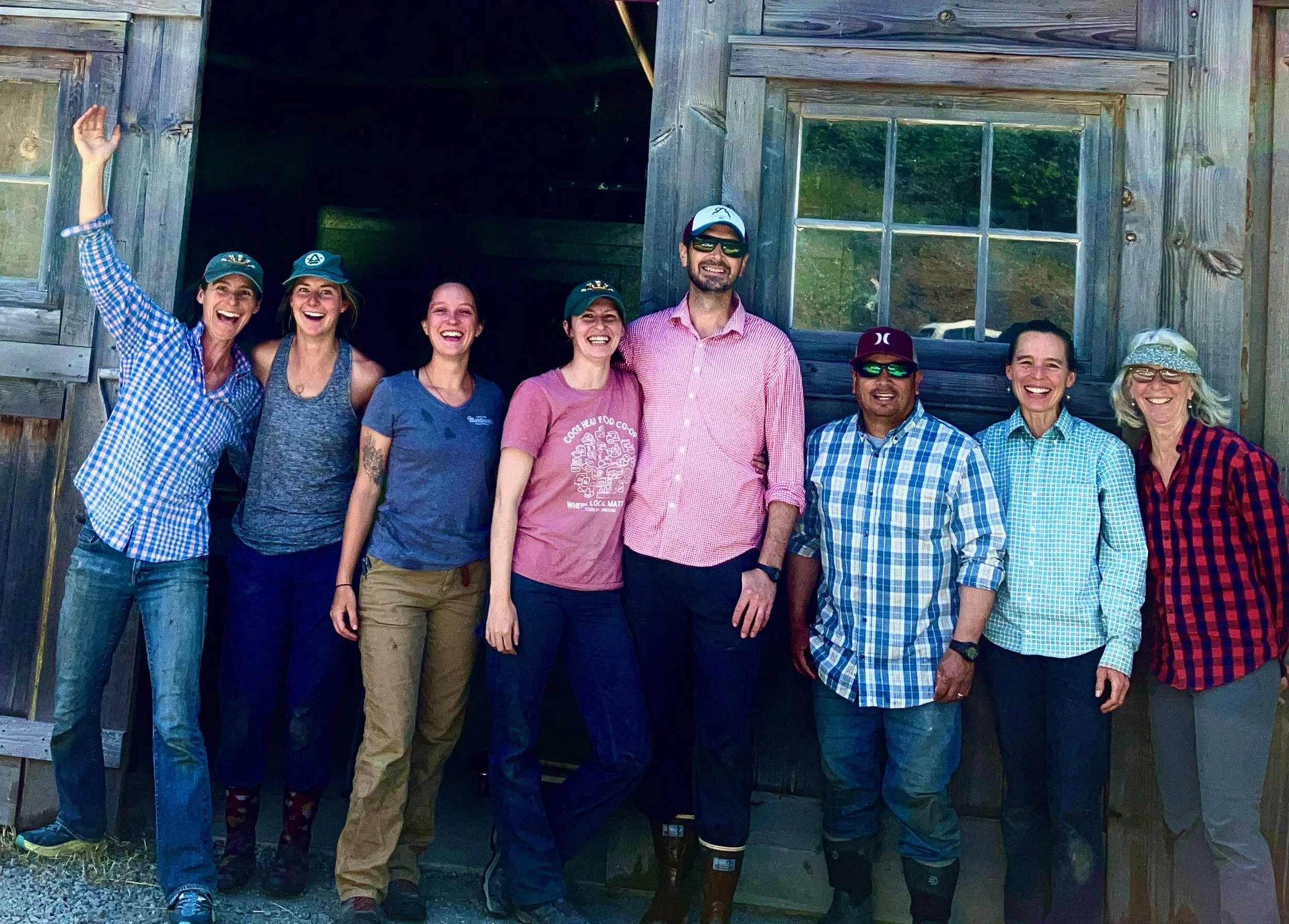
Zoë, Jen, Alexa, Sarah, Allen, Roberto, Abby, Bets.
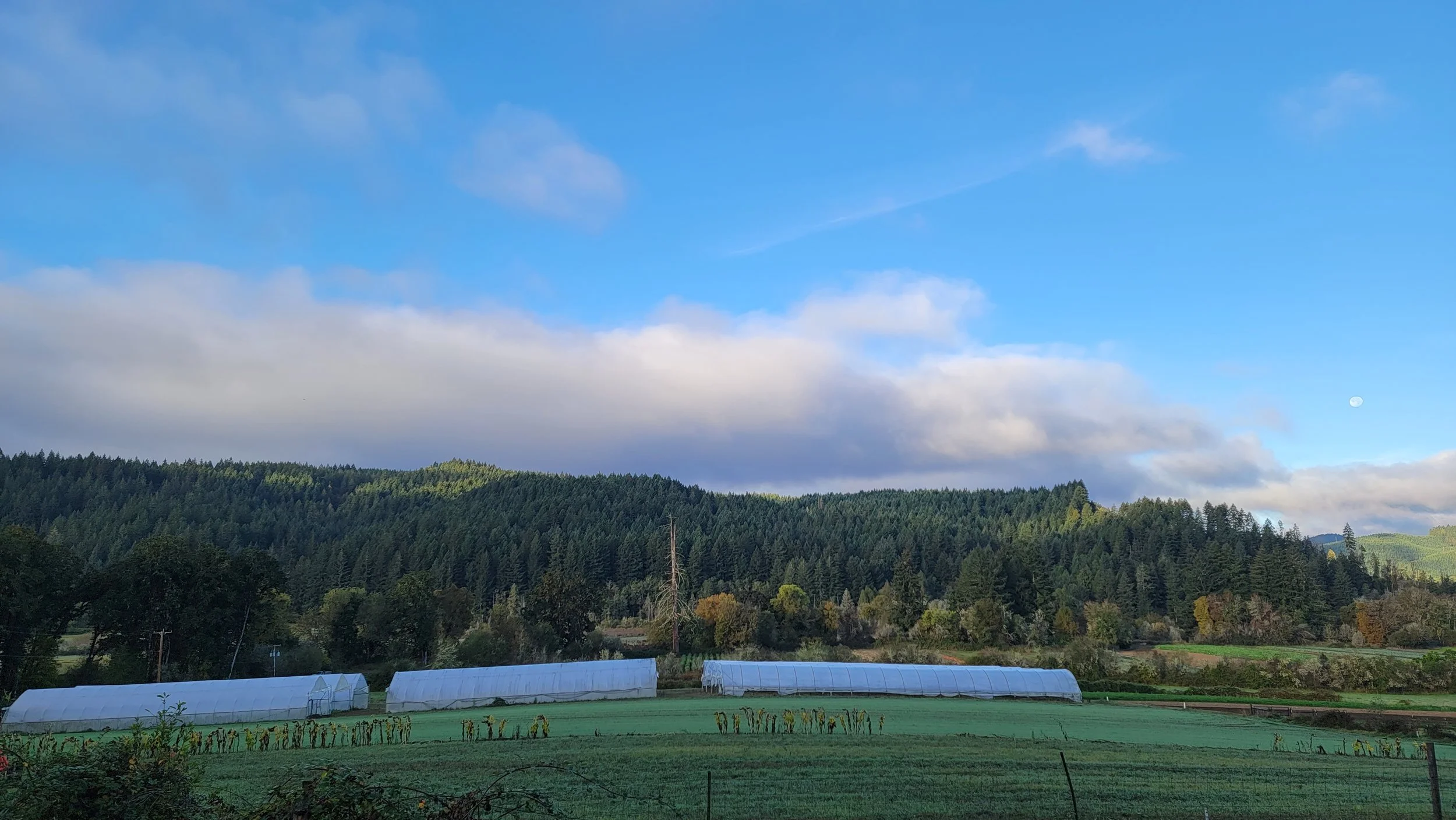
Winter Green Farm
WINTER GREEN FARM
2 APPRENTICESHIPS
FULL TIME (40 hours/week)
APPROX START/END DATES: March - November
$15.75/HR
LOCATION: Noti (WIllamette Valley Chapter)
YEARS IN PRODUCTION: 45 years
PREVIOUS YEARS HOSTING: 2
PRACTICES: Biodynamic, Certified Organic, Mechanized/Tractor Farming
ACRES IN CULTIVATION: 25
Vegetables, Fruit, Culinary Herbs, Meat Production, Hay Production
ON-FARM HOUSING? No
VEHICLE REQUIRED? Yes
LANGUAGES SPOKEN: English, Spanish
Women-Owned/Operated
Mission Statement:
A productive farm in harmony with the earth, humanity, and ourselves.
FARM OVERVIEW
Winter Green Farm is owned and operated by Chris and Shannon. Our farm is nestled in the foothills of the coast range about 25 miles from Eugene and 40 miles from the Oregon coast. The farm is about 100 acres, and we lease 34 acres down the road as well. The closest town that offers basic amenities is Veneta which is five miles away.
Our farm enterprises include a CSA (500 members), 3 farmers markets a week, direct wholesale to stores and restaurants, plus wholesaling to schools, Organically Grown Company and a small grass-fed lamb operation. We grow 22-25 acres of mixed fruits and vegetables a year that are certified organic by Oregon Tilth. We also use biodynamic farming methods. We practice a six year rotation where our ground is mixed vegetables and forage production for our animals for three years, and then a beef herd managed by neighbors is on the farm for 3 years. We make all of our own compost on-farm which is our main source of fertility. We have an average of 20-25 people on payroll during the year.
Apprentices would work closely with harvest managers as the primary mentors, rather than the farm owners. We grow a variety of fresh market vegetables and most are hand harvested, although we do have specialized mechanical harvesting equipment. Most of our tillage and cultivation is mechanized and done with tractors.
Winter Green Farm was founded in 1980, has been certified organic since 1984, has had a CSA since 1992. Chris came to the farm in 1995 with no agricultural experience, a degree in biology and a commitment to help make the world a better place. His initial role on the farm was to help process medicinal herbs. He then went on to become the irrigation person. As his passion grew and knowledge base broadened, he was given more and more responsibility on the farm. In 2008 He and Shannon were given the opportunity by the other owners to partner in the farm and in 2015 they purchased all of the assets and secured a long term lease to run the vegetable operation on the farm.
TRAINING AND EXPECTATIONS
We are looking to teach people production agriculture. They will take part in planting, harvesting, and processing of fruits and vegetables. Depending on experience and aptitude they may also get to take part in tractor work and other equipment operation. Depending on experience and desire to learn, Apprentices will be exposed to record keeping, fertility management and food safety protocol.
Apprentices will be given all the training they need for tasks that they are asked to do. Ideally they would work on average 40 hours a Monday through Friday. If someone is interested in doing farmers markets, their schedule would be adapted so they would work on Saturdays and still average 40 hours/week.
Farming is hard work. An Apprentice should be able to work hard at an efficient pace during all types of weather. Time off is honored if scheduled in advance (unless for urgent needs). Apprentices will get paid sick time as well. We provide instruction by explaining, showing and working with the skill being instructed on. The people learning the task are given goals and techniques that we have worked on over the years to make the job more efficient , safe and less taxing on the body and mind. They will be given the chance to ask questions and work on their own after hands-on instruction is given. We follow up a couple of times after the training to make sure that the skill has been acquired and that the person is reaching their fullest potential at that skill demonstration, gaining independence, offering time for questions or field walks, regular check-ins/meetings, evaluation sessions, etc.):
QUALIFICATIONS
People with previous farm experience would be ideal but not necessary. We appreciate: outdoor work experience, a commitment to organic agriculture, attention to detail, good communication and listening skills. Will need a car.
It would be nice but not necessary to meet in person beforehand.
COMPENSATION / ACCOMMODATIONS
We start all crew workers at $15.75 an hour. Workers are given a 50 cent raise after 250 hours of employment and then raises are given based on hours accrued after that on July 1st and January 1st. Bonuses are given at the end of the year if the farm is profitable.
Every employee is given paid sick leave (up to 40 hours a year) and if necessary can get paid family leave as well.
Apprentices will receive a 1⁄2 share of our CSA and are able to access other farm produce as well.
EQUITY AND INCLUSION
We believe that workers have the right to meaningful work, fair treatment, and decent compensation. We are eternally grateful for the love and care that our employees invest in our farm. In a very real way our farm is the manifestation of the energy of our workers. Many deep relationships have developed over the years at the farm, among workers and between workers and owners. We see our workforce as our farm community and look forward to supporting this important aspect of our farm. Just as Winter Green Farm’s ecosystem exists within a global ecology, so does our social activity exist within a broader community and societal context. We believe that supporting local community organizations, specific cause related endeavors, and certain agricultural organizations are important. Similarly, we believe that by opening the farm as a place where members of the community can support us, we help strengthen the bonds of community and help heal the rural/urban divide.
PAST APPRENTICE TESTIMONIALS
“It is [a great farm] to learn about larger scale production.” - 2024
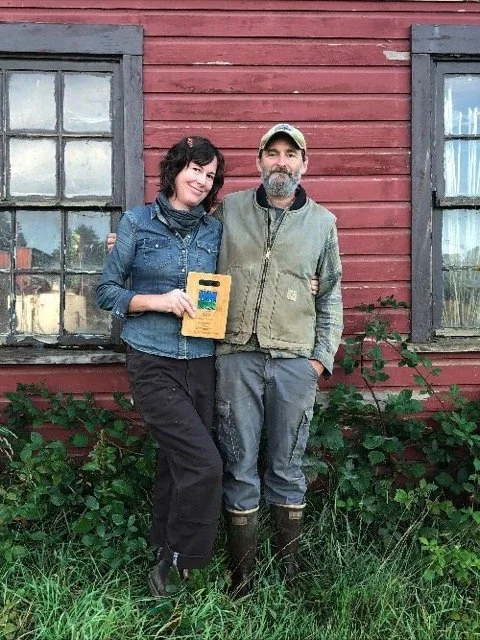
Shannon and Chris.

PCC ROCK CREEK LEARNING GARDEN-Full for 2026
PCC ROCK CREEK LEARNING GARDEN-Full for 2026
1 APPRENTICESHIP
PART TIME (14 hours/week)
APPROX START/END DATES: March - November
$16.30/HR
LOCATION: Portland (Portland Chapter)
YEARS IN PRODUCTION: 14
PREVIOUS YEARS HOSTING: 2
PRACTICES: Low-Till, No-Till, Organic Practices (Not Certified)
ACRES IN CULTIVATION: 3/4
Vegetables, Fruit, Culinary Herbs, Medicinal Herbs, Seed Production, Vineyard
ON-FARM HOUSING? No
VEHICLE REQUIRED? No
LANGUAGES SPOKEN: English , Spanish
Educational Farm
The PCC Rock Creek Learning Garden is part of a network of 5 gardens across the PCC district designed to create safe, welcoming, educational spaces that were built for and by students. The gardens promote interdisciplinary academic achievement, leadership development, curricular and co-curricular opportunities and model sustainable food systems through dynamic and responsive hands-on education. These living classrooms work to offer equity-centered learning opportunities, cultivate a sense of belonging and promote community on campus in our support of food sovereignty.
https://www.pcc.edu/sustainability/on-campus/rock-creek/rock-creek-learning-garden/
FARM OVERVIEW
Portland Community College is the largest higher education institution in the state of Oregon. The Rock Creek Campus rests on 250 acres of Tualatin Kalapuya land in Washington County, 20-30 minutes outside of downtown Portland. The Learning Garden is nestled near the main buildings on campus and consists of 3.5 acres with 50 fruit trees, 50 blueberries, grapes, brambles and many fruits and vegetables. Our campus is also home to wooded trails, the riparian habitat surrounding Rock Creek, a large recreational public park with sports fields operated by Tualatin Hills Park and Recreation District, as well as the 5 Oaks Museum.
The Learning Garden produces thousands of pounds of food each season, which are primarily donated to the food pantry on campus. We rely primarily on hand work, but also keep a new BCS walk-behind tractor just in case! We are no-spray, practice extensive cover cropping and are moving towards the production of our own usable compost. Our farm crew is always in flux - we have volunteer hours 10am-1pm Tuesday-Friday and we meet whoever is volunteering where they're at and re-prioritize based on inclusion.
The Learning Garden in its current iteration was established in 2012. Miriam has served as the Rock Creek Campus Learning Garden Coordinator since 2017. She ran her own 8-acre farm from 2011-2016, co-owned/operated a 25-acre production from 2006-2011, and worked on other peoples' farms from 1999-2003. She is interested in seed-saving, seed stories and the dignity of all living creatures.
TRAINING AND EXPECTATIONS
Crop-planning is collaborative. Greenhouse work begins in February. We plant, cultivate, harvest, wash and deliver food together. Efficiency does not dictate here! However, Miriam can offer insights based on her 15 years of production experience.
Our production is highly unpredictable because of our ethic of working in community, where building trust and creating learning opportunities are valued more highly than task completion. That said, because the majority of work is by hand, it is possible and probable that work will be physical and conditions may not always be easy.
The goal is to co-create a schedule that allows for 10-12 hours of labor in partnership, 1-2 hours of solitary labor pursuing a special project, and 45 minutes to an hour a week for check-ins, questions, and reflection.
QUALIFICATIONS
Willingness to learn, honest communication, reliability, and attention to detail
Considerate communication skills
A genuine delight for people and plants
COMPENSATION AND ACCOMMODATIONS
$16.30 per hour. The Apprentice can share in the harvest, seeds and entry into the PCC hiring system and diverse community of students, staff, faculty and campus neighbors.
The PCC Rock Creek site is located in a semi-urban area of Portland with various options for housing close by. There is low-cost housing in the area, and the campus is served by public transportation.
EQUITY AND INCLUSION
As LG coordinator Miriam has been building relationships for years with colleagues in Accessible Education and Disability Resources, the Dreamer Center, English for Speakers of Other Languages, and so many other departments on campus. This has guided the direction of the garden and created a welcoming space for everyone who wants to be in the garden.

Miriam, Learning Garden Coordinator

Saur Farming-Full for 2026
SAUR FARMING-Full for 2026
2 APPRENTICESHIPS
FULL TIME (40 hours/week)
APPROX START/END DATES: April - November
$16/HR
LOCATION: Parkdale (Portland Chapter)
YEARS IN PRODUCTION: 15
PREVIOUS YEARS HOSTING: 1
PRACTICES: Organic Practices (Not Certified), Draft Powered
ACRES IN CULTIVATION: 2
Vegetable Production, Culinary Herbs, Cut Flowers
ON-FARM HOUSING? No
VEHICLE REQUIRED? Yes
LANGUAGES SPOKEN: English
BIPOC owned/operated, Women owned/operated
Our goal has been to build healthy community through healthy soil and food. We farm using organic methods but are not certified. Cover crops, compost, and ecological habitat projects help to maintain soil health and biodiversity. Our fields of veggies are farmed intensively using much hand work. We are a detail oriented farm crew that strive to do good work; we value clean rows and high quality crops. In order to make a living farming, us and our crew must be efficient in all we do; working intently, smartly, and quickly is the name of the game.
We take ‘field trips’ throughout the season to either do something fun or to go check out other farms in the area. We work hard but laugh a lot and have a great time. You will feel like family by the end of the season.
FARM OVERVIEW
Anastasia and Ben started Saur Farming in 2011 just outside of Hood River, Oregon. After four seasons we moved up the valley to Parkdale, where we have been farming since. We farm 16 acres; 3 acres in veggie production, 2 in pasture, 4 in hay, and 5 in forest. We provide produce and cut flowers to our local thriving Farmers Market, a small CSA, and to many restaurants and wholesale customers in the area.
We use draft horses for many tasks around the farm including soil preparation and cultivation, compost and manure spreading, forest management, etc. We also use a BCS walk-behind tractor for mowing and final bed preparation.
TRAINING AND EXPECTATIONS
Our crew members will be doing nearly everything on the farm, including soil and bed prep, transplanting, trellising, weeding, harvesting, manure management, wash & pack, etc. We do not require previous experience, but we do require that staff come with an attitude that is ready to learn and continually progress in their skills and tasks. You will learn a ton about organic systems, small scale efficiency, and the thousand day to day tasks it takes to run a small vegetable farm.
Our staff does not work with the horses on a daily basis, but they do interact with them at times throughout the season.
The work will be full time during the main season (May through mid November), with possible part-time work before and after. Expect lots of manual labor: lifting, carrying, bending, shoveling, etc. Staff needs to be able to lift and carry 50 lb bags repeatedly. We work outside all day long throughout the season, so being able to work joyfully in all weather is essential. We are a small, tight crew where each member is a large part of what makes this farm function and if staff doesn’t show up for work the entire farm suffers. We can accommodate some time off requests, but that should be the exception not the rule, come ready to work.
Training and teaching will consist of daily morning meetings, in field instruction, as well as weekly check-ins to ensure the apprentice is understanding the week’s work. You will be learning from the farmers as well as our crew leader. There will be monthly ‘classes’ for bigger picture teaching that will address the seasonal dynamics of the farm and general organic farm practices. We love to teach and encourage our staff to ask questions and be inquisitive.
We also have seasonal employee reviews where we give feedback on job performance as well as provide time to listen to each staff member.
QUALIFICATIONS
Apprentices must have good communication skills, stable mental health, the ability to follow directions and take feedback (not always positive). Attention to detail, good physical abilities, and an overall pleasant demeanor and good attitude is mandatory. You must work well with a team and show up everyday with a desire to learn and do good work.
Communication is a key component for how our farm is run. We communicate our expectations and instructions and expect our crew to be communicating with us.
COMPENSATION / ACCOMMODATIONS
Starting wage is $16/hr with reviews and probable raises throughout the season. We also offer bonuses throughout the season based on performance, and an end of year bonus for those who finish out the season.
No housing offered. Housing in this area can be challenging (expensive), but we do know a lot of people in the area and can help to find something.
EQUITY AND INCLUSION
Farming on a small & sustainable scale often attracts people from different backgrounds and marginalized communities, everyone is welcome here.

Anastasia and Ben.
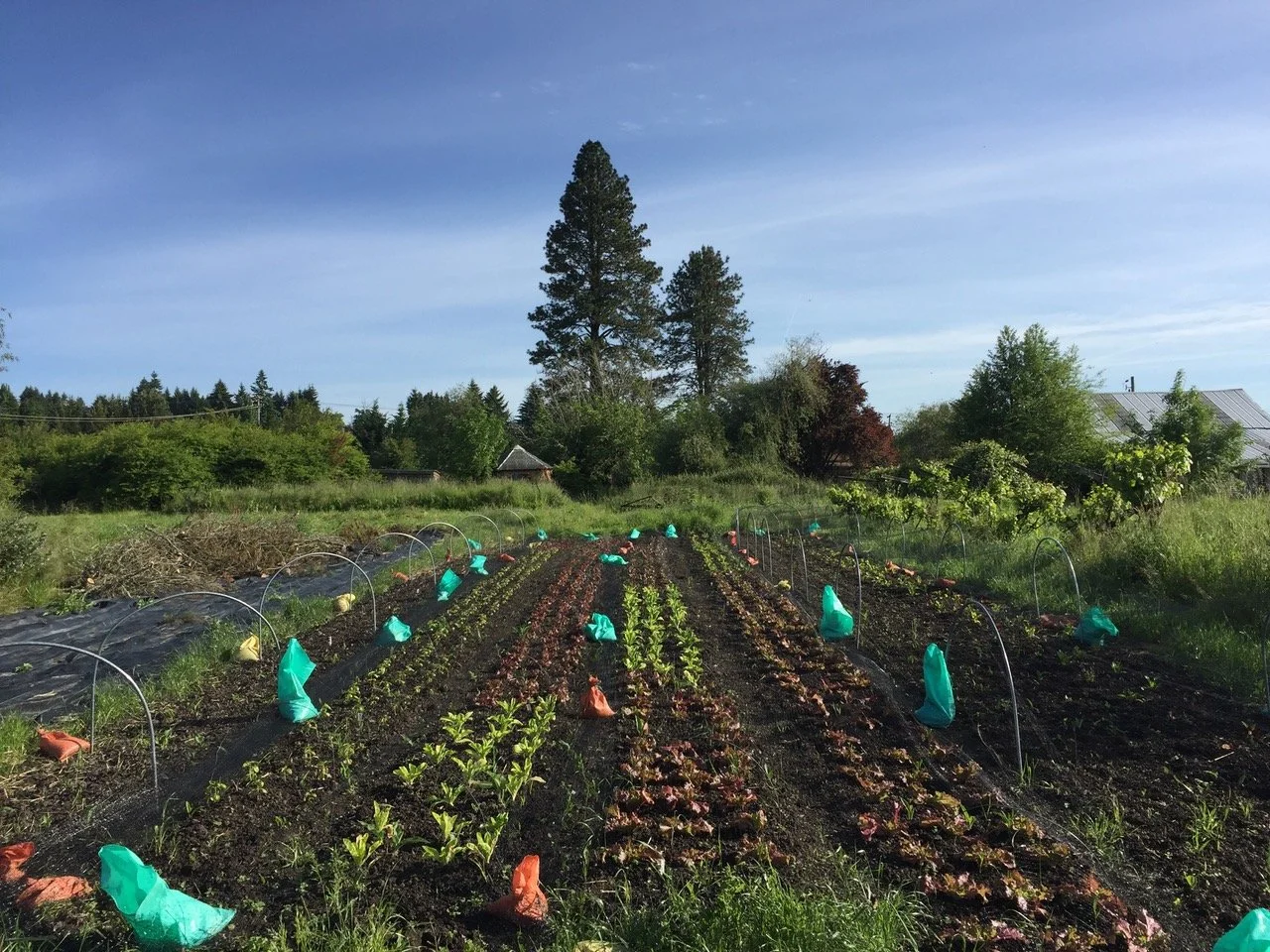
Sunbow Produce- Full for 2026
Sunbow Produce
2 APPRENTICESHIPS
PART TIME/FULL TIME (April-May: 18-28 hours/week, June-October: 28-40 hours/week, November- December: 16-24 hours/week)
APPROX START/END DATES: April- November or December
$15.05/HR
LOCATION: Corvallis (Willamette Valley Chapter)
YEARS IN PRODUCTION: 10
PREVIOUS YEARS HOSTING: 2
PRACTICES: Certified Organic
ACRES IN CULTIVATION: 8
Vegetables, Fruit, Culinary Herbs, Seed Production
ON-FARM HOUSING? No
VEHICLE REQUIRED? Yes
LANGUAGES SPOKEN: English, Spanish
BIPOC-Owned/Operated, Immigrant-Owned/Operated, Women-Owned/Operated, Public Education
We are stewards of the soil, water, and land.. Much of our field work is done by hand but we use tractors for field prep, mowing, harrowing, tillage (spading, rototilling), spreading mulch, moving compost, and some weeding. We teach and encourage ergonomic practices to keep our bodies in good working condition. We harvest most crops by hand and use methods to get multiple harvests off several crops. Our fertility program includes deliberate rotations, cover cropping, mulching with leaves, and using minimal purchased inputs.
FARM OVERVIEW
We grow certified organic fruits, vegetables, pulses, and herbs through a customer direct e-newsletter and online store. We sell at the Philomath Farmers Market and provide weekly distribution through Linn-Benton Food Share. Bea and Nate head up the crew as owners/operators. We hire two to three part-time employees. We also offer a work-trade model and compensate with our farm currency, Sunbacks. We have a comprehensive liability insurance policy and carry workers comp insurance. Our business is licensed in Oregon, we do not distribute out of state.
We have a few satellite locations and one main one. The main one is at Sunbow Farm, a 14 acre property located on the outskirts of Corvallis and Philomath. We farm between 3-5 acres at Sunbow depending on the year. There are fields, 5 high tunnels, an orchard, a lot of wildlife habitat, a few old barns and some old crumbling out-buildings. There’s a house, a bathroom building, a market room and a pack/wash area as well as a cob structure. Four people reside here, including us. The other locations are between 7 to 15 miles of the main farm.
We’ve both been farming between 10-12 years including some volunteer work and internships/apprenticeships. Before we became farmers, Bea worked in a social justice/social services agency and Nate worked for the State of Washington. We’re devoted to organic and regenerative practices, and are certified by the Oregon Department of Agriculture and the Real Organic Project.
TRAINING AND EXPECTATIONS
● All-season growing techniques in high/low tunnels: bed prep, annual crop planting, harvesting, and maintenance of crops and infrastructure.
● Perennial crop harvesting and maintenance
● Soil conservation and water management; irrigation techniques; water catchment
● Dry farming techniques
● Wildlife conservation and coexistence; pest management in an organic operation; agro-ecological practices
● Field work: weeding with tools and by hand; harvesting; prepping beds for transplanting; transplanting, planting; clearing beds; setting up protection (low tunnels, bird netting, etc.); installing, maintaining, moving, and removing irrigation; seeding cover crops
● Highly diversified crop production, identification, and management
● Consumer-direct marketing techniques and farm stand/farmers market work
● Time management/efficiency/work pace
● Harvest, wash and pack skills
● Food safety standards and management
● Possible tractor operation depending on the person
● Small equipment operation (weed whacking, root washer operation, water pump problem solving)
The first four months will be hands-on training with one or both of us. Independent tasks may be assigned after a successful training period. The work week will change with the seasons but is likely to start with two days/week and expand to up to 5 days/week. Lunch times will be 30-60 minutes depending on shift length.
Slower season: exertion is expected to be medium high with decent pace. Labor is medium. Harvest, wash, pack and deliver orders once a week; field work two to three days a week. Minimum of two consecutive days off can be expected during the slower parts of the season.
Busy season: exertion is high with a fast pace. Labor is heavy, a lot of repetitive work and heavy lifting. Farm managers work 6 days/week. Crew will only be asked to work 6 consecutive days on rare occasions and only if it cannot be avoided due to other crew absences.
Harvest, wash, pack and deliver two days a week; field work three days a week; farmers market and farm stand once a week. During the months of July-October harvesting becomes part of daily field work and is performed by all crew members. All crew members are expected to be present for all shifts during the busy season with the exception of illness.
On excessively hot days, there will be unpaid time off during the hottest part of the day. Schedules will be adjusted in order to avoid heat stress but still get work done. This may mean early starts and late endings.
Evaluation will be based on performance, engagement, consistency, availability, and reliability. We will provide hands-on training, engage in frequent discussion, and provide opportunities to practice. Daily feedback will be given during the training period at work sessions. In-person check-ins will be done as needed but minimally, at three and six months. We encourage Apprentices to let us know when they need to discuss progress, interests, etc.
QUALIFICATIONS
Enthusiasm, eagerness, and self-respect. Curiosity, resourcefulness, and grit. Drive, desire to learn, desire to excel, attention to detail, investment in the operation (emotional, not financial), food systems interest, food, land and social justice. Excellent communication skills, good boundary setting.
Applicants must be able to:
Lift 50 pounds safely and regularly
Follow directions
Ask questions
Spend extended periods of time doing repetitive work such as standing, crouching, kneeling, etc.
Understand how to work safely around a tractor, within/around old buildings and crowded spaces.
Be willing to get dirty, wet, cold and hot (sometimes all in the same day!)
Use equipment as directed and utilize suggestions for best ergonomic practices Respect all crew members
Problem solve and discuss possible solutions before acting
Avoid using violence, both physically and verbally
Avoid using alcohol, drugs (including marijuana) and cigarettes during work shifts.
Arrive sober, free of any intoxicants and fully functional to all assigned shifts. Arriving incapacitated in any way will not be tolerated as it could be a safety issue.
COMPENSATION / ACCOMMODATIONS
Apprentice will receive an hourly wage of $15.05/hour to start. We also offer up to $30 of our produce, weekly. Increase in pay will be considered after the first 90 days. See Sunbow Handbook for details on pay increase considerations. We may offer additional increases or bonuses based on consistent, excellent work performance. Lunch breaks are not paid, 10 minute breaks are paid. OFC hosted events, community building events (Grange meetings, potlucks, social time) and elective educational workshops/meetings are not considered payable hours. An end of year bonus may be issued based on the farm’s success that year and the Apprentice’s performance, reliability, and willingness to return the following season. The pay period is the 22nd of the month through the 21st of the following month. Paychecks will be issued no later than the 28th of each month for the prior payroll period and can be picked-up at the farm.
Occasional crew meals and gatherings will be offered but are not mandatory.
We’re happy to grant access to personal growing space as long as there are no conflicts with time and resources (watering schedule, tool use, etc.)
The farm will pay for up to $100 for local workshops per Apprentice.
Successful completion of the Apprenticeship could lead to a management or crew boss position with us.
We provide basic equipment (tools) required for work and have loaner rain gear and rubber boots depending on shoe size.
No on-farm housing is offered, but we are more than willing to help find affordable housing within our community (with people we know and trust).
EQUITY AND INCLUSION
We welcome everyone, and do our best to engage with people positively and directly. We’re an equal opportunity employer, and are reasonable people who respect others and expect the same.
We acknowledge that Oregon was home to Indigenous people well before white settlers arrived.
We often find ourselves having open discussions about the intersection of race, class, history, policy and access.
PAST APPRENTICE TESTIMONIALS
“I appreciated how often my host farmers would stop to explain why and how things are done at Sunbow. Nate especially really seemed to enjoy sharing his knowledge and thoughts about whatever task we were working on at the time. I also appreciated that when I shared that I needed to talk with them about something, they found the time to listen.” - 2024
Bea and Nate.

FOOD For Lane County Youth Farm-Full for 2026
FOOD For Lane County Youth FarM
Full for 2026
PART TIME (28 hours/week)
APPROX START/END DATES: March - November
$18/HR
LOCATION: Eugene (Willamette Valley Chapter)
YEARS IN PRODUCTION: 31
PREVIOUS YEARS HOSTING: 1
PRACTICES: Organic Practices (Not Certified)
ACRES IN CULTIVATION: 7
Vegetable Production, Culinary Herbs, Fruit, Nursery Stock, Cut Flowers
ON-FARM HOUSING? No
VEHICLE REQUIRED? No, we are not located next to public bus lines but they are coming in Spring!
LANGUAGES SPOKEN: English, Basic Spanish
Urban, Public Education, Non-Profit Farm
We are a program of FOOD For Lane County (FFLC), the regional nonprofit food bank in our area. FFLC is a well respected and innovative organization with the mission of “Reducing hunger by engaging our community to create access to food”. The Youth Farm has been in operation for over 30 years, serving the community healthy food while creating opportunities for youth, beginning farmers and volunteers. We have moved farm operations and 2026 will be our first year at our new site. We have worked with and trained well over 100 interns over the years. Many are still involved in agriculture, including some as farm owners.
www.foodforlanecounty.org/gardens
https://www.facebook.com/fflcyouthfarm/
FARM OVERVIEW
On the Youth Farm, we cultivate 7 acres of diverse vegetable crops as well as a new orchard of approximately 100 fruit trees (apples, pears, peaches, Asian pears, plums), strawberries, thornless blackberries and raspberries and a blueberry patch. We are not certified organic, but we use all organic methods. We have two small tractors that we run on biodiesel that we use for discing, tilling, bed shaping and mowing. For our new, larger farm, we have also purchased new tractor implements for cultivating, seeding and spreading amendments. Most other work on the farm is done by hand, including transplanting, weeding, harvesting, and post-harvest handling. Approximately half of our produce is delivered to the FOOD For Lane County warehouse for distribution through our network of partners to those experiencing food insecurity in our county. The remainder we sell through a 180-member CSA, and an onsite produce stand on Saturdays. We also grow vegetable, flower and herb starts for two very large plant sale fundraisers each spring.
Our primary farm crew consists of a Farm Supervisor, Education Coordinator, Field Coordinator and Youth Crew Coordinator and Maintenance Coordinator, who work from mid-January-early December. During the main growing season, we hire 14 teens to participate in a part-time work experience and job skills program where they attend classes and are trained to do farm work as well as operate our farmstand. Some of our stellar youth are in leadership positions and return for up to 4 consecutive seasons. Our Gardens Program Manager oversees the program. We also host numerous volunteers and volunteer groups at our farm each year, which creates a dynamic and unpredictable element to our crew size on certain days of the week. Overall, our crew each day can range from 4-25 people, depending on the time of year.
The Youth Farm is located on a 25 acre site in Lane County close to Eugene and Springfeild. We recently moved to this new site from a property in North Springfield, and are thrilled to have the opportunity to re-create our farm on a property owned by Food For Lane County. The Farm is on prime agricultural land, and a farmhouse. Since taking ownership, we’ve built nine high tunnel greenhouses, planted a large fruit tree orchard and blueberry patch, established extensive irrigation, put in a rainwater catchment system, cover cropped the main produce growing areas, and enclosed the property in deer fencing. We have many more plans for the future infrastructure and demonstration gardens. This is an exciting time to be a part of developing a new farm for an established program. The preoperty is close to the Mt. Buford Park recreational distrcit, which includes Mt. Pisgah Arboretum and several other land-based community organizations. The neighboring towns of Eugene and Springfield offer plenty of cultural, entertainment and recreation opportunities, including music venues, art scene, free lecture at the university, bike paths, close-in hiking trails, lakes, and rivers for boating and swimming.
TRAINING AND EXPECTATIONS
Apprentices will be trained in various aspects of the operation including orchard care (pruning, thinning, pest management), nursery and greenhouse management, and growing a wide variety of annual produce (over 40 crops). Work will include seeding, planting, cultivation and weed management, fertilization, harvesting, wash/pack, irrigation set-up and watering, composting, CSA and market set up and distribution, and use of small farm equipment (barrel washer, salad spinner, vacuum seeder, walk behind tillers, flame weeders and lawn care equipment).
Apprentices will also have the opportunity to help run our onsite produce stand, including set-up, take down and customer service. They will be involved in packing boxes for our CSA customers, which we do 2 times per week for a 25 week season.
Depending on interest, Apprentices will have the opportunity to lead volunteers and youth participants once they are trained.
We would like Apprentices to begin on March 3rd, four days/week (Tuesday-Friday), with some additional weekend duties on occasion. 8:30am-4:30pm is a typical work schedule with a half hour for an unpaid lunch. An early start to the season will give Apprentices the opportunity to learn pruning on some of our fruit trees. They will also be integrally involved in preparations for our two plant sales, including seeding and tending starts, and organizing for the sales that occur in April and May. The Apprenticeship will end on November 20th. Apprentices can request up to two weeks off, unpaid.
Our Apprenticeship educational program consists of lectures, occasional field trips, hand-outs, and mostly hands-on learning. We have a curriculum of educational topics, including composting, nutrient management and soil testing, plant propagation and nursery management, orchard management and fruit tree pruning, crop planning and rotation, winter farming, greenhouse management and construction, irrigation, cultivation, weed management, food preservation and cover cropping. We hold morning check-in stretching circles as well as frequent crew meetings. We take monthly field walks, and will do our best to address topics that Apprentices are interested in. These on farm classes will supplement Rogue Farm Corps online Educational Event Series and weekend intensives.
QUALIFICATIONS
Passion for organic farming, gardening or outdoor work
Previous experience in working with plants outdoors, agriculture, landscaping, etc. (Prefer 1-3 years experience)
Interest or experience in working with youth and community members
Ability to lift 50 pounds and perform physical farm tasks in adverse weather conditions
Excellent attention to detail
Good communication skills
Organized and reliable
Share FFLC’s values of Compassion, Inclusion and Collaboration
COMPENSATION / ACCOMMODATIONS
$18/hr for 28 hours/week. Sick time accrual is included. Apprentices receive 2 paid 10 minute breaks, and are required to take a half hour unpaid for lunch. OFC events are not part of payable hours.
Shared housing as well as apartments and studios can be found in both Eugene and Springfield. Check Craigslist and Facebook Marketplace to get an idea as we do not offer housing at this time.
Pay will be directly deposited into your bank account every two weeks. Details are in the FOOD For Lane County Employee Handbook. Reimbursement of OFC tuition is included if you complete the full season. Farm Produce and starts are provided as available.
EQUITY AND INCLUSION
Compassion, Inclusion and Collaboration are the stated core values of our organization, Food For Lane County. We are all invested in and strive to create a safe, open, productive work environment for everyone involved and prioritize community building, straight forward communication, and validation and appreciation.
Our supervisors have received training in conflict resolution, micro-agressions, gender diversity, nuerodivergence and how inequities permeate in our food system. Which leads to less access to quality, culturally appropriate food for LGBTQIA2S+, BIPOC, immigrant and disabled populations.
PAST APPRENTICE TESTIMONIALS
“The mentors are both teachers and farmers. There are many opportunities to learn new things and be in leadership roles with volunteers and youth farmers.” -2024

Youth Farm staff.

Camas Swale- FULL FOR 2026
Camas Swale- FULL FOR 2026
1 APPRENTICESHIP
FULL TIME (26-40 hours/week)
APPROX START/END DATES: May - October
$15/HR
LOCATION: Eugene (Willamette Valley Chapter)
YEARS IN PRODUCTION: 16
YEARS HOSTING: 1
PRACTICES: Certified Organic
ACRES IN CULTIVATION: 14 acres
Vegetables
ON-FARM HOUSING? No
VEHICLE REQUIRED? Yes
LANGUAGES SPOKEN: English, some staff competency in Spanish Women owned/operated
We focus on healthy soil, high quality crops, and staff wellness. We keep a close eye on soil organic matter percentages– we use reduced tillage practices and return plants to the soil through cover cropping, working past crops into the field, and through applying compost. We are certified organic with Oregon Tilth and have always grown with awareness of organic because we value and enjoy the use of natural materials. We also grow habitat for beneficials– on the farm you’ll find hundreds of perennials in our hedges. Synthetic chemicals and GMOS are never used on our farm. Crops are grown using a mix of human power and tractor power. We use four specialized tractors to get the work done, for hauling, pallet lifting, spading, harvesting roots crops and more. However, most of the harvest work is done by hand, with hoes, knives, wheelbarrows etc. Come work out with us!
FARM OVERVIEW
Camas Swale is owned by Amber and Jonah and located in Oregon’s Southern Willamette Valley Our farm grows vegetables, culinary herbs and some fruit for wholesale (grocers, restaurants, food hubs, distributors) and for our Community Supported Agriculture (250-300 CSA families per year) program. With about 14 acres in rotation– about 10 acres are producing food at any time during the main season.
We are grateful to be located just 1 mile north of Coburg and 15 minutes from the university town of Eugene. On both sides of our farm are other small farms selling produce, nursery crops and/or flowers. You can see the Coburg hills from our fields and a big open sky. Migratory birds and birds of prey frequent the farm as well as small animals– some friend, some foe of the vegetable crops. We are a few miles from swim spots on the Mckenzie River. Owners Jonah and Amber along with their two children live on the farm, staff commute (sometimes together) from Eugene or Springfield.
Jonah and Amber started farming on a small-scale farm, following bio-intensive methods of production yielding a high value per acre but it was intense on our bodies. Utilizing a mix of human power and tractor power has worked better for our staff and our bodies over the last ten years, while also meeting soil health goals. We keep a close eye on soil organic matter percentages, using our tillage implement minimally and returning plants to the soil through cover cropping, working past crops into the field, and through applying compost.
During the work week six to ten employees work on the farm from 8:00 - 5:00. In addition, about four volunteers are on the farm two mornings per week. The farm has a family friendly environment while also maintaining work efficiency to meet our production goals. There tends to be common interests amongst staff including appreciation for music and outdoor sports, and always a respect for one another regardless of race or gender identity. Diverse skills and people are very welcome. We often find that passionate workers have super strengths in at least one important area and we match skills with the task as possible – such as seeding or CSA packing.
Camas Swale Farm sprouted in 2009. The farm has operated from this location since 2015. Jonah and Amber both started farming about 20 years ago, as employees for other organic produce farms.
TRAINING AND EXPECTATIONS
Everyone learns planting, cultivation, harvesting, washing/packing, and use of relevant tools. Rogue Farm Corps Apprentices will also get exposure to seeding. Depending on strengths and interests of the Apprentice and the farm’s needs, staff often have the opportunity to take on special duties once adapted to the farm.
We prefer full -time employees over part -time, but there is a place for part-time work. For this Apprenticeship we think that our typical full time schedule would best meet the needs of the program. Our full time employee schedule during the months of May - October is M-F, 8am - 5:00 with a 30 min- one hour lunch break daily. Training will be woven into the work day and we will make a schedule for dedicated training check-ins and trainings with specific experienced staff.
We will provide mentorship and training by teaching core concepts/skills, working alongside participant(s), demonstration, opportunities to gain independence, offering time for questions or field walks, regular check-ins/meetings, and two evaluation sessions. Apprentices will also be given the opportunity to log what they learn via a weekly form that we provide to assist with integrating on and off-farm learning.
Training will be coordinated by co-owner Amber and multi-year employee Miranda. Some elements are best taught by owners Jonah (field management and maintenance lead) or Amber (business management and harvest lead). Others will be delegated to one of two experienced staff, Miranda (4th season) and Jason (12th season). The mentor team approach collectively offers a well rounded experience for an Apprentice while not pulling any one person away from their regular duties on the farm. We look forward to meeting you.
QUALIFICATIONS
We expect all employees to come to work on time and be a good listener during morning meetings and during training, to ask questions as needed and to stay focused on the goals of the day. Respect, kindness and good communication are very important as are the ability to learn and do the job efficiently. Our product is certified organic local produce that looks and tastes good and is very fresh. Providing this product requires good attention to detail balanced with efficient methods of production and harvest. If you take pride in doing a good job and love working on a team outside – this could be a good place for you. There is often an acclimation period, that's understood - and we are extra supportive during the onboarding time. But, we expect to see progress and to see that there is an interest in being an effective employee and apprentice.
As for experience, we know that experienced employees come in the door with more dexterity in their hands and more understanding of what a good bunch of turnips looks like. Experience in related jobs or personal experience with vegetables should also be valued and expressed. We’ve had employees demonstrate plenty of transferable skills from working in restaurants and produce stores, for example.
COMPENSATION / ACCOMMODATIONS
The wage for a first yearApprentice will be $15/hr. There is a potential for an increase in pay over the course of the season. Our benefits include a gear stipend of $200, PTO, reimbursement of half of the RFC Apprenticeship fee amount if/when they complete the season, any farm-produced food). Scheduled time off is allowed and encouraged to promote a healthy balance of work and play but we define what is reasonable in our work agreement. Time off should be requested well in advance and approved and added to the staff calendar once approved. A reasonable amount would be 1-2 occasions of taking 1-2 days off per occasion in a coordinated fashion so that vacations do not overlap with other staff.
No housing is offered. We are 10 minutes from Eugene and Springfield. Seasonal workers in the past have had good luck with finding housing via the traveling nurses portal and finding rooms in houses in Eugene where there are college students coming and going.
EQUITY AND INCLUSION
We make our policies known in a document called Employee Work Agreement, this document includes how evaluations are done, time off policies and benefits and our process for making wage adjustments and hazardous work environment procedures and more. Job roles are presented to all staff in a document called the Command Tree and via job descriptions.
Staff and owners are welcoming to each other every day at work. As owners we try to model communication that is kind, necessary and true. On the farm we foster community among workers including Wednesday staff lunches and occasional events. We aim to keep our produce accessible to all income levels – including weekly donations to Burrito Brigade, a non-profit that makes thousands of burritos per week for the houseless in Eugene and Springfield; taking SNAP benefits for CSA payment; providing a scholarship fund for low-income; and via our Working CSA Member program.
PAST APPRENTICE TESTIMONIALS
“The environment at Camas Swale is so welcoming, and the roles are ever moving, so you get a taste of all [the] pieces of the farming operation. “ - 2024

Amber and Jonah.
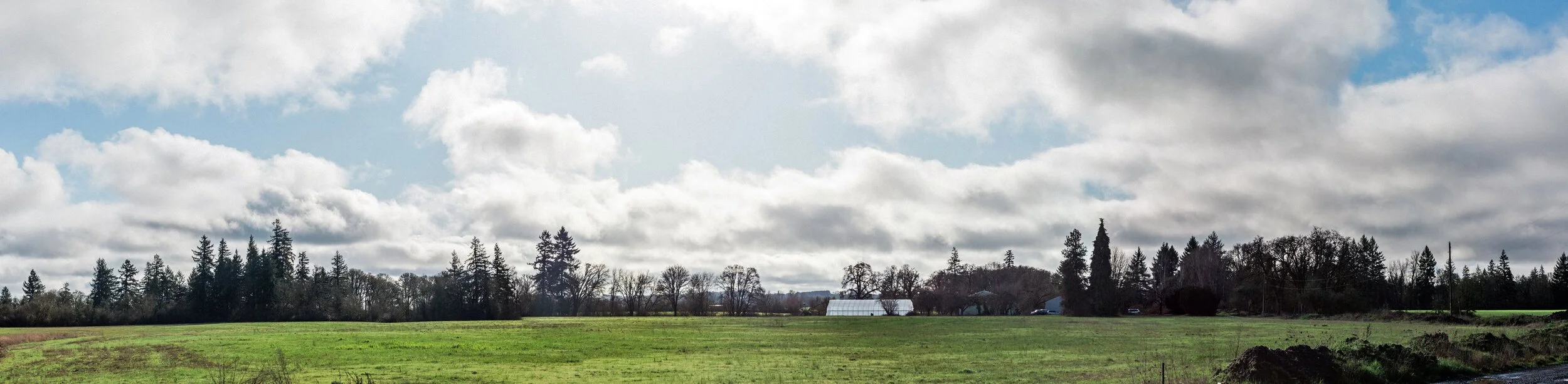
Lucky Crow Farm
Lucky Crow Farm
2 APPRENTICESHIPS
FULL TIME (40 hours/week)
APPROX START/END DATES: April - October
$15-$18/HR
LOCATION: Monmouth (Willamette Valley Chapter)
YEARS IN PRODUCTION: 7
PREVIOUS YEARS HOSTING: 3
PRACTICES: Dry-Farming, Mechanized/Tractor Farming, Organic Practices (Not Certified)
ACRES IN CULTIVATION: 3
Vegetable Production, Fruit, Culinary Herbs, Nursery, Cut Flowers
ON-FARM HOUSING? No
VEHICLE REQUIRED? No, but reliable transportation to work is required
LANGUAGES SPOKEN: English
LGBTQIA2s+-Owned/Operated, Women-Owned/Operated
Eden’s mission is to feed her diverse, local community delicious, nutrient rich food seasonally. She is driven by her investment in environmental sustainability, social equity and economic profitability. As a young, queer, female farmer, she embraces her responsibility to set an example and to create a working model for sustainable food production and thriving rural business within her hometown and beyond.
https://www.facebook.com/luckycrowfarm
FARM OVERVIEW
We grow mixed vegetables for a 75-member CSA, the Independence Farmers’ Market, local restaurant accounts and our online store. This year we are also opening a farmstand/restaurant in downtown Monmouth. We do some of our bed prep at the urban farm manually, while our larger farm location utilizes tractor implements much more frequently. Though we are not certified organic, we employ natural farming methods and do not use synthetic chemicals or fertilizers. Our small farm crew is made up of Eden (owner/manager) and 2-3 other employees.
Lucky Crow Farm operates a 1-acre urban farm in the heart of a small neighborhood in Monmouth, OR. Adjacent to the neighborhood (past the urban growth boundary) is the 60-acre, rural farm where our greenhouses, pack shed and cold storage is located. We spend the majority of our time alternating between these two locations.
The farm in Monmouth is within a five-minute drive to downtown Monmouth and Downtown Independence. They are both small towns with populations of about 10,000. There are plenty of outdoor activities available in the nearby area including hiking and kayaking on the Willamette River, which runs right through Independence. Monmouth houses Western Oregon University so there is a college town feel. A trolly was recently acquired to shuttle residents between both towns (for free!) The farm crew members live nearby and commute to the farm each day.
TRAINING AND EXPECTATIONS
Apprentices will receive training/participate in: bed preparation, harvest, planting, wash/pack, farmers’ markets, CSA distribution, customer interaction, marketing, pest management, nutrient management, and propagation. Eden does most tractor/machinery work.
Full-time employees are expected to work 40 hour weeks from the beginning of April through the end of October. Spring days are generally shorter (with an average of 20-30 hours per week, depending on weather). Employees are not expected to work more than 40 hours in a week, even in the height of summer. Taking vacation days (unpaid) is permitted with advanced notice.
As we switch tasks regularly, training takes place throughout the day as needed. Apprentices are regularly required to sit, kneel, stand, bend, climb and reach; regularly lift up to 50 pounds without assistance; have the ability to work outside in all weather conditions, often for long durations; be capable of performing repetitive tasks with endurance. Reasonable accommodation can be made to enable individuals with disabilities to perform the essential functions. Appropriate gear is required for all weather conditions.
Beyond our scheduled training sessions, Apprentices will work one-on-one with either Eden or an experienced staff member every day. We are committed to teaching as we work and having impromptu training sessions when needed. We provide regular check-ins and can make time for meetings/questions if requested.
QUALIFICATIONS
Required:
• Detail oriented and fast learner
• Self-motivated and able to streamline workflow
• Ability to work efficiently alone or in a group
• Experienced/licensed driver
• Excellent interpersonal/communication skills and willingness to work with a diverse group of people
• Ability to keep clear, handwritten and electronic records
• Positive attitude in all types of weather
• Commitment to work entire season (with potential for unpaid vacation time)
• Organized and thorough
• Ability to show up on time and ready to work
Preferred:
• 1-3 years of prior farm work
• Strong love of food, nutrition and healthy local economies
• Manual transmission operation
• Basic mechanics
COMPENSATION / ACCOMMODATIONS
Hourly rate $15-$18, depending on experience.
Each employee receives a CSA share.
The farm does not offer Apprentice housing. As Monmouth is a college town there are plenty of seasonal, diverse housing options depending on the time of year. Past employees have lived in their own studio apartments, campus housing and in a house with roommates.
EQUITY AND INCLUSION
Eden is queer farmer who strives to empower those who are not historically/fairly represented in agriculture. Lucky Crow, first and foremost, is a safe and inclusive space for anyone interested in farm business and local food economies. She believes a more diverse and equitable food production system is imperative in our work towards a sustainable future.
PAST APPRENTICE TESTIMONIALS
“The work environment was comfortable, supportive and educational. Eden always took the time to come over and help any of us when we had questions, I don’t recall any time she didn’t drop what she was doing to give us advice and guidance” - 2024

Eden
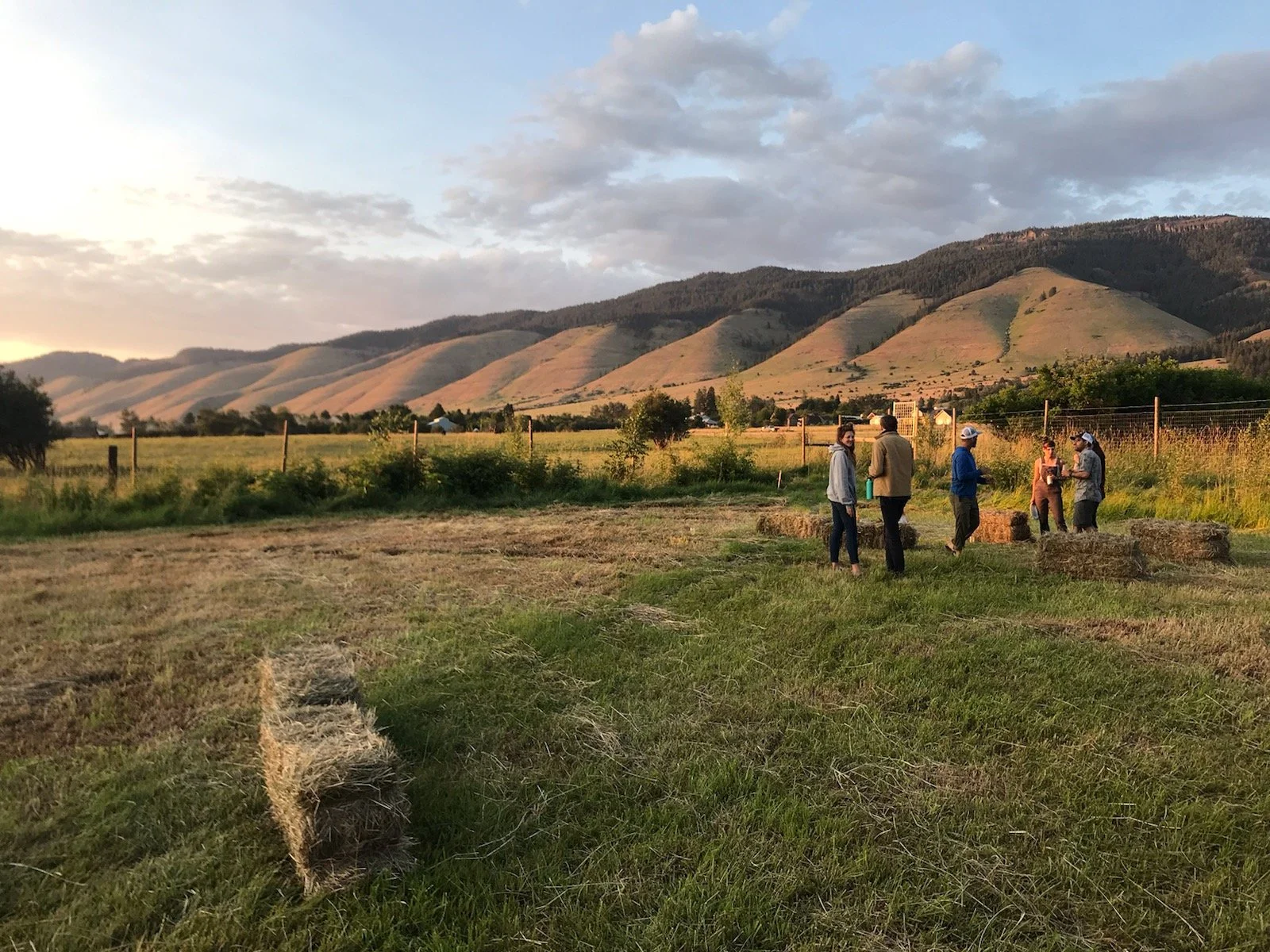
Nella Mae's Farm- FULL FOR 2026
Nella Mae’s FarM- FULL FOR 2026
1 APPRENTICESHIP - FULL FOR 2026
FULL TIME (30-40 hours/week)
APPROX START/END DATES: April - October
$17/HR
LOCATION: Cove (Satellite Farm)
YEARS IN PRODUCTION: 12
PREVIOUS YEARS HOSTING: 3
PRACTICES: Low-till, Rotational Grazing, Winter Farming
ACRES IN CULTIVATION: 1/2 Vegetables, 15 Pasture
Vegetable Production, Meat Production
ON-FARM HOUSING? No
VEHICLE REQUIRED? Yes
LANGUAGES SPOKEN: English, Spanish
Women-Owned/Operated, BIPOC-Owned/Operated, LGBTQIA2s+-Owned/Operated
Nella Mae’s Farm is a high desert produce farm managed with low-till, regenerative, and holistic practices at the base of the Wallowa Mountains in northeast Oregon. Nella Mae’s philosophy is influenced primarily by Holistic Management, Lean Farming, and soil science. The farm’s purpose is to feed our community, steward soil, and enhance the well being of the land and those who tend it.
FARM OVERVIEW
Nella Mae’s Farm is just outside the “city” of Cove, population 500. Cove is on the east side of the Grande Ronde Valley, population 26,000, one of the largest round valleys in the world. While this is technically high desert, the snow melt, rivers and a high water table make this place rich for agriculture. We also face a short spring, extreme temperature swings in the summer, and increasingly variable weather. We are learning to adapt every year.
Most of the farms in the valley are hundreds or thousands of acres and grow grass, grains and sunflowers for seed, alfalfa, mint, and sugar beets. There is a healthy number of small-scale farms growing meat, produce, and nursery crops, and our small group of small farms is mutually supportive and highly collaborative. We have a huge amount of support locally large and small, as well as fellow business owners, customers, and neighbors as we have grown the farm. We look forward to enhancing an Apprentice’s experience at the farm through sharing experiences with her own mentors and farmer friends.
The farm also raises a few beef for market with a neighbor.
Produce sells at the on-farm farmstand, the La Grande Farmers Market, several retail outlets, one CSA, the local and regional food banks, and restaurants in two counties.
The farm crew is small and tight-knit. We have a friendly, fun crew and focus on collaboration, teamwork, improving systems together, and eating well.
TRAINING AND EXPECTATION
Position filled for 2026.
QUALIFICATIONS / COMPENSATION / ACCOMMODATIONS
Position filled for 2026.
EQUITY AND INCLUSION
Equity, inclusion, anti-racism, and feminism are guiding principles in how Nella Mae lives her life, raises her family, runs her farm, and operates her business. Understanding her own privilege, checking it, and ensuring that she is sharing her knowledge and resources with new and beginning farmers is paramount to what she does.
PAST APPRENTICE TESTIMONIALS
”Working with Nella Mae at Nella Mae's Farm has been an inspiring and transformative experience. Nella’s commitment to innovative farming practices and community engagement has profoundly shaped my approach to sustainable agriculture. This year, I am thrilled to continue as a farming partner, co-leading collaborative projects that focus on food security, community education, flowers and regenerative practices. Nella’s mentorship and dedication to fostering growth both in the field and within people have been invaluable, and I look forward to building on this foundation in the coming season!” -2024

Nella Mae with Cherry Tomatoes