
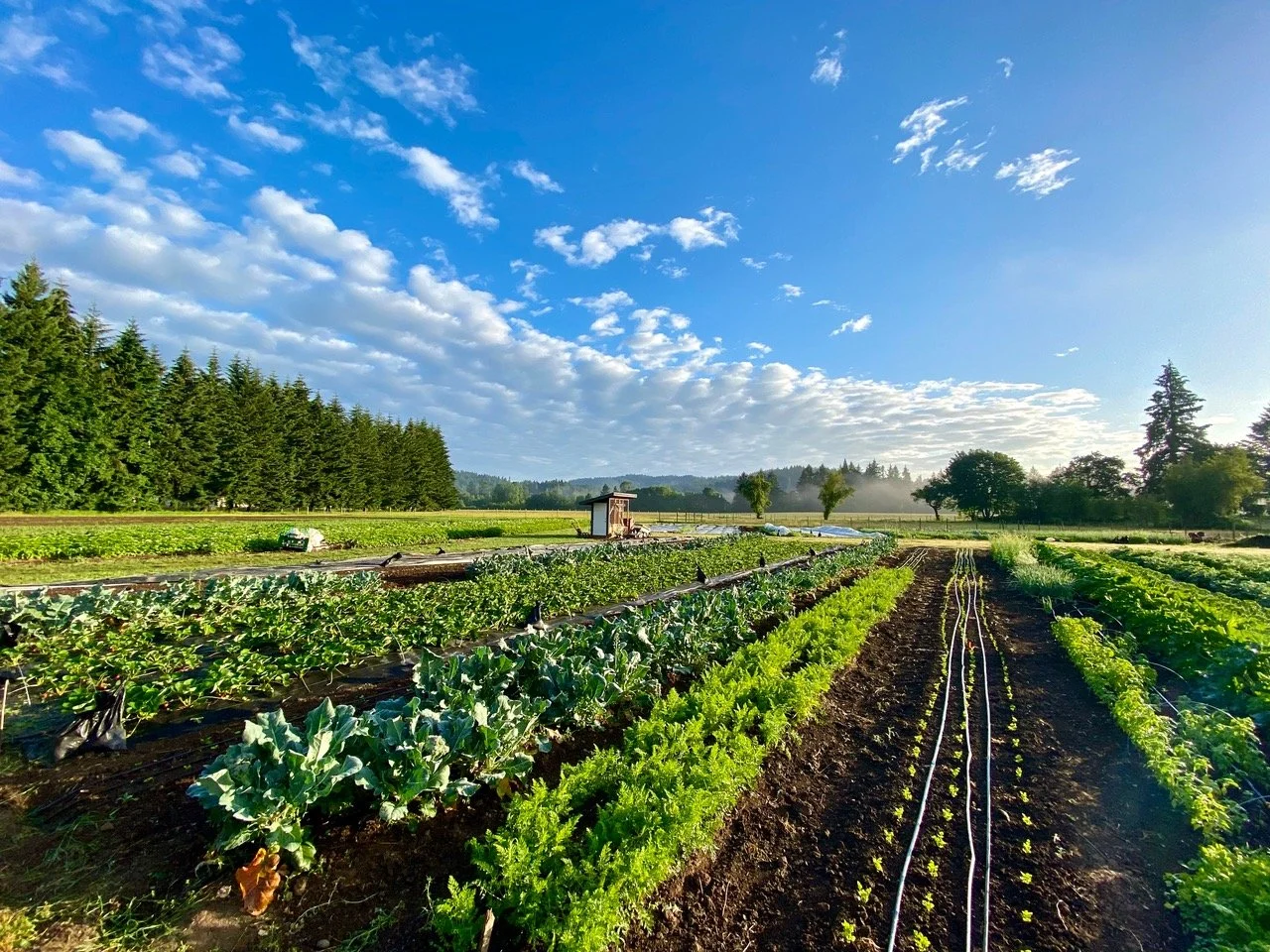
all current participating mentor host farms with Oregon Farm Corps farmer training programs
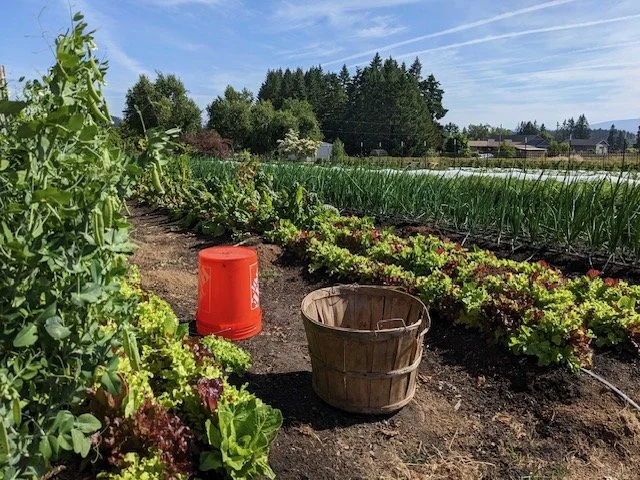
Thimbleberry Collaborative Farm-Full for 2026
Thimbleberry Collaborative Farm-Full for 2026
1 APPRENTICESHIP
PART TIME (30 hours/week)
APPROX START/END DATES: Mid-March - Mid-November
$18/HR
LOCATION: Boring (Portland Chapter)
YEARS IN PRODUCTION: 3
PREVIOUS YEARS HOSTING: 1
PRACTICES: Low-Till, Regenerative, Organic Practices (Not Certified)
ACRES IN CULTIVATION: 1/3
Vegetable Production, Culinary Herbs, Medicinal Herbs, Fruit, Poultry(Eggs), Cut Flowers, Orchard Production
ON-FARM HOUSING? No
VEHICLE REQUIRED? Yes
LANGUAGES SPOKEN: English
Non-Profit Farm, Educational Farm
2023 was our first year of production on this land, and we’ve been experimenting with no/low-till strategies for growing our annual vegetables to great success. This means there is a lot of hand work, including weeding, harvesting, and removing plants at the end of their cycle to leave roots in place whenever possible. Though we are not certified organic, we do not use pesticides or herbicides, and take a “from the soil up” approach - meaning we aim to build the appropriate soil biome for plants to thrive in using natural methods, and aim to keep the soil growing plants or in a protective cover as much of the year as possible. We are in the beginning stages of learning about the soil food web and how we can support this biome, and look forward to any experience or knowledge a potential Apprentice can contribute.
We believe farming is a constant learning experience that should be fluid, so we adapt our methods on a daily basis to account for the needs of the plants and those of us who tend them. In the winter, our fields are partially cropped to late-fall and over-wintered vegetables, cover crops, and partially covered with compost and tarps to ensure we have fertile ground ready to be planted in early spring. We have newly-established perennial native plantings along our learning garden and in blocks along our main field, as well as a small stand of mature blueberries and various herbs bordering our in-ground and raised beds. Finally, we have a mature orchard featuring apples, plums, pears and cherries.
www.thimbleberrycollaborativefarm.org
@thimbleberrycollaborativefarm
FARM OVERVIEw
We are situated on 5 acres just outside Boring, Oregon - 30 miles east of downtown Portland, 57 miles from Mt. Hood, and surrounded by some of the best natural beauty and recreational opportunities in Oregon. Approximately ⅓ of an acre of our farm is in no/low-till, mixed annual vegetables, and another ¼ acre is planted to boysenberries which are currently leased and managed by a nearby Organic certified farmer. We have a large learning garden with several raised and in-ground beds, as well as perennial native plantings, blueberries, and herbs, and a small, mature orchard of apple, plum, pear and cherry trees. There is a large shop which contains our packing/storage/refrigeration, a seed propagation greenhouse, and a home which serves as our office/communal kitchen/meeting space.
We are a 501c3 nonprofit organization, and our produce is provided at no cost to the recipients through donations to local food pantries in east Multnomah and Clackamas Counties, as well as through a farm-to-table meal delivery program that we piloted for two years. With this program, patients of Wallace, a medical clinic in Rockwood, received weekly meals prepared and delivered to them by Milk Crate Kitchen, a non-profit production kitchen. We also set up a weekly, free farm stand onsite at the clinic where patients receive fresh produce to take home. Our educational programs are constantly growing, so field trips and workshops involving school-age children as well as adults are a regular occurrence on and off the farm. Finally, we have 4 laying hens and 5 ducks, which we hope to incorporate into the fertility plan of the farm by utilizing manure and “chicken tillage” of cover crop residue, as well as their pest management capabilities.
So far, our farm crew consists of one full-time farmer (Drew), two staff on harvest and transplanting days as needed, a part-time farm assistant, and additional support from board members and volunteers during work parties and other events.
Drew is the primary farmer/Farm Operations Manager at TCF. We are a small team of just 1 part-time and 3 full-time employees (plus an awesome Board of Directors), so on any given day each of us may be helping out in the field, learning garden, orchard, or supporting each other with other tasks not directly related to growing food. Though TCF was established just 3 years ago (2023 being our first season on our current land), Drew has 10+ years of farming experience, having previously owned his own CSA/market farm south of Eugene, Oregon, where he also grew using natural methods but with a more traditional tillage approach. Drew noticed that repeated tillage had a very detrimental effect on the soil and thus the crops, but didn’t have the resources needed to implement some of the exciting low-till methods we use here at Thimbleberry. He believes that farming and tending plants comes naturally to most people, so his general philosophy is that there is no “right” way to do something. That being said, through repeated trial and error he has developed preferences for how to approach tasks, and will expect anyone helping on the farm to utilize these techniques unless agreed otherwise. We have found that it is easy to become myopic in farming, so we encourage questions about the “why” of any given task or technique. Generally, we find farmers to be some of the smartest, most ingenuitive people around, and have no doubt that we can learn much from even the greenest thumb. We value direct communication, consistency, punctuality, hard work, laughter/fun, and camaraderie amongst the staff and community that surrounds us at TCF. One of our favorite parts of working at the farm is our weekly staff meal, prepared mostly with ingredients from the fields!
TRAINING AND EXPECTATIONS
Apprentices will primarily be involved in the day-to-day physical operations of the farm, including, seed propagation, transplanting, weeding, cover crop establishment/management, drip irrigation installation and management, harvesting, washing/packing/delivering produce, small machinery/hand tool operation (BCS walk-behind tractor, mower, weed whacker, stirrup hoes, shovels, etc.), compost production, chicken/duck care, record keeping, and various other tasks related to the smooth operation of the farm. Occasionally, Apprentices may support other staff in activities such as field trips, workshops, or tabling at farm stands/farmer’s markets/events. In addition, Apprentices have the opportunity to engage in aspects of the non-profit side of the farm, such as supporting fund-raising events like our annual harvest celebration or community nights facilitated by local partners. Much of the farm management aspect of the farm such as crop-planning, seed ordering, and budgeting is done during the winter months, so exposure to learning experiences in these areas will be limited, though time can be set aside to discuss these aspects if desired. Since we are not a typical “market” farm, experience in the retail, direct to consumer aspects common with many small farm operations such as farmers markets and CSA programs won’t be provided, though our farm-to-table program will provide experience in setting up a farm stand and interacting with other nonprofits serving the community.
Typical start time is between 8-9am Monday-Friday, depending on the required task, and will generally end by 4:30pm, with Monday/Wednesday/Friday being harvest days and therefore requiring the most support. During peak season, harvest days may begin at 7am and end by 3pm. We do not generally work more than 8 hours on any given day. The majority of a prospective apprentice’s time will be spent supporting harvesting, washing, weeding, and transplanting crops. Essentially, every day is a “training day” in the sense that through repetition and working side-by-side with the Farm Operations Manager, the Apprentice will gain a thorough understanding of the day to day operation of the farm. Detailed training in other aspects of the farm will be determined through our regular check-ins and identifying gaps in knowledge or proficiency in real time. Questions about processes and techniques are encouraged to ensure work can be done safely and efficiently, and that the Apprentice ends the season with as comprehensive an understanding as possible.
Time off requests will be granted within reason and with 2 weeks advance notice, to ensure the workload can be covered by existing staff. At this time, we are unable to offer paid time off, and will need to limit time off to sick days and shorter duration absences. However, we are flexible and happy to work with prospective Apprentices to find a consistent schedule that works for everyone.
Occasionally, Apprentices may be asked to support staff during other activities that occur during irregular work hours, such as weekend volunteer days, evening events, etc., or in non-farming related events such as community workshops or field trips. These activities are an important part of TCF, and are integral to our function as a non-profit, educational farm serving the surrounding community.
Most instruction and learning will be through hands-on application of farming techniques in day-to-day operations. Support such as reading materials in specific areas such as soil test interpretation, low/no-till techniques, etc., will be provided throughout the season when appropriate. Regular check-ins with the Farm Operations Manager and/or our Executive Director will help narrow in on prospective areas of mutual growth and development, and additional support and time to focus on filling knowledge gaps will be provided. Depending on hourly availability, Apprentices may attend weekly staff meetings to stay engaged with overall operations when appropriate. Drew will be working closely with Apprentices on a daily basis in the field, so there will be ample opportunity to ask questions, explore and deepen technical abilities, and work together to ensure all learning goals are met. Regular evaluations and feedback will be provided on a mutual basis, both formally and informally.
COMPENSATION / ACCOMMODATIONS
We can offer $18/hour and access to food from the farm. We would also reimburse for OFC tuition.
Local housing options in case a placement is coming into the area and needs housing: Rentals in Portland are fairly expensive and can be difficult to come by, and would require a commute of 30 minutes to an hour, depending on location. The surrounding community of Boring may be somewhat limited as well due to its smaller size, but nearby Gresham may provide more affordable options and a quicker commute.
QUALIFICATIONS
Generally, a farm apprentice here at TCF needs to have a strong work ethic, good communication (direct and respectful), be punctual, and have an ability to be flexible and self-motivated to jump in and support wherever they are needed. An ability to work outside in various weather conditions, as well as tolerate days consisting mostly of physical labor and some repetitive tasks are essential. Consistency and attention to detail, as well as a desire to learn through trial and error are a benefit, and a desire to support our under-served community members is essential. A good sense of humor and ability to have fun while we work is one of the core values here at TCF, as well!
EQUITY AND INCLUSION
Equity and inclusion are at the core of our values and mission at TCF. Every aspect of our physical farm and learning garden space was created with accessibility in mind; From our semi-raised, permanent bed systems in the row crop area, to the permanent raised and ADA accessible beds and traversable paths in our learning garden, we’re making continuous improvements to ensure access for everyone. As collaboration is a key aspect of our organization, we treat each person we come in contact with as a potential partner/teacher and valued voice in the co-creation of our farm and the greater food system we inhabit. Our mission to increase access to free/affordable, healthy food for low-income, underserved communities is the guiding principle that ensures we are making the greatest impact on food justice and security that we can as a small organization. Partnerships with local schools and organizations that are already working to support these communities increase our potential to help create a strong and lasting network that can bolster existing efforts towards these goals. Undergirding everything is a sense of humility and openness to new ideas, perspectives, and educational opportunities. As a staff, we’ve incorporated weekly readings and film screenings in order to educate ourselves about the current and historical issues facing the various cultural communities that make up East Multnomah and Clackamas Counties, especially issues related to food systems and agriculture. We use what we learn in these weekly discussions to shape our programs, design our educational curricula and crop plans, inform our relationship-building efforts with community partners, as well as our team recruitment efforts, and more. Finally, we acknowledge that lived experience is a crucial component in an individual’s desire and ability to contribute to the work of food justice, and weigh it equally with other considerations when reviewing applicants for all positions within our organization.
PAST APPRENTICE TESTIMONIALS
“Very welcoming environment, felt at home immediately. Drew was a great mentor and I really appreciated getting to learn all aspects of the farm.” - 2024
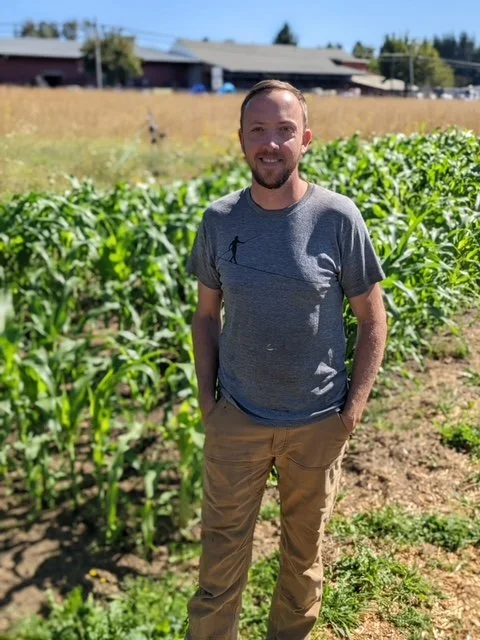
Drew

Good Rain Farm-Full For 2026
Good Rain Farm-Full for 2026
2 APPRENTICESHIPS
PART TIME (32 hours/week) Full Time (40 hours / week) considered
APPROX START/END DATES: May - October
$18/HR
LOCATION: Troutdale (Portland Metro Chapter)
YEARS IN PRODUCTION: 10
PREVIOUS YEARS HOSTING: 1
PRACTICES: Low-Till, Organic Practices (Not Certified)
ACRES IN CULTIVATION: 1
Vegetables, Culinary Herbs, Meat Production, Seed Production
ON-FARM HOUSING? No
VEHICLE REQUIRED? Yes
LANGUAGES SPOKEN: English
BIPOC Owned/Operated, Women Owned/Operated
Good Rain Farm is a diverse operation focused on vegetable production, native plant propagation, and Indigenous First Foods. We primarily grow mixed vegetables and Indigenous crops, cultivating them through sustainable practices such as low-till methods, cover cropping, and regenerative soil care. Our marketing and sales outlets include a CSA program, local farmers markets, and direct-to-community sales. Our CSA, Save Our Seed, prioritizing culturally relevant foods and education.
Training future farmers is essential to sustaining our food systems, and it’s critical to build a qualified, skilled workforce that values sustainable, culturally rooted practices. Mentoring Apprentices aligns with our mission to strengthen the community through hands-on education and cultural stewardship, helping to ensure a resilient, knowledgeable, and inclusive agricultural future.
www.GoodRainFarm.com
FARM OVERVIEW
Good Rain Farm is located on 13.5 acres within the Urban Growth Boundary (UGB) and designated rural agricultural reserves, just 10 minutes from Gresham and Troutdale, Oregon. The farm includes 10 open-field acres dedicated to mixed vegetable production, providing a spacious and productive setting for diverse crops. Our proximity to the Sandy and Columbia Rivers adds to the richness of the environment, offering opportunities for recreational activities and connection to local natural resources. The setting provides both a quiet, rural atmosphere and convenient access to nearby communities, making it ideal for sustainable farming and community engagement. Currently farm owner Michelle Week and partner live on site with 1 dog, several cats, poultry and meat rabbits.
Our production is a blend of mechanization and hand labor, using tools like a BCS walk-behind tractor for efficiency while maintaining soil health. We use cover crops to enrich soil and support biodiversity, and we are committed to organic practices, exploring organic certification to enhance transparency.
Our typical farm crew includes Michelle and seasonal Apprentices who engage in all aspects of the farm’s operations. We prioritize training Apprentices in sustainable methods, food sovereignty, and cultural revitalization, aiming to foster skilled farmers who carry forward these values. Community volunteers also join us seasonally, helping with planting, harvesting, and community events that support our broader mission of sustainable, inclusive agriculture.
Farmer Michelle Week, founder and steward of Good Rain Farm, is a first-generation farmer from the sngaytskstx (Sinixt) Arrow Lakes Peoples. With a foundation in outdoor recreation and gardening, she refined her skills through a Farm Apprenticeship at Zenger Farm, which led her to establish Good Rain Farm to increase access to Indigenous First Foods.
Michelle’s philosophy centers on food sovereignty, cultural revitalization, and environmental stewardship. Good Rain Farm was established in 2018 to blend traditional knowledge with sustainable farming, fostering ecological health and community resilience. Michelle’s goals include creating an inclusive food system, expanding education, and training future farmers who prioritize community and sustainability.
TRAINING AND EXPECTATIONS
Apprentices at Good Rain Farm will engage in a variety of tasks throughout the six-month Apprenticeship, such field work includes planting, cultivating, weeding, and harvesting, as well as care for livestock, including feeding and cleaning of our meat rabbits. About 48 hours of On-Farm orientation (typically offered in 3hr weekly chunks)will occur . Apprentices will also learn practical skills in washing and packing produce, basic marketing principles through CSA interactions, and safe equipment use and maintenance. Additionally, they will contribute to social media marketing and newsletter writing, enhancing their communication skills and understanding of farm promotion. While the focus is more on agricultural skills than business operations, Apprentices will have access to a list of resources and recommendations for additional entrepreneurial education, and time to attend workshops can be accommodated. The program aims to provide a well-rounded experience, fostering both hands-on agricultural skills and an understanding of sustainable farming practices while encouraging collaboration and active participation.
Apprentices at Good Rain Farm are expected to commit to four eight-hour days per week, starting around 7-8 AM and ending around 3-4 PM, with appropriate breaks included. Farm activities are predominantly performed outdoors in various weather conditions, so employees must dress appropriately each day and wear closed-toed shoes. The role involves significant physical exertion, requiring frequent bending, lifting, and handling of heavy equipment and supplies, with the ability to lift up to 50 pounds repeatedly throughout the day and stand for extended periods outdoors especially during soil amendment & cover cropping days. Reasonable accommodation may be provided upon request to support apprentices in meeting these physical demands.
To provide effective instruction and mentorship to an Apprentice, Michelle will use a hands-on approach that combines lecture, demonstration, collaboration, and open communication. Michelle will teach core concepts and skills through practical work, engaging the Apprentice in daily tasks while guiding them with clear explanations. Regular field walks will facilitate discussions about observations and questions, enhancing their understanding. Michelle will schedule regular check-ins to assess progress and address challenges, fostering an environment where the Apprentice feels safe to share concerns. Michelle aims to provide consistent positive reinforcement alongside constructive criticism, balancing firmness with gentleness. While the work is urgent, Michelle emphasizes that growth and learning are ongoing processes. Evaluation sessions will reflect on progress and set goals, ensuring the Apprentice gains confidence and independence as they develop their skills.
QUALIFICATIONS
We are seeking applicants with a minimum of one year of outdoor field work or farm experience that includes direct involvement in farm operations, with a focus on supporting and executing activities directed by the Lead Instructor or Farm Managers. Ideal candidates should have a working knowledge of organic, sustainable, small farm practices and a passion for learning about Native First Foods, alongside a commitment to land stewardship. Excellent verbal and written communication skills, competency with mathematics, and the ability to follow verbal instructions are essential. Additionally, applicants should be comfortable within a community-driven management process and demonstrate a strong work ethic, enthusiasm for lifelong learning, and an open mind. A food handler's card is preferred but not required.
COMPENSATION / ACCOMMODATIONS
For our Apprenticeship position(s), we offer $18 per hour for four 8-hour workdays weekly, plus several benefits to enrich the experience. Apprentices receive a seasonal CSA box, Paid Time Off, Paid Sick Days, and a Gear Stipend to ensure they’re well-supported. We maintain a Hydration Station and snack basket (“snasket”), provide occasional hot lunches, and offer access to a network of educational and farming opportunities. Technical support for scholarships, grants, and other resources is available, along with comprehensive on-the-job training that emphasizes both practical farming skills and Indigenous approaches to agriculture. Together, these benefits create a holistic, supportive environment for Apprentices to thrive and prepare for futures in sustainable agriculture.
EQUITY AND INCLUSION
At Good Rain Farm, equity and inclusion mean fostering a safe, welcoming, and empowering environment for all, particularly BIPOC and Queer individuals. Our Apprenticeship offers specialized training from an Indigenous-led perspective, promoting diversity and skill-building. We ensure accessibility with 50% of CSA memberships offered at reduced or no cost and by providing home delivery for those in need. Through culturally relevant programs like our Save Our Seed initiative , which teaches seed saving and sustainable agriculture, we advance food sovereignty and social justice. Our commitment to fair treatment, accessibility, and cultural reclamation reflects our belief that equitable food access and environmental stewardship are essential for a just community.

Michelle Week (Photo Credit: Jaimie Thrower)

PCC ROCK CREEK LEARNING GARDEN-Full for 2026
PCC ROCK CREEK LEARNING GARDEN-Full for 2026
1 APPRENTICESHIP
PART TIME (14 hours/week)
APPROX START/END DATES: March - November
$16.30/HR
LOCATION: Portland (Portland Chapter)
YEARS IN PRODUCTION: 14
PREVIOUS YEARS HOSTING: 2
PRACTICES: Low-Till, No-Till, Organic Practices (Not Certified)
ACRES IN CULTIVATION: 3/4
Vegetables, Fruit, Culinary Herbs, Medicinal Herbs, Seed Production, Vineyard
ON-FARM HOUSING? No
VEHICLE REQUIRED? No
LANGUAGES SPOKEN: English , Spanish
Educational Farm
The PCC Rock Creek Learning Garden is part of a network of 5 gardens across the PCC district designed to create safe, welcoming, educational spaces that were built for and by students. The gardens promote interdisciplinary academic achievement, leadership development, curricular and co-curricular opportunities and model sustainable food systems through dynamic and responsive hands-on education. These living classrooms work to offer equity-centered learning opportunities, cultivate a sense of belonging and promote community on campus in our support of food sovereignty.
https://www.pcc.edu/sustainability/on-campus/rock-creek/rock-creek-learning-garden/
FARM OVERVIEW
Portland Community College is the largest higher education institution in the state of Oregon. The Rock Creek Campus rests on 250 acres of Tualatin Kalapuya land in Washington County, 20-30 minutes outside of downtown Portland. The Learning Garden is nestled near the main buildings on campus and consists of 3.5 acres with 50 fruit trees, 50 blueberries, grapes, brambles and many fruits and vegetables. Our campus is also home to wooded trails, the riparian habitat surrounding Rock Creek, a large recreational public park with sports fields operated by Tualatin Hills Park and Recreation District, as well as the 5 Oaks Museum.
The Learning Garden produces thousands of pounds of food each season, which are primarily donated to the food pantry on campus. We rely primarily on hand work, but also keep a new BCS walk-behind tractor just in case! We are no-spray, practice extensive cover cropping and are moving towards the production of our own usable compost. Our farm crew is always in flux - we have volunteer hours 10am-1pm Tuesday-Friday and we meet whoever is volunteering where they're at and re-prioritize based on inclusion.
The Learning Garden in its current iteration was established in 2012. Miriam has served as the Rock Creek Campus Learning Garden Coordinator since 2017. She ran her own 8-acre farm from 2011-2016, co-owned/operated a 25-acre production from 2006-2011, and worked on other peoples' farms from 1999-2003. She is interested in seed-saving, seed stories and the dignity of all living creatures.
TRAINING AND EXPECTATIONS
Crop-planning is collaborative. Greenhouse work begins in February. We plant, cultivate, harvest, wash and deliver food together. Efficiency does not dictate here! However, Miriam can offer insights based on her 15 years of production experience.
Our production is highly unpredictable because of our ethic of working in community, where building trust and creating learning opportunities are valued more highly than task completion. That said, because the majority of work is by hand, it is possible and probable that work will be physical and conditions may not always be easy.
The goal is to co-create a schedule that allows for 10-12 hours of labor in partnership, 1-2 hours of solitary labor pursuing a special project, and 45 minutes to an hour a week for check-ins, questions, and reflection.
QUALIFICATIONS
Willingness to learn, honest communication, reliability, and attention to detail
Considerate communication skills
A genuine delight for people and plants
COMPENSATION AND ACCOMMODATIONS
$16.30 per hour. The Apprentice can share in the harvest, seeds and entry into the PCC hiring system and diverse community of students, staff, faculty and campus neighbors.
The PCC Rock Creek site is located in a semi-urban area of Portland with various options for housing close by. There is low-cost housing in the area, and the campus is served by public transportation.
EQUITY AND INCLUSION
As LG coordinator Miriam has been building relationships for years with colleagues in Accessible Education and Disability Resources, the Dreamer Center, English for Speakers of Other Languages, and so many other departments on campus. This has guided the direction of the garden and created a welcoming space for everyone who wants to be in the garden.

Miriam, Learning Garden Coordinator
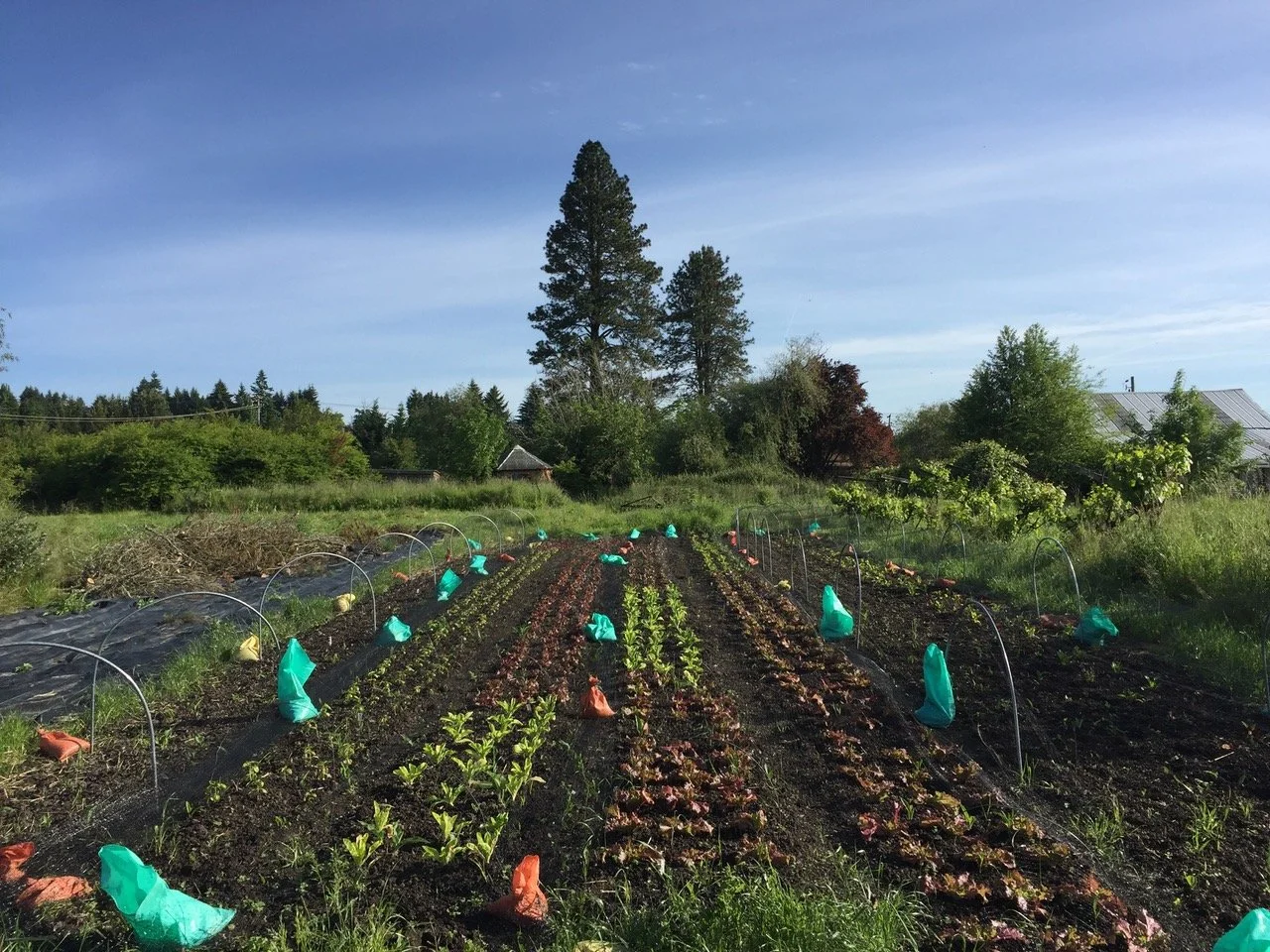
Sunbow Produce- Full for 2026
Sunbow Produce
2 APPRENTICESHIPS
PART TIME/FULL TIME (April-May: 18-28 hours/week, June-October: 28-40 hours/week, November- December: 16-24 hours/week)
APPROX START/END DATES: April- November or December
$15.05/HR
LOCATION: Corvallis (Willamette Valley Chapter)
YEARS IN PRODUCTION: 10
PREVIOUS YEARS HOSTING: 2
PRACTICES: Certified Organic
ACRES IN CULTIVATION: 8
Vegetables, Fruit, Culinary Herbs, Seed Production
ON-FARM HOUSING? No
VEHICLE REQUIRED? Yes
LANGUAGES SPOKEN: English, Spanish
BIPOC-Owned/Operated, Immigrant-Owned/Operated, Women-Owned/Operated, Public Education
We are stewards of the soil, water, and land.. Much of our field work is done by hand but we use tractors for field prep, mowing, harrowing, tillage (spading, rototilling), spreading mulch, moving compost, and some weeding. We teach and encourage ergonomic practices to keep our bodies in good working condition. We harvest most crops by hand and use methods to get multiple harvests off several crops. Our fertility program includes deliberate rotations, cover cropping, mulching with leaves, and using minimal purchased inputs.
FARM OVERVIEW
We grow certified organic fruits, vegetables, pulses, and herbs through a customer direct e-newsletter and online store. We sell at the Philomath Farmers Market and provide weekly distribution through Linn-Benton Food Share. Bea and Nate head up the crew as owners/operators. We hire two to three part-time employees. We also offer a work-trade model and compensate with our farm currency, Sunbacks. We have a comprehensive liability insurance policy and carry workers comp insurance. Our business is licensed in Oregon, we do not distribute out of state.
We have a few satellite locations and one main one. The main one is at Sunbow Farm, a 14 acre property located on the outskirts of Corvallis and Philomath. We farm between 3-5 acres at Sunbow depending on the year. There are fields, 5 high tunnels, an orchard, a lot of wildlife habitat, a few old barns and some old crumbling out-buildings. There’s a house, a bathroom building, a market room and a pack/wash area as well as a cob structure. Four people reside here, including us. The other locations are between 7 to 15 miles of the main farm.
We’ve both been farming between 10-12 years including some volunteer work and internships/apprenticeships. Before we became farmers, Bea worked in a social justice/social services agency and Nate worked for the State of Washington. We’re devoted to organic and regenerative practices, and are certified by the Oregon Department of Agriculture and the Real Organic Project.
TRAINING AND EXPECTATIONS
● All-season growing techniques in high/low tunnels: bed prep, annual crop planting, harvesting, and maintenance of crops and infrastructure.
● Perennial crop harvesting and maintenance
● Soil conservation and water management; irrigation techniques; water catchment
● Dry farming techniques
● Wildlife conservation and coexistence; pest management in an organic operation; agro-ecological practices
● Field work: weeding with tools and by hand; harvesting; prepping beds for transplanting; transplanting, planting; clearing beds; setting up protection (low tunnels, bird netting, etc.); installing, maintaining, moving, and removing irrigation; seeding cover crops
● Highly diversified crop production, identification, and management
● Consumer-direct marketing techniques and farm stand/farmers market work
● Time management/efficiency/work pace
● Harvest, wash and pack skills
● Food safety standards and management
● Possible tractor operation depending on the person
● Small equipment operation (weed whacking, root washer operation, water pump problem solving)
The first four months will be hands-on training with one or both of us. Independent tasks may be assigned after a successful training period. The work week will change with the seasons but is likely to start with two days/week and expand to up to 5 days/week. Lunch times will be 30-60 minutes depending on shift length.
Slower season: exertion is expected to be medium high with decent pace. Labor is medium. Harvest, wash, pack and deliver orders once a week; field work two to three days a week. Minimum of two consecutive days off can be expected during the slower parts of the season.
Busy season: exertion is high with a fast pace. Labor is heavy, a lot of repetitive work and heavy lifting. Farm managers work 6 days/week. Crew will only be asked to work 6 consecutive days on rare occasions and only if it cannot be avoided due to other crew absences.
Harvest, wash, pack and deliver two days a week; field work three days a week; farmers market and farm stand once a week. During the months of July-October harvesting becomes part of daily field work and is performed by all crew members. All crew members are expected to be present for all shifts during the busy season with the exception of illness.
On excessively hot days, there will be unpaid time off during the hottest part of the day. Schedules will be adjusted in order to avoid heat stress but still get work done. This may mean early starts and late endings.
Evaluation will be based on performance, engagement, consistency, availability, and reliability. We will provide hands-on training, engage in frequent discussion, and provide opportunities to practice. Daily feedback will be given during the training period at work sessions. In-person check-ins will be done as needed but minimally, at three and six months. We encourage Apprentices to let us know when they need to discuss progress, interests, etc.
QUALIFICATIONS
Enthusiasm, eagerness, and self-respect. Curiosity, resourcefulness, and grit. Drive, desire to learn, desire to excel, attention to detail, investment in the operation (emotional, not financial), food systems interest, food, land and social justice. Excellent communication skills, good boundary setting.
Applicants must be able to:
Lift 50 pounds safely and regularly
Follow directions
Ask questions
Spend extended periods of time doing repetitive work such as standing, crouching, kneeling, etc.
Understand how to work safely around a tractor, within/around old buildings and crowded spaces.
Be willing to get dirty, wet, cold and hot (sometimes all in the same day!)
Use equipment as directed and utilize suggestions for best ergonomic practices Respect all crew members
Problem solve and discuss possible solutions before acting
Avoid using violence, both physically and verbally
Avoid using alcohol, drugs (including marijuana) and cigarettes during work shifts.
Arrive sober, free of any intoxicants and fully functional to all assigned shifts. Arriving incapacitated in any way will not be tolerated as it could be a safety issue.
COMPENSATION / ACCOMMODATIONS
Apprentice will receive an hourly wage of $15.05/hour to start. We also offer up to $30 of our produce, weekly. Increase in pay will be considered after the first 90 days. See Sunbow Handbook for details on pay increase considerations. We may offer additional increases or bonuses based on consistent, excellent work performance. Lunch breaks are not paid, 10 minute breaks are paid. OFC hosted events, community building events (Grange meetings, potlucks, social time) and elective educational workshops/meetings are not considered payable hours. An end of year bonus may be issued based on the farm’s success that year and the Apprentice’s performance, reliability, and willingness to return the following season. The pay period is the 22nd of the month through the 21st of the following month. Paychecks will be issued no later than the 28th of each month for the prior payroll period and can be picked-up at the farm.
Occasional crew meals and gatherings will be offered but are not mandatory.
We’re happy to grant access to personal growing space as long as there are no conflicts with time and resources (watering schedule, tool use, etc.)
The farm will pay for up to $100 for local workshops per Apprentice.
Successful completion of the Apprenticeship could lead to a management or crew boss position with us.
We provide basic equipment (tools) required for work and have loaner rain gear and rubber boots depending on shoe size.
No on-farm housing is offered, but we are more than willing to help find affordable housing within our community (with people we know and trust).
EQUITY AND INCLUSION
We welcome everyone, and do our best to engage with people positively and directly. We’re an equal opportunity employer, and are reasonable people who respect others and expect the same.
We acknowledge that Oregon was home to Indigenous people well before white settlers arrived.
We often find ourselves having open discussions about the intersection of race, class, history, policy and access.
PAST APPRENTICE TESTIMONIALS
“I appreciated how often my host farmers would stop to explain why and how things are done at Sunbow. Nate especially really seemed to enjoy sharing his knowledge and thoughts about whatever task we were working on at the time. I also appreciated that when I shared that I needed to talk with them about something, they found the time to listen.” - 2024
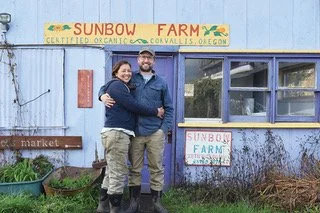
Bea and Nate.