
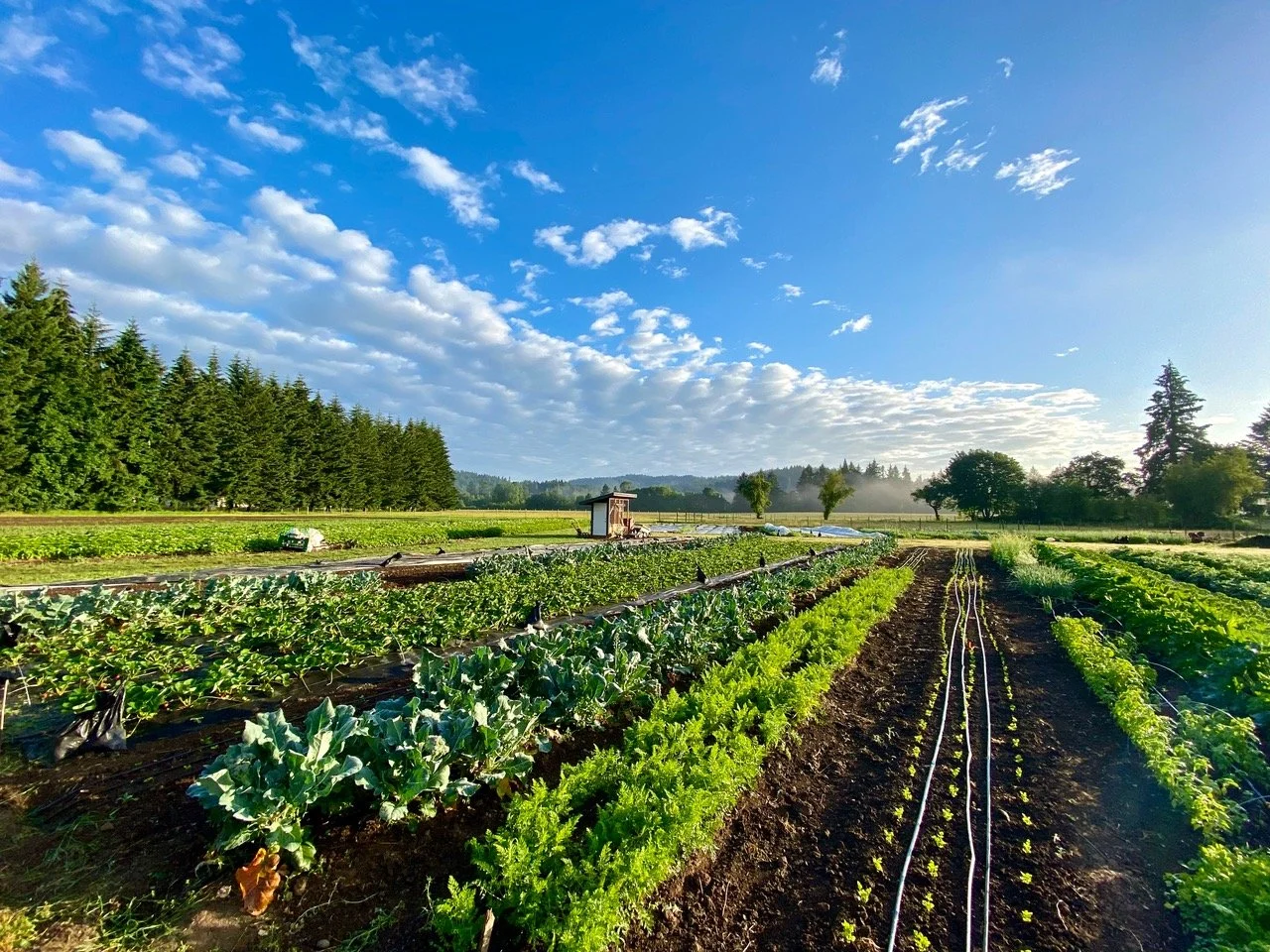
all current participating mentor host farms with Oregon Farm Corps farmer training programs
Edible Stories Market Garden- Full for 2026
Edible Stories Market Garden-Full for 2026
1 APPRENTICESHIP
PART TIME average of 20 hours (hours can fluctuate between 15-25 hours per week over the course of the season)
APPROX START/END DATES: March - November
$17/HR
LOCATION: Hillsboro (Portland Chapter)
YEARS IN PRODUCTION: 13
PREVIOUS YEARS HOSTING: New Host Farm
PRACTICES: Organic Practices (not certified), Low-till
ACRES IN CULTIVATION: 1/3
Vegetables, Fruit, Culinary herbs, Medicinal herbs, Nursery stock, Crops with Cultural Significance to Asian Cuisine
ON-FARM HOUSING? No
VEHICLE REQUIRED? Yes
LANGUAGES SPOKEN: English, Hindi, Tamil, Marathi
BIPOC-Owned/Operated, Women-Owned/Operated
Edible Stories Market Garden is a ⅓ acre hand-tended Market Garden devoted to nurturing land and community. We use organic, no-till growing methods to produce specialty crops used in Asian cuisines. For us, food is more than nourishment—it carries memories, emotions, and a deep sense of belonging. Every crop we grow tells a story, connecting us to the South Asian immigrant community (to which we belong) and its cultural traditions that continue to shape our lives. These stories live in the sights and smells of our market garden and in the flavors of its harvests, reminding us of home, heritage, and the shared joy of growing and eating food.
https://www.helvetia.us/FARMPAGE-Edible-Stories
https://www.instagram.com/ediblestoriesmarketgarden/
https://www.pbs.org/newshour/show/family-farm-in-oregon-grows-crops-to-share-south-asian-cuisine-with-its-community
FARM OVERVIEW
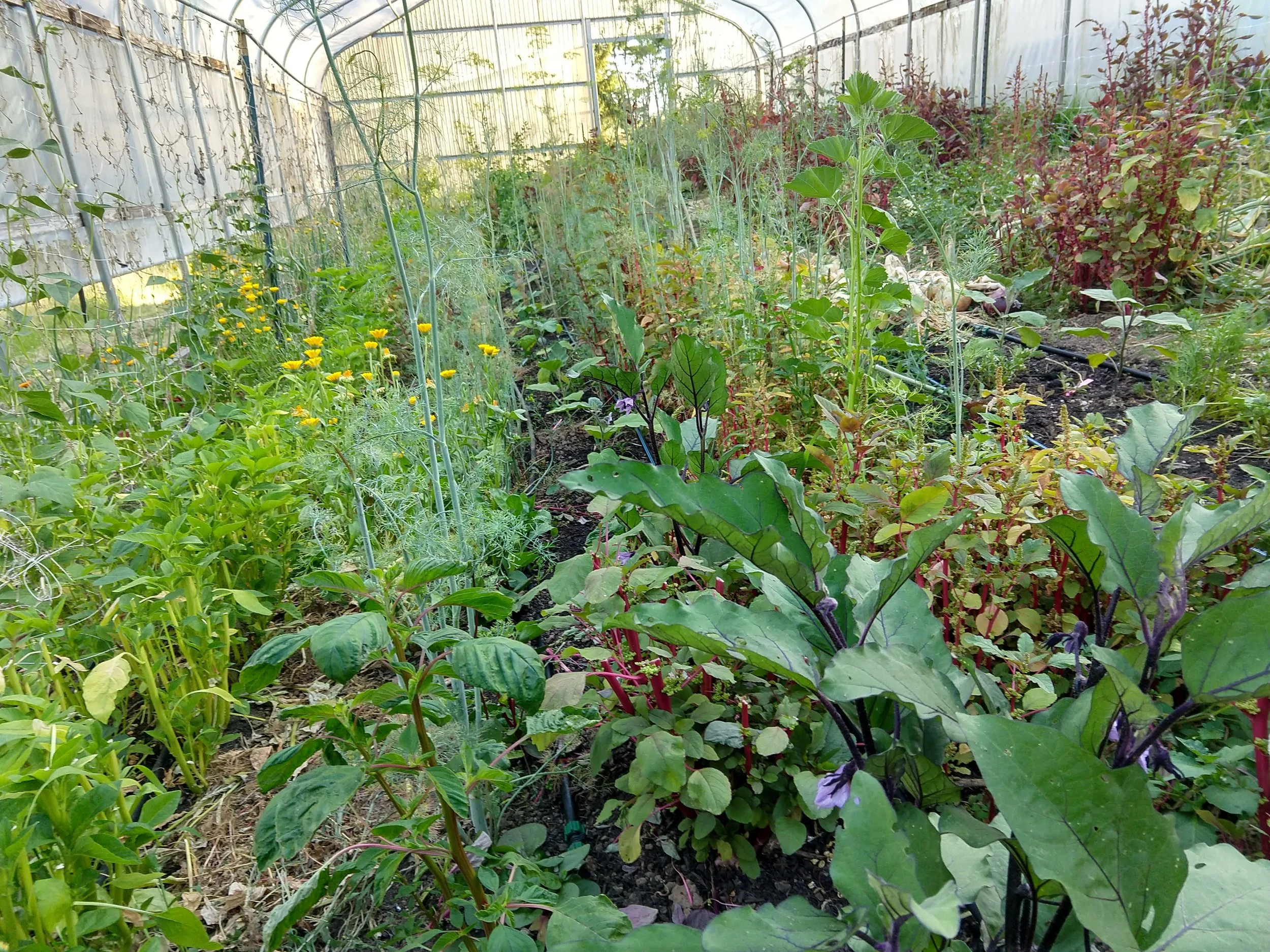
Edible Stories Market Garden nestled in the scenic Helvetia area of Hillsboro, Oregon, is just five miles from Highway 26. Our growing space spans approximately one-third of an acre, with all cultivation taking place inside six high tunnels. We also have a greenhouse dedicated to seed starting and transplant production. The terraced garden sits on a gentle slope—hence the name ‘Edible Stories’ - a reflection of both the land’s contour and the many stories created and evoked by each crop we grow, harvest, and share. The garden is part of a five-acre property bordered by an undisturbed expanse of Douglas fir, maple, western cedar, and ferns, which enrich the garden landscape both visually and biologically.
At Edible Stories Market Garden, we employ organic growing practices—using no synthetic fertilizers or pesticides, and relying on compost and natural soil amendments. We also minimize tillage to nurture soil health and biodiversity, rely on drip irrigation to conserve water, and maintain pollinator habitats to support a thriving community of beneficial insects. Our work is primarily done by hand—using hand tools for seeding, transplanting, weeding, bed preparation, and harvesting—to ensure care and attention in every step.
We cultivate a diverse range of vegetables, with a special emphasis on crops that hold cultural significance to the Asian community. Using high tunnels allows us to extend our growing season and create ideal microclimates for these specialty crops. Growing them year after year is our way of celebrating our Asian heritage while contributing to the cultural diversity of locally grown produce in the Portland metro area.
Our growing season extends from March through November. We sell directly to our customers using a pay-as-you-go CSA model. We also sell our produce at local Indian grocery stores and to select Portland restaurants.
TRAINING AND EXPECTATIONS
The apprentice will participate in all stages of vegetable production, from seed starting to harvest and post-harvest handling. Responsibilities will include starting seeds in the greenhouse or directly in the ground, preparing and amending garden beds, applying compost, managing weeds in beds and pathways, operating the drip irrigation system, transplanting seedlings, harvesting, and packing produce for sale. All tasks will be demonstrated, and the apprentice will receive ongoing mentorship and guidance to develop practical skills and a deeper understanding of small-scale vegetable production
Our growing season begins in early March 2026, and we are seeking an apprentice to work an average of 20 hours (hours can fluctuate between 15-25 hours per week over the course of the season) extending through mid-November 2026. The apprentice will receive a 10-minute paid break every 1 hour and a one-hour unpaid lunch break each day. The work is physically demanding, and applicants should be prepared for tasks such as moving and spreading compost, as well as standing, bending, and squatting for extended periods.
The apprentice will begin by working alongside us as we demonstrate each task. They are welcome to ask questions during the work or afterward. We will check in and meet as often as needed to provide the apprentice with the required guidance and support.
QUALIFICATIONS
We are seeking an apprentice who is reliable, eager to learn about growing food and small-scale farming, with an interest in various plants and a keen attention to detail. The work is physically demanding, requiring the ability to stand, kneel, squat, and bend for extended periods. All tasks take place in high tunnels, which can become very hot during the summer, so the apprentice should be able to work safely in warmer conditions while taking reasonable breaks.
Safety and appropriate attire are essential: close-toed shoes must be worn at all times, and the apprentice should dress suitably for farm work. We encourage apprentices to adjust their work hours based on the season and weather, such as starting earlier on hot days. We value a respectful and professional work environment.
Employees are expected to treat team members courteously, remain sober while on the farm, and refrain from smoking or using drugs during work hours. Apprentices are also responsible for taking care of tools and returning them to their proper places. While much of the work may be independent, employees are welcome to bring a radio or music to listen to while working. Previous gardening or horticulture experience is a plus, but a willingness to learn and a strong work ethic are most important.
COMPENSATION / ACCOMMODATIONS
We offer $17/hour as compensation. Additionally the apprentice can take home a reasonable amount of produce for personal consumption.
We do not offer on-farm housing, but there are many rental options in Hillsboro and nearby towns such as Forest Grove, Cornelious, and Beaverton.
Apprentice needs to have their own transportation to get to and from the farm, as our farm is not accessible by public transportation system.
EQUITY AND INCLUSION
Edible Stories Market Garden welcomes and respects individuals of all genders, gender identities, sexualities, ethnicities, and ages, and strives to foster open and respectful communication.
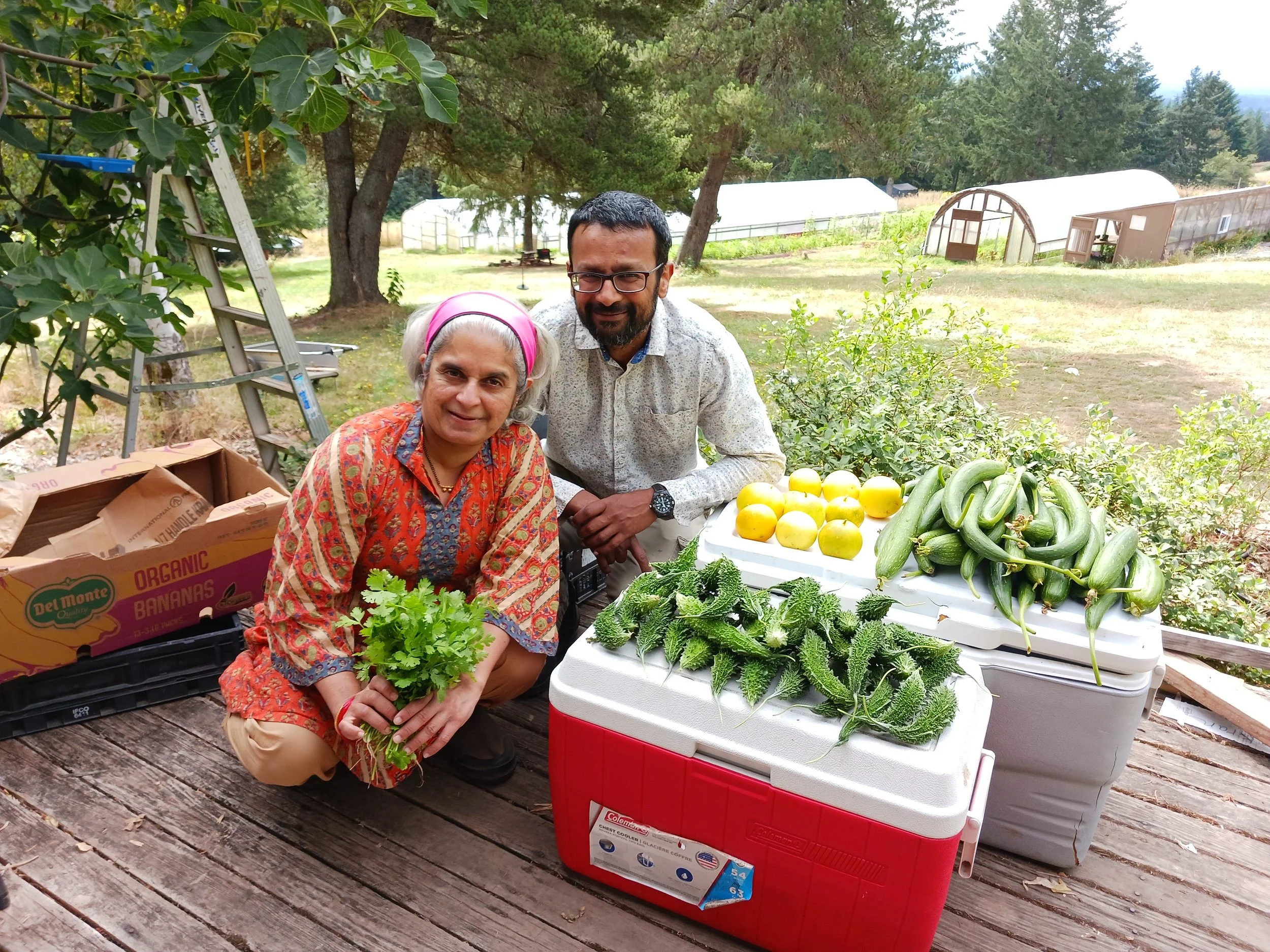
Farmers Lakshmi and Ganesh

Goodfoot Farm- Full for 2026
GOODFOOT FARM
Full for 2026
FULL TIME (36-42 hours/week)
APPROX START/END DATES: May-November
$16/HR
LOCATION: Kings Valley/Philomath (Willamette Valley Chapter)
YEARS IN PRODUCTION: 14
PREVIOUS YEARS HOSTING: 2
PRACTICES: Biodynamic, Certified Organic
ACRES IN CULTIVATION: 2 vegetable, 1.5 berries, 0.5 tree fruit, plus forage
Vegetable Production, Fruit, Nursery Stock
ON-FARM HOUSING? No
VEHICLE REQUIRED? Yes
LANGUAGES SPOKEN: English
Women-Owned/Operated
The farmer and farm philosophy is aligned with biodynamic agriculture and sociocracy. Goodfoot Farm’s goal is to implement an agricultural model that is ecologically sound, socially responsible, and economically viable.
FARM OVERVIEW
Goodfoot Farm is located on the Luckiamute River in Hoskins, 20 miles west of Corvallis. We grow organic and biodynamic vegetables, fruits and berries year-round for farm members, farmers' markets, restaurants and local retail.
Our mission is to provide unconventionally grown food for the people of our local community. To us, unconventionally grown means we take a systems approach in our efforts to balance our food production with our responsibility for our local forest, field and river life and with the health of our planet and people. We work hard to minimum our use of off-farm and petroleum dependent inputs and practice a method of agriculture that strives to emulate a natural system. Fundamental to the success of our production system is the integration of animals for fertility and weed management, our selection of crops and cultivars for pest and disease control and our practice of “farmscaping” which provides habitat for native pollinators and natural predators of pests. In addition to our ecological practices, our goal on the farm is to implement farmer centered practices based on principles of sociocracy and collaboration. It is our belief that human labor is at the heart of ecologically responsible small-scale vegetable growing, and the care we express in our work on the farm and the health of our relationships with our co-workers and the earth is critical to the quality and vitality of the food we produce. .
Production on the farm is both human and tractor powered. A Kubota tractor is used for primary tillage, 2 BCS tractors are used for bed prep and cultivation. Most weeding, planting, and harvesting is people powered. Farm crew (in addition to farm owners) is 1-4 depending on time of year.
Kings Valley is a rural community 30 minutes outside of Corvallis, a college town; farm owners live on the farm. Apprentices will have access to forest and river. There is some farming in the local community; lots of neighboring parcels are in forestry.
TRAINING AND EXPECTATIONS
It is our belief and intention that work on a small scale diversified farm is a skilled occupation. Our farmers are integrated into most aspects of the farm production system and are expected to fully engage in their practice of agriculture. Significant time is spent orienting and training farmhands to tasks and practices and they are expected to act with agency and authority in these roles. Farm operations are conducted with a management system called holacracy which supports a high degree of autonomy and ownership.
Training methods include verbal instruction, modeling/demonstration, and written resources. Check-ins and field walks happen regularly.
QUALIFICATIONS
No prior experience necessary, however, Goodfoot has a desire to work with individuals who are seriously exploring farming as an occupation and have an appreciation for production agriculture. A compulsive need to grow food in relationship with the earth is desirable!
Qualifications include a high attention to detail, ability to manage competing priorities, being self-organized, a strategic thinker and systems thinker, having a high degree of professionalism in work and person, excellent communication skills, and an interest in meeting people where they are at.
COMPENSATION / ACCOMMODATIONS
$16-$18/hr. DOE, depending on experience. Indiciduals starting at $16/hr have access to free produce from the farm. Most work gear is provided. No on-farm housing is offered. Corvallis is a college town 30 minutes away; other communities are also about 20-30 minutes away. There are limited local, rural opportunities for housing.
EQUITY AND INCLUSION
We do not have traditional hierarchical labor systems; the farm operates on principles of sociocracy. We practice collaboration and transparency..
PAST APPRENTICE TESTIMONIALS
“I appreciated how available and communicative the mentorship was, and the focus on comprehensive training to inspire confidence and autonomy. I also appreciated the conscious choices around how we practiced farming, and I understood that there was a solid reason for why we did everything the way we did--always with room for experimentation and new ideas.” - 2024

Beth Hoinacki

FOOD For Lane County Youth Farm-Full for 2026
FOOD For Lane County Youth FarM
Full for 2026
PART TIME (28 hours/week)
APPROX START/END DATES: March - November
$18/HR
LOCATION: Eugene (Willamette Valley Chapter)
YEARS IN PRODUCTION: 31
PREVIOUS YEARS HOSTING: 1
PRACTICES: Organic Practices (Not Certified)
ACRES IN CULTIVATION: 7
Vegetable Production, Culinary Herbs, Fruit, Nursery Stock, Cut Flowers
ON-FARM HOUSING? No
VEHICLE REQUIRED? No, we are not located next to public bus lines but they are coming in Spring!
LANGUAGES SPOKEN: English, Basic Spanish
Urban, Public Education, Non-Profit Farm
We are a program of FOOD For Lane County (FFLC), the regional nonprofit food bank in our area. FFLC is a well respected and innovative organization with the mission of “Reducing hunger by engaging our community to create access to food”. The Youth Farm has been in operation for over 30 years, serving the community healthy food while creating opportunities for youth, beginning farmers and volunteers. We have moved farm operations and 2026 will be our first year at our new site. We have worked with and trained well over 100 interns over the years. Many are still involved in agriculture, including some as farm owners.
www.foodforlanecounty.org/gardens
https://www.facebook.com/fflcyouthfarm/
FARM OVERVIEW
On the Youth Farm, we cultivate 7 acres of diverse vegetable crops as well as a new orchard of approximately 100 fruit trees (apples, pears, peaches, Asian pears, plums), strawberries, thornless blackberries and raspberries and a blueberry patch. We are not certified organic, but we use all organic methods. We have two small tractors that we run on biodiesel that we use for discing, tilling, bed shaping and mowing. For our new, larger farm, we have also purchased new tractor implements for cultivating, seeding and spreading amendments. Most other work on the farm is done by hand, including transplanting, weeding, harvesting, and post-harvest handling. Approximately half of our produce is delivered to the FOOD For Lane County warehouse for distribution through our network of partners to those experiencing food insecurity in our county. The remainder we sell through a 180-member CSA, and an onsite produce stand on Saturdays. We also grow vegetable, flower and herb starts for two very large plant sale fundraisers each spring.
Our primary farm crew consists of a Farm Supervisor, Education Coordinator, Field Coordinator and Youth Crew Coordinator and Maintenance Coordinator, who work from mid-January-early December. During the main growing season, we hire 14 teens to participate in a part-time work experience and job skills program where they attend classes and are trained to do farm work as well as operate our farmstand. Some of our stellar youth are in leadership positions and return for up to 4 consecutive seasons. Our Gardens Program Manager oversees the program. We also host numerous volunteers and volunteer groups at our farm each year, which creates a dynamic and unpredictable element to our crew size on certain days of the week. Overall, our crew each day can range from 4-25 people, depending on the time of year.
The Youth Farm is located on a 25 acre site in Lane County close to Eugene and Springfeild. We recently moved to this new site from a property in North Springfield, and are thrilled to have the opportunity to re-create our farm on a property owned by Food For Lane County. The Farm is on prime agricultural land, and a farmhouse. Since taking ownership, we’ve built nine high tunnel greenhouses, planted a large fruit tree orchard and blueberry patch, established extensive irrigation, put in a rainwater catchment system, cover cropped the main produce growing areas, and enclosed the property in deer fencing. We have many more plans for the future infrastructure and demonstration gardens. This is an exciting time to be a part of developing a new farm for an established program. The preoperty is close to the Mt. Buford Park recreational distrcit, which includes Mt. Pisgah Arboretum and several other land-based community organizations. The neighboring towns of Eugene and Springfield offer plenty of cultural, entertainment and recreation opportunities, including music venues, art scene, free lecture at the university, bike paths, close-in hiking trails, lakes, and rivers for boating and swimming.
TRAINING AND EXPECTATIONS
Apprentices will be trained in various aspects of the operation including orchard care (pruning, thinning, pest management), nursery and greenhouse management, and growing a wide variety of annual produce (over 40 crops). Work will include seeding, planting, cultivation and weed management, fertilization, harvesting, wash/pack, irrigation set-up and watering, composting, CSA and market set up and distribution, and use of small farm equipment (barrel washer, salad spinner, vacuum seeder, walk behind tillers, flame weeders and lawn care equipment).
Apprentices will also have the opportunity to help run our onsite produce stand, including set-up, take down and customer service. They will be involved in packing boxes for our CSA customers, which we do 2 times per week for a 25 week season.
Depending on interest, Apprentices will have the opportunity to lead volunteers and youth participants once they are trained.
We would like Apprentices to begin on March 3rd, four days/week (Tuesday-Friday), with some additional weekend duties on occasion. 8:30am-4:30pm is a typical work schedule with a half hour for an unpaid lunch. An early start to the season will give Apprentices the opportunity to learn pruning on some of our fruit trees. They will also be integrally involved in preparations for our two plant sales, including seeding and tending starts, and organizing for the sales that occur in April and May. The Apprenticeship will end on November 20th. Apprentices can request up to two weeks off, unpaid.
Our Apprenticeship educational program consists of lectures, occasional field trips, hand-outs, and mostly hands-on learning. We have a curriculum of educational topics, including composting, nutrient management and soil testing, plant propagation and nursery management, orchard management and fruit tree pruning, crop planning and rotation, winter farming, greenhouse management and construction, irrigation, cultivation, weed management, food preservation and cover cropping. We hold morning check-in stretching circles as well as frequent crew meetings. We take monthly field walks, and will do our best to address topics that Apprentices are interested in. These on farm classes will supplement Rogue Farm Corps online Educational Event Series and weekend intensives.
QUALIFICATIONS
Passion for organic farming, gardening or outdoor work
Previous experience in working with plants outdoors, agriculture, landscaping, etc. (Prefer 1-3 years experience)
Interest or experience in working with youth and community members
Ability to lift 50 pounds and perform physical farm tasks in adverse weather conditions
Excellent attention to detail
Good communication skills
Organized and reliable
Share FFLC’s values of Compassion, Inclusion and Collaboration
COMPENSATION / ACCOMMODATIONS
$18/hr for 28 hours/week. Sick time accrual is included. Apprentices receive 2 paid 10 minute breaks, and are required to take a half hour unpaid for lunch. OFC events are not part of payable hours.
Shared housing as well as apartments and studios can be found in both Eugene and Springfield. Check Craigslist and Facebook Marketplace to get an idea as we do not offer housing at this time.
Pay will be directly deposited into your bank account every two weeks. Details are in the FOOD For Lane County Employee Handbook. Reimbursement of OFC tuition is included if you complete the full season. Farm Produce and starts are provided as available.
EQUITY AND INCLUSION
Compassion, Inclusion and Collaboration are the stated core values of our organization, Food For Lane County. We are all invested in and strive to create a safe, open, productive work environment for everyone involved and prioritize community building, straight forward communication, and validation and appreciation.
Our supervisors have received training in conflict resolution, micro-agressions, gender diversity, nuerodivergence and how inequities permeate in our food system. Which leads to less access to quality, culturally appropriate food for LGBTQIA2S+, BIPOC, immigrant and disabled populations.
PAST APPRENTICE TESTIMONIALS
“The mentors are both teachers and farmers. There are many opportunities to learn new things and be in leadership roles with volunteers and youth farmers.” -2024

Youth Farm staff.