
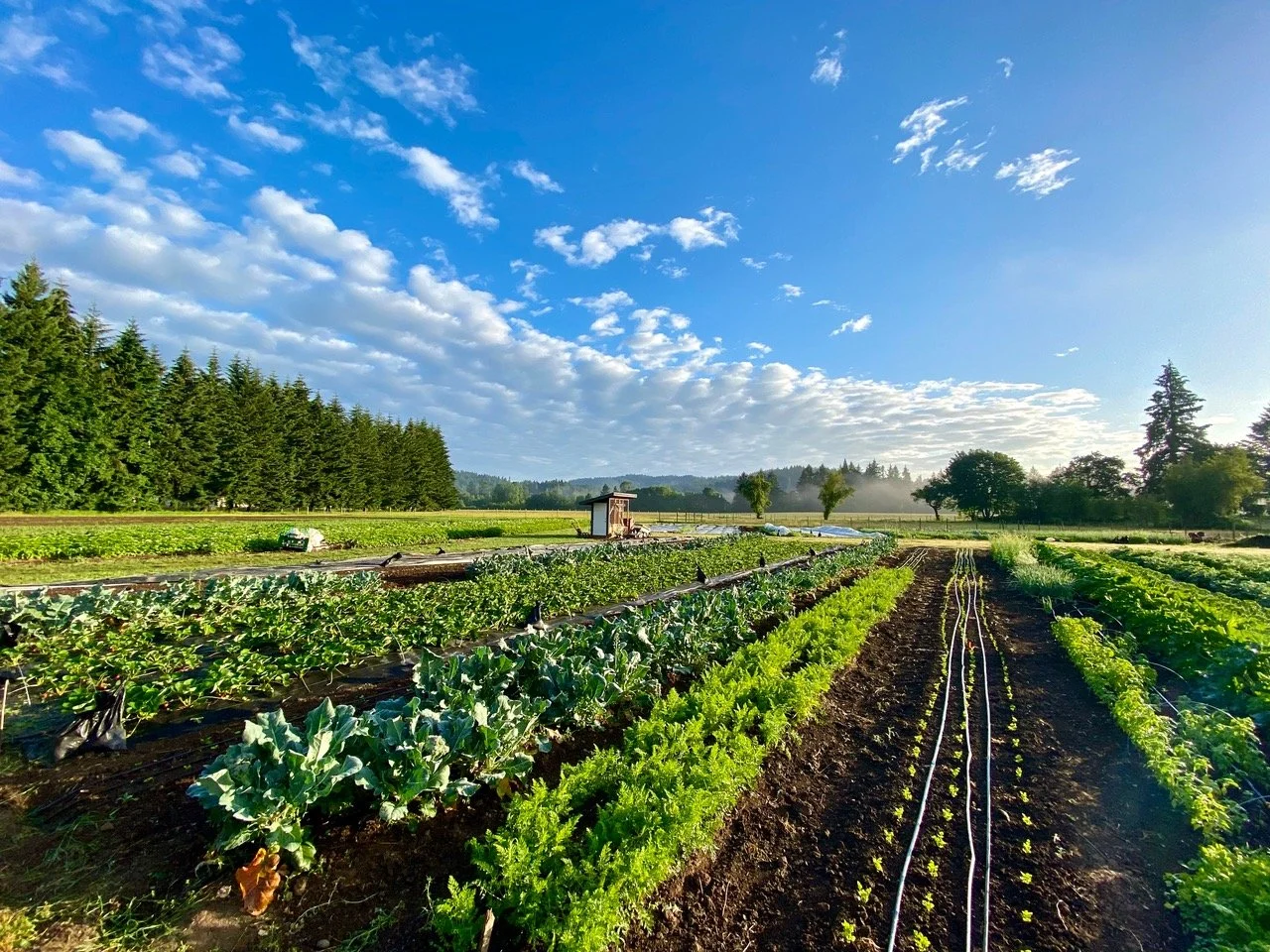
all current participating mentor host farms with Oregon Farm Corps farmer training programs
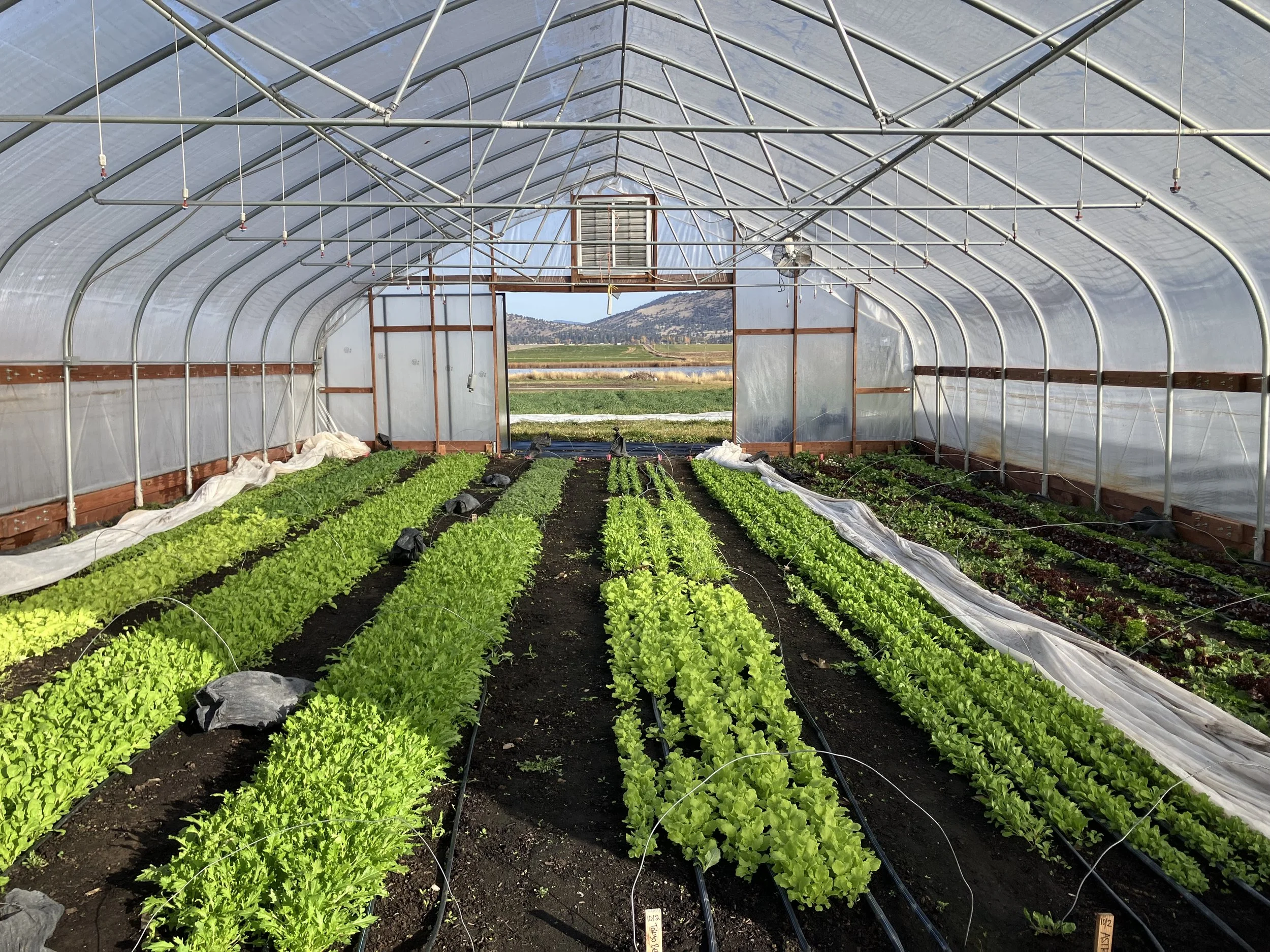
Sweet Union Farm - FULL FOR 2026
Oregon Farm Corps Apprentice Position at Sweet Union Farm
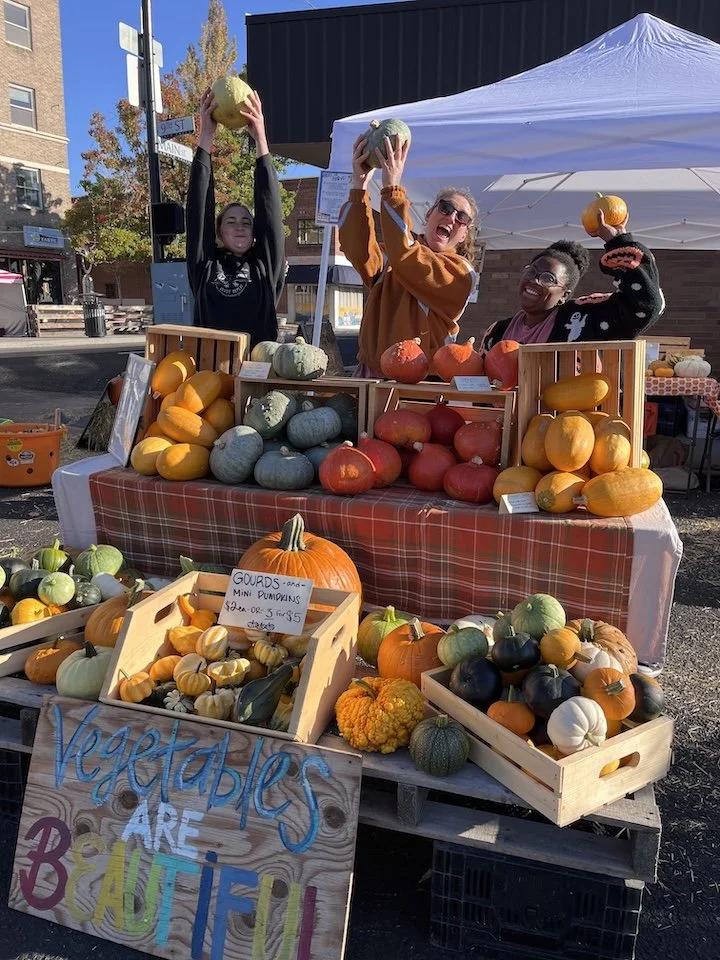
At Sweet Union Farm, we believe that vegetables are beautiful, land is to be respected and community is our strength. We are passionate about growing the highest quality vegetables for our community and making them accessible to everyone. We seek balance, intentionality and excellence in all we do ecologically, socially and economically.
SWEET UNION FARM
1 APPRENTICESHIPS - FULL FOR 2026
PART TIME (20-24 hours/week)
APPROX START/END DATES: Mid April - Late October
$17/HR
LOCATION: Klamath Falls (Southern Oregon* / Satellite)
YEARS IN PRODUCTION: 9
PREVIOUS YEARS HOSTING: 2
PRACTICES: Low-Till, No-Till, Organic Practices (Not Certified)
ACRES IN CULTIVATION: 1
Vegetable Production, Nursery, Sheep
ON-FARM HOUSING? No
VEHICLE REQUIRED? Yes
LANGUAGES SPOKEN: English , Spanish
*While outside of the Rogue Valley Chapter, some in-person educational events will be within a 90-minute drive from this Host Farm. Attendance at these events is highly encouraged.
At Sweet Union Farm, we believe that vegetables are beautiful, land is to be respected and community is our strength. We are passionate about growing the highest quality vegetables for our community and making them accessible to everyone. We seek balance, intentionality and excellence in all we do ecologically, socially and economically.
Katie Swanson has been farming for 10 years and just completed her ninth season owning/operating Sweet Union Farm. Sweet Union’s farm Enterprises are diversified vegetables. Our sales outlets include Farmer's market, restaurants, farm-to-school and the local food hub Klamath Grown. Sweet Union is a very intensively managed and productive small farm. Sustainability is a top priority in making this farm healthy for all the species that live here, emphasizing diversity, soil-building, and water saving.
FARM OVERVIEW
Sweet Union Farm sits on the occupied land of the Klamath and Modoc tribes who cared for this beautiful place since time immemorial. Currently, what the community refers to as “The Tribes” are the Klamath, Modoc and Yahooskin tribes which are headquartered about 25 minutes north of the farm. Since federal recognition was restored in the 80s, The Tribes have been doing incredible community-building work, leading public health and environmental efforts that make Klamath Falls a better place to live.
I, Katie Swanson, have lived in Oregon my whole life, growing up in Gresham and Boring. My husband and I live in our home on the farm. We had our first child, John River, born August 2024. The Farm is about 10 minutes southeast of the metro area of Klamath Falls. The property is 7.5 acres total with about 1 acre in vegetable production and the rest is a mix of pasture, outbuildings, a home garden, irrigation pond and riparian habitat along the river. Our property is surrounded by a mix of similar sized hobby farms and a few much larger farm operations with hills in the distance and the Lost River running alongside the north edge. It’s very peaceful with lots of birds but is also very close to town.
Klamath Falls is a small city of about 45,000 people and the county seat for Klamath County, which has a population of about 70,000. Klamath has a small town feel, but because it’s the city center for a remote region, it has an energy to it with lots of great small businesses. It’s surrounded partially by wide open spaces of agricultural land (mainly hay, grain, potatoes, cattle, horseradish, garlic, etc.) as well as lakes, mountains and forests which provide endless outdoor recreation. It’s a mountain biking destination and the lakes provide lots of opportunities for canoeing, sailing, kayaking, SUP, etc. Crater Lake National Park is about an hour away to the north and the Lava Beds National Monument is 45 minutes to the south. The wide open skies make for some great sunsets and the high desert climate means lots of dry, sunny days. Klamath Falls is definitely experiencing an increase in population; some people like to say we’re the next Bend, but I like to think our grit gives us our own, unique character.
Living in a dry, drought-prone climate, water-saving efficiencies have become more and more of a focus every year on the farm. One of the main focuses is increasing the water-holding capacity of the soil through building organic matter with cover crops and compost and minimal tillage techniques. We use compost, cover crops and natural fertilizers to build the soil and are working to mitigate the compaction that has occurred due to the practices of previous owners.
We do a mix of hand work and mechanized with the tractor and BCS. We transplant by hand as well as use the Paperpot transplanter and use a jang seeder for direct seeding. We use tarps to suppress weeds and break down old crops. Drip tape is mostly used for irrigation, plus some overhead (micro sprinklers and handlines) for specific uses. We have one unheated high tunnel and are building another minimally heated tunnel this winter.
A few other production methods we use are crop rotation, planting hedgerows and borders of pollinator-friendly flowers and herbs, interplanting, natural fertilizers and various Integrated Pest Management techniques. We are always experimenting and trying new things. Pigs are raised on pasture and get lots of farm scraps.
About Katie: Katie believes growing good food and making it accessible while taking care of the land is the best thing she can do for her community. Besides farming, Katie loves to be with her family, paddle on the water (canoe, kayak, SUP), search for wildflowers, camp, cross country ski, drink tea and cuddle with Kitty Ben.
Katie did not grow up farming, but always had a garden and some animals. She taught high school for five years, but fell in love with farming thanks to the thriving women-led small farm scene in the Portland area. She worked on a few different farms, including WWOOFing in Peru and working at 47th Avenue Farm in Portland. Katie started Sweet Union Farm in 2016 on one of the busiest roads in Klamath while working at Blue Zones Project as a food systems manager. Starting on about a quarter acre, she grew over 100 varieties of vegetables for CSA and restaurant customers and slowly expanded by leasing land. In the winter between the 2021 and 2022 season, she and Dallas were fortunate enough to move to their current property. During the 2022 season on the new property, Katie scaled down, got to know the land and built infrastructure, then re-started full farm operations again in 2023. Katie also co-founded and is heavily involved in Klamath Grown, a non-profit food hub that aims to build a strong and equitable local and regional food system.
TRAINING AND EXPECTATIONS
For the 2026 season, The crew will mostly consist of myself, one returning full-time employee and one OFC Apprentice. There may be one other part-time employee that runs the farmers market booth. .
The Apprentice will gain experience in annual vegetable production in the following ways: flipping and prepping beds (hand tools, tarps & BCS), direct seeding (Jang), transplanting (by hand & Paperpot), greenhouse seeding, cultivation and weed management, season extension techniques, irrigation, harvest, wash & pack. Tractor training can be discussed, although this is typically reserved for one crew member per season who has at least one season on the farm. Apprentices will learn about the various sales outlets and have opportunities to work the farmers market booth. There may also be opportunities to work on other projects around the property, such as managing and expanding the native plant hedgerows and riparian habitat. We will also have a few sheep that they can help take care of. The apprentice will also be involved in our spring plant sale where we sell veggie starts and native plants. Additionally, there will be opportunities to learn about the back end of farming and how we manage the business. We also typically host a few field trips every year, so the Apprentice can learn how to lead a class field trip on the farm. If the apprentice has another particular area of interest, I will do my best to arrange the schedule so that they can participate in that aspect of the farm.
In addition to farm work and farm business management, the Apprentice will have the opportunity to learn about community food systems work and how to develop partnerships in order to increase access to produce. Katie is the co-founder of the local food hub, Klamath Grown, so there is ample opportunity to get involved in that work.
The specifics of the schedule for 2026 are still being worked out. The days per week may vary between 2-3. The average day is 8 hours, although it can range from 6-10 hours depending on a variety of factors. There is the option to apply for the farmers market position which involves 1 day/week running our Saturday farmers market booth. All state laws regarding breaks and lunch are observed.
The Apprentice is expected to be able to do physical work in all types of weather and be on their feet for the hours described above with the ability to lift 40 pounds repeatedly. Provided training, the ability to operate equipment such as the BCS is important as well as other hand tools used on the farm.
More than anything, a positive attitude, willingness to learn and ask questions, and open communication would be expected of the apprentice. Beyond the on-farm communication, the Apprentice would be expected to communicate kindly and clearly to customers.
We tend to utilize the “I do, we do, you do” format where we show the mentee how to do a task then do it with them providing feedback and answering questions. Once it feels like they have the hang of it, we give them space and do something else then come back to check in to see if they have any questions. At the beginning of the season we would expect to be doing more tasks side by side and as they learn more and fewer tasks are new, they would work more independently.
We typically have a weekly check in and review the plan with the whole crew once a week, plus daily morning check-ins to clarify who is doing what and to provide any explanations.
A lot of discussions and mentoring naturally happen while we are working, but Katie also schedules individual check-ins with each staff member at least 2-3 times per season to discuss how they are doing physically, mentally and emotionally on the farm. These will also be times to touch base on what they are learning to make sure their goals are being met.
The Apprentice would have access to the farm library of 20+ farming books. Plus, we will inevitably share online resources with each other, podcasts, watch videos, etc. which would fuel great discussions in the field. I also recognize that people come from a diversity of backgrounds with different communication and learning styles, so I would ask them about their preferences at the beginning of the season and adjust accordingly. The apprentice is also welcome and encouraged to take on a project of their own on the farm. Once they arrive and get a feel for the place, we can talk about their ideas, see how they fit into the existing farm systems and discuss how to best support their project.
QUALIFICATIONS
At least one season of agricultural experience is preferred but not required. Most important is experience doing physical labor outdoors.
Strong communication skills, ability to self-advocate and communicate needs
Ability to work efficiently and consistently with others and independently
Ability to follow instructions, open to constructive feedback
Positive attitude and ability to have a good time while being productive.
Learner mindset, asks questions and shares ideas from own experience.
Observant, attention to detail and takes initiative to fill needs or solve problems
Strong work ethic, desire to do high quality work
Ability to do physical work in all weather
Provided training, ability to operate hand tools and equipment, including the BCS.
Ability to lift 40 pounds repeatedly
Clean drivers license and reliable vehicle to get to work on time
An in-person visit is preferable, but if that is not possible, we can work around that.
COMPENSATION / ACCOMMODATIONS
$17/hr.
$150 equipment stipend after 60 days
Paid PTO (accrual rate 1 hr per 30 hrs worked plus 4 additional hours after 60 days)
Access to lots of farm veggies
$200 bonus when the season completed
Limit of 3 personal days off during peak season (late May - mid September), not including sick time, approved in advance. Vacation requests need to be scheduled at least 2 weeks in advance and coordinated with the farm schedule and rest of the crew so that no two people are off at the same time. Unless discussed at least 2-3 months in advance, time off requests are not likely to be approved during May and September.
No Housing Offered.
EQUITY AND INCLUSION
At Sweet Union, we strive to maintain a welcoming spirit and create a safe and inclusive environment where everyone is valued and respected for who they are. We do that by caring for each other and seeing each other as more than a laborer, but a whole, complex and unique human being. We help each other out, encourage each other, use kind and respectful language, and take a collaborative approach to solving problems on the farm. We stretch together before each harvest and check in with how our bodies are doing, making adjustments to the work plan as needed to allow for self care. We do a lot of check-ins to make sure each individual’s needs are met, they feel supported and that they are finding joy in their work. We welcome people of all backgrounds and strive to be open and honest about our faults while constantly doing the personal, inner work that we see as our own responsibility.
Klamath Falls is a place that struggles with poverty, water scarcity, and white supremacy among other things. In that context, I take the role of a farm business like Sweet Union very seriously. As a white woman in agriculture, I have a responsibility to speak out against white supremacy and inequity of all kinds. At a community level, I am working with the non-profit, Klamath Grown, to prioritize social justice within the organization and the broader local food promotion work. The farm also supports the local Pride Festival every year. Ag and inclusivity haven’t always been paired together in this community, but the hope is to start changing that and for there to be no doubt where Sweet Union Farm stands on the Black Lives Matter movement, Indigenous rights, LGBTQ+ rights or other social justice issues.
Farm values & philosophy:
At Sweet Union Farm, we believe that vegetables are beautiful, land is to be respected and community is our strength. We are passionate about growing the highest quality vegetables for our community and making them accessible to everyone. We seek balance, intentionality and excellence in all we do ecologically, socially and economically.
At Sweet Union Farm, the vegetables are beautiful. We share that beauty with the community when we:
Produce vegetables that are beautiful inside and out. This means that we provide consistently fresh, high-quality, diverse and delicious vegetables that thrive in our climate through sustainable and efficient farm management practices.
Inspire our customers to cook with and enjoy the uniqueness of fresh and local vegetables.
Maintain a tidy and beautiful environment that serves as an inspiration for all who visit the farm.
Prioritize professionalism, kindness and trust in all our community relationships.
Always seek to improve our systems with a holistic lens.
At Sweet Union, the land is respected. We are grateful to grow in such a beautiful place. In our efforts to be respectful and filled with gratitude, we:
Relish in working within the boundaries of our place, considering the climate and natural resources of the high desert (formerly a wetland basin, which is now drained and irrigated farmland and desert). We pay particular attention to soil health, efficient water management, and plant varieties that thrive in this environment.
Value all parts of the farm ecosystem, including those that don’t produce cash crops by planting flowers for pollinators and implementing no or low-till systems that respect the microbial life in the soil.
Recognize and seek to better understand the reciprocal relationship between the land and ourselves. We have much to learn from the natural systems around us.
Are always improving, testing, innovating, learning and questioning our farm management practices with the goal to become more sustainable and regenerative. We are grateful for the teachers in our lives.
We recognize that none of these practices are new and most sustainable farming methods were developed long ago by the original, Indigenous stewards of this land.
Our community is strong and we are fortunate to be a part of it. We feel a strong sense of purpose and as part of our commitment to community-building, we:
Maintain a welcoming spirit and strive to create a safe and inclusive environment where all customers, employees, volunteers and visitors to the farm feel valued, respected and are treated as equals.
Seek to build a stronger, more equitable and inclusive food system through collaboration and partnership with people and organizations who share these values.
Increase access to nourishing and regionally appropriate food for the people of Klamath Falls as well as connect them to the land and each other through food.
Choose to fight against an oppressive food system which has systematically disenfranchised Black, Indigenous and People of Color. We choose to be honest about our supporting role in this violent system, both historically and presently, as we seek to educate ourselves so we can do better and move ourselves and our farm towards justice.
Prioritize balance in our lives and time to care for ourselves, which in turn allows us to care for those around us.
Do not see decolonization as a metaphor. We acknowledge we farm on the occupied land of the Klamath & Modoc Tribes. We have not resolved the conflict between the unjust roots of our land ownership and our desire to be in a respectful and mutual relationship with the current tribal members who are survivors of the attempted genocide against their ancestors. Within this tension, we hope to find our proper role through partnership and the transfer of power.
PAST APPRENTICE TESTIMONIALS
“I learned a lot from Katie and her farm business, and I think Katie is a smart and thoughtful farmer, with lots of knowledge to share.” Three things that went well were “one-on-one time; regular discussions about issues in the small farms world; giving opportunities to take responsibility.” - 2021
““The environment that you find at Sweet Union is so very welcoming, honest, passionate, and gracious. You learn so much about caring for the land, the produce, yourself, and your community. I have gained such a deep appreciation and sense of gratitude towards our food and the many hands and hearts that grow it.” - 2024
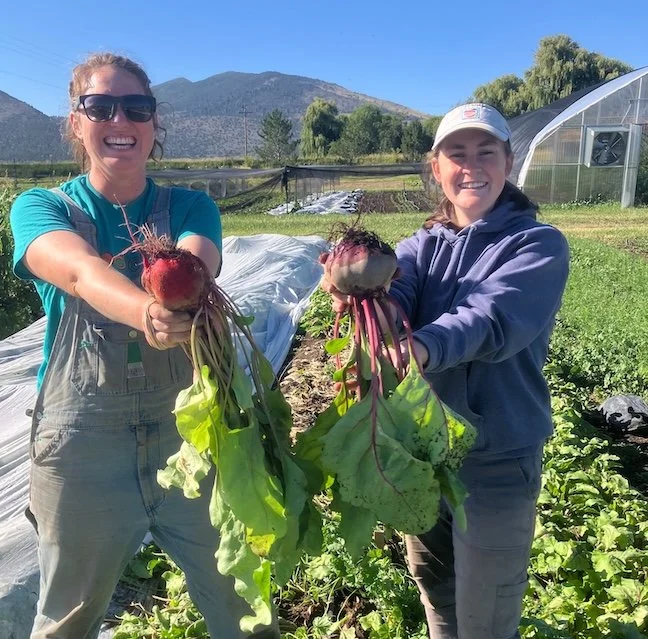
Farm Owner Katie Swanson and Staff with Beets

Runnymede Farm - Full for 2026
Runnymede Farm
1 APPRENTICESHIP
PART TIME/FULL TIME (24-40 hours/week)
APPROX START/END DATES: March/April - November
$15.50/HR
LOCATION: Rogue River (Rogue Valley Chapter)
YEARS IN PRODUCTION: 26
PREVIOUS YEARS HOSTING: 6
PRACTICES: Organic Practices (Not Certified), Mechanized/Tractor Farming, Winter Farming
ACRES IN CULTIVATION: 9
Diversified Vegetable, Fruit, Dairy, Poultry (Eggs), Cut Flowers, Nursery Stock, Value-Added / Processing
ON-FARM HOUSING? No
VEHICLE REQUIRED? Yes
LANGUAGES SPOKEN: English
Women-Owned/Operated, Veteran-Owned/Operated
Runnymede Farm is well known for our fresh produce and nursery business in the local Rogue River community. We strive to provide the Rogue Valley with high quality, local food while being good stewards to our land. The farm uses intuition and intensive, chemical-free, non-certified organic practices to produce a wide variety of crops on their 10 acres, including vegetables, fruit, cut flowers, nursery plants, eggs, and dairy.
FARM OVERVIEW
Runnymede farm is located in the beautiful Evans Valley of Southern Oregon, just 2 miles outside the town of Rogue River, a 10 minute drive to Grants Pass and a 20 minute drive to Medford. The 10 acres comprises 5 acres of pasture, 1 acre of wooded forest, 3 acres of hoop houses, nursery space, and growing fields, and 1 acre of living quarters. Teri and Arthur White, the farm’s owners, live on the farm with their dog Leche and the other farm animals. The Rogue Valley is a beautiful place at all times of the year, with plenty of hiking, river floats, and nature to explore.
Runnymede grows row crops and flowers in our fields and hoop houses. We also have a small orchard of pear trees and blackberries, as well as a nursery with annual and perennial flowers, vegetable starts, fruit trees, bushes, and ornamental bushes and trees.
Each year, Runnymede raises a new round of chicks for egg production. There are about 15 goats bred for raw goat milk.
Produce, eggs, nursery starts, and plants sell at 3 local farmer’s markets (Ashland, Medford and Grants Pass), as well as selling produce for a few other local farms. We do a 5 week CSA in the winter months. We also do on farm sales of our raw milk, eggs, and nursery stock.
Due to the scale and intensity of the plantings, field prep is done with a tractor, while all other tasks are performed by hand with basic tools. The farm employs 2 full-time employees, 1 part-time employee, and hires additional seasonal help as it’s needed.
The farm is owner by husband and wife team, Arthur and Teri. Together, they have over 25 years of farming and marketing experience. They have been on the farm since 1999.
Nora Kendall is the primary mentor for the Apprentice and was once herself a OFC Apprentice! Nora started working at Runnymede in 2021. She is now the field manager, organizes the daily on-farm operations, as well as works 2 of the 3 markets. Nora enjoys the diversity farming brings to each day, and appreciates being able to spend the days on her feet being active. She is in the beginning years of starting her own farm, and loves educating others about farming and the importance of local food. Nora also lives in Rogue River with her husband and looks forward to growing her own farm business in the years to come.
TRAINING AND EXPECTATIONS
Apprentices joining the crew at Runnymede can expect to be exposed to all tasks involved in operating a small-scale, diverse, mixed production farm. Those tasks will include animal husbandry (including milking and milk handling) and planting, cultivation, harvesting, packing, and farmers market sales of produce, fruit, and nursery products. On-farm training time consists of between 24-40 hours/week for an Apprenticeship position, depending on the applicant, and will include some weekends and holidays. Apprentice will work alongside the host farmers and employees, with some independent work as well, especially as the season progresses. The farm has many facets, and Apprentices are welcome to gravitate toward the areas that interest them.
The Apprentice will have tasks demonstrated to them clearly and thoroughly. We require applicants come with no prior bias, and we may explain tasks that they have previous experience with to ensure it is done the way we like it. We are not providing instruction in biology, botany, or zoology. We are providing on the job experience from which apprentices will have to use their own initiative to further or codify their education.
QUALIFICATIONS
Applicants seeking employment at Runnymede Farm must be mature, serious in their pursuit of farming, and physically capable of lifting heavy objects and being active and on their feet for long days. They must be capable of working independently without constant supervision. A positive attitude that brings a calm presence amongst the employees and animals is a must.
We encourage Apprentices to explore and enjoy Southern Oregon’s beauty, its proximity to the coast, the redwoods, the cascades, and the desert. We encourage Apprentices to make friends in the wider Rogue Farm Corps community and share experiences to fully understand that farming, like life, has many paths.
We prefer an applicant who can stay from March - November but can be flexible on start and end dates as needed. We prefer an applicant to visit in person before a placement decision is made. If you will hire on without an on farm visit, we will have an interview, perhaps multiple interviews.
COMPENSATION / ACCOMMODATIONS
Apprentices will start at $15.50/hr.
We do not provide On-Farm Housing. Housing can be tight, but rentals are available in the area. Non-local applicants are encouraged to come early to get settled. We can provide a reference for employment and character for housing applications.
EQUITY AND INCLUSION
Our farm encourages and supports applicants from all backgrounds and is committed to creating a safe and supportive work environment. Runnymede is happy to share our knowledge of farming with anyone with an open mind towards learning and the world around them.
One of the foundations of nature is variety, and as such, Runnymede Farm also welcomes all souls committed to tolerance, non-violence, and ethical and moral human values.
PAST APPRENTICE TESTIMONIALS
“[Arthur and Teri provided] a clear schedule and list of tasks. [They hosted] a welcoming environment and awesome coworkers… open to ideas and feedback from employees.” - 2021

Teri and Art White (Photo: David Hampton Photography)

Farm Mentor Nora Dennehy with one of the Goats at Runnymede
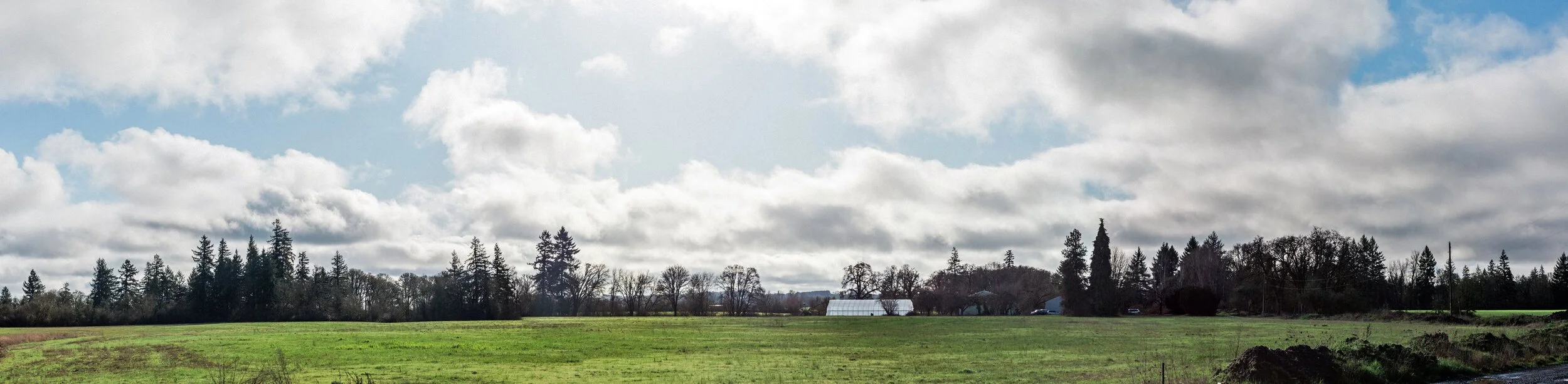
Lucky Crow Farm
Lucky Crow Farm
2 APPRENTICESHIPS
FULL TIME (40 hours/week)
APPROX START/END DATES: April - October
$15-$18/HR
LOCATION: Monmouth (Willamette Valley Chapter)
YEARS IN PRODUCTION: 7
PREVIOUS YEARS HOSTING: 3
PRACTICES: Dry-Farming, Mechanized/Tractor Farming, Organic Practices (Not Certified)
ACRES IN CULTIVATION: 3
Vegetable Production, Fruit, Culinary Herbs, Nursery, Cut Flowers
ON-FARM HOUSING? No
VEHICLE REQUIRED? No, but reliable transportation to work is required
LANGUAGES SPOKEN: English
LGBTQIA2s+-Owned/Operated, Women-Owned/Operated
Eden’s mission is to feed her diverse, local community delicious, nutrient rich food seasonally. She is driven by her investment in environmental sustainability, social equity and economic profitability. As a young, queer, female farmer, she embraces her responsibility to set an example and to create a working model for sustainable food production and thriving rural business within her hometown and beyond.
https://www.facebook.com/luckycrowfarm
FARM OVERVIEW
We grow mixed vegetables for a 75-member CSA, the Independence Farmers’ Market, local restaurant accounts and our online store. This year we are also opening a farmstand/restaurant in downtown Monmouth. We do some of our bed prep at the urban farm manually, while our larger farm location utilizes tractor implements much more frequently. Though we are not certified organic, we employ natural farming methods and do not use synthetic chemicals or fertilizers. Our small farm crew is made up of Eden (owner/manager) and 2-3 other employees.
Lucky Crow Farm operates a 1-acre urban farm in the heart of a small neighborhood in Monmouth, OR. Adjacent to the neighborhood (past the urban growth boundary) is the 60-acre, rural farm where our greenhouses, pack shed and cold storage is located. We spend the majority of our time alternating between these two locations.
The farm in Monmouth is within a five-minute drive to downtown Monmouth and Downtown Independence. They are both small towns with populations of about 10,000. There are plenty of outdoor activities available in the nearby area including hiking and kayaking on the Willamette River, which runs right through Independence. Monmouth houses Western Oregon University so there is a college town feel. A trolly was recently acquired to shuttle residents between both towns (for free!) The farm crew members live nearby and commute to the farm each day.
TRAINING AND EXPECTATIONS
Apprentices will receive training/participate in: bed preparation, harvest, planting, wash/pack, farmers’ markets, CSA distribution, customer interaction, marketing, pest management, nutrient management, and propagation. Eden does most tractor/machinery work.
Full-time employees are expected to work 40 hour weeks from the beginning of April through the end of October. Spring days are generally shorter (with an average of 20-30 hours per week, depending on weather). Employees are not expected to work more than 40 hours in a week, even in the height of summer. Taking vacation days (unpaid) is permitted with advanced notice.
As we switch tasks regularly, training takes place throughout the day as needed. Apprentices are regularly required to sit, kneel, stand, bend, climb and reach; regularly lift up to 50 pounds without assistance; have the ability to work outside in all weather conditions, often for long durations; be capable of performing repetitive tasks with endurance. Reasonable accommodation can be made to enable individuals with disabilities to perform the essential functions. Appropriate gear is required for all weather conditions.
Beyond our scheduled training sessions, Apprentices will work one-on-one with either Eden or an experienced staff member every day. We are committed to teaching as we work and having impromptu training sessions when needed. We provide regular check-ins and can make time for meetings/questions if requested.
QUALIFICATIONS
Required:
• Detail oriented and fast learner
• Self-motivated and able to streamline workflow
• Ability to work efficiently alone or in a group
• Experienced/licensed driver
• Excellent interpersonal/communication skills and willingness to work with a diverse group of people
• Ability to keep clear, handwritten and electronic records
• Positive attitude in all types of weather
• Commitment to work entire season (with potential for unpaid vacation time)
• Organized and thorough
• Ability to show up on time and ready to work
Preferred:
• 1-3 years of prior farm work
• Strong love of food, nutrition and healthy local economies
• Manual transmission operation
• Basic mechanics
COMPENSATION / ACCOMMODATIONS
Hourly rate $15-$18, depending on experience.
Each employee receives a CSA share.
The farm does not offer Apprentice housing. As Monmouth is a college town there are plenty of seasonal, diverse housing options depending on the time of year. Past employees have lived in their own studio apartments, campus housing and in a house with roommates.
EQUITY AND INCLUSION
Eden is queer farmer who strives to empower those who are not historically/fairly represented in agriculture. Lucky Crow, first and foremost, is a safe and inclusive space for anyone interested in farm business and local food economies. She believes a more diverse and equitable food production system is imperative in our work towards a sustainable future.
PAST APPRENTICE TESTIMONIALS
“The work environment was comfortable, supportive and educational. Eden always took the time to come over and help any of us when we had questions, I don’t recall any time she didn’t drop what she was doing to give us advice and guidance” - 2024

Eden

Feral Farm - Full For 2026
Feral Farm
1-2 APPRENTICESHIPS
PART TIME(20-32 hours/week)
APPROX START/END DATES: April - October
$15.05/HR
LOCATION: Jacksonville / Applegate (Rogue Valley Chapter)
YEARS IN PRODUCTION: 9
PREVIOUS YEARS HOSTING: 4
PRACTICES: Certified Organic, Mechanized/Tractor Farming
ACRES IN CULTIVATION: 4
Seed Production, Nursery
ON-FARM HOUSING? No
VEHICLE REQUIRED? Yes
LANGUAGES SPOKEN: English, Spanish (Basic)
Women-Owned/Operated
Feral Farm was founded on a love of seed and a passion for stewarding the genetic and cultural diversity of our food system. We believe in health from the ground up, and grow our seeds in a way that honors the soil and our native ecosystem. Feral Farm is dedicated exclusively to organic, open pollinated seed and heirloom garlic production. The farm consists of four fields along a five mile stretch of the Thompson Creek watershed in the Applegate Valley of southern Oregon, where long dry summers and a county ban on GMOs favor healthy, clean seed production. Owned and operated by Cacia Huff and with the help of neighbors along Thompson Creek.
Farm Overview
Feral Farm produces vegetable, flower, herbs and garlic seeds for wholesale and an on-site farm stand selling garden starts and seed packets. Everything is certified organic. We use a small tractor for bed prep, hand tools for weeding, and mostly small/hand scale tools for seed processing, though some will be mechanized. Overall, a wide variety of tools will be employed to grow and process a diversity of seed crops - between 50-100 varieties per season. There is a nice seasonal flow, with early springtime being heavily focused on greenhouse work, seeding and transplanting; late spring being focused on weeding and crop supports like mulching and trellising; summer begins seed crop harvest; and fall continues harvest and begins seed processing and cleaning. There are lots of opportunities to learn new skills!
Feral Farm is spread across four isolation fields along a 5 mile stretch of Thompson Creek - a rural and fairly close knit community of homesteaders, farmers, and ranchers. Thompson Creek is located approximately halfway between the cities of Medford and Grants Pass. The home field is where I live as well as three other people including my landlord and his partner and another renter, and my house will be accessible during work hours to the Apprentices. The other three fields do not have bathroom access. There are ample hiking trails to explore, rivers and creeks to swim in, proximity to Applegate Lake, and opportunities to connect with others in the farming community.
Feral Farm has been in operation since 2017, and is run by Cacia Huff. It started with a small lease on the established farm I, Cacia, was working for at the time. Prior to that, I spent 2 seasons in the Puget Sound area of northwestern WA apprenticing at the Organic Farm School, where I learned business management, farm-scale vegetable and contract seed production. My background prior to that was Environmental Studies. My studies in agroecology led me to spend time in southern Mexico establishing school gardens and garden classroom curriculum, and opened my eyes to the worldwide struggle to maintain and preserve rapidly disappearing seed diversity. It then led to a few years of work in organic certification, before I decided that I wanted to be out in the field and on the ground rather than in the office. I’m passionate about being outdoors, working with my body, being surrounded by natural beauty, and expressing creativity in the work I do. I love pushing myself mentally and physically, and this type of work never fails there!
TRAINING AND EXPECTATIONS
I will be working alongside the Apprentices for the majority of the time, taking time to demonstrate each individual task as it arises. I am always available for feedback, and encourage questions. I embrace the idea of allowing greater independence on tasks that an Apprentice enjoys or shows particular aptitude for - there is flexibility there. I’m happy to schedule regular check-ins and foster open communication.
Early Spring: greenhouse production of many types of plants for seed crops as well as farmstand/nursery plant production. Soil blocking, hand seeding, potting on, and managing the flow of the farmstand.
Mid to late Spring: bed preparation, which will include tractor work (done by me), hand fertilizing, bed marking, direct seeding with an Earthway seeder, and hand transplanting from soil blocks. Setting up drip irrigation systems. String trimming and weeding with a walk-behind electric tilther, wheel hoe, and stirrup hoes. Plant protection (hoops and row cover), and early identifying and roguing of off types in seed crops.
Late spring to early summer: continued weeding, laying straw mulch on cucurbits, and setting up crop supports like trellises and, in some cases, isolation netting to prevent undesired crossing of seed crops.
Summer: garlic harvest, proper curing, and cleaning for wholesale and local sales. Early seed crop harvests begin in July and August, mostly dry-seeded crops which will be cured, threshed, winnowed, etc. Each crop is a different process.
Late Summer/Early Fall: later season seed crop harvest and processing, which includes many wet seeded crops like tomatoes, peppers, eggplant, squash and cucumbers. Mechanical and hand processing, fermenting, decanting, and cleaning - each crop is a different process! This is also the time we finish clean garlic and pack large wholesale orders for shipping.
Late Fall: continued seed cleaning, packing and shipping.
Throughout the season: Keeping the farmstand stocked and running, plenty of weeding, gopher trapping, and keeping irrigation water flowing.
Feral Farm offers an average of 20 to 32 work hours per week from approximately April through October, Monday through Friday. Hours start on the low end and increase as the season progresses, with a slight lull in July. I am flexible with time off if requests are made ahead of time. The heaviest crunch times are May and September/October, so those are not great times for extended time off requests. While I do work to switch up the work tasks throughout the day and week to avoid monotony, Apprentices should expect to be doing a fair bit of physical exertion in all kinds of weather! Southern Oregon will get hot, averaging daily between 90-105 in the summer. Apprentices should plan to use a respirator for a few weeks in the summer due to wildfire smoke.
QUALIFICATIONS
I work best with people who already love being outdoors, enjoy challenging themselves, and enjoy doing physical work in all weather. Also, those who enjoy learning new things and thinking creatively about how to approach tasks. Flexibility and the ability to go with the flow of work that is often weather-dependent and, therefore, unpredictable is important. Attention to detail is critical when it comes to maintaining varietal integrity of seed crops, garlic, and vegetable starts, which is relevant through all parts of the season. Good communication and mutual respect - listening and asking questions as well as speaking up about any issues that arise, respecting each other's time (showing up on time, communicating scheduling needs), and also being attuned to your own physical needs. Previous farming or landscaping work is desirable but ultimately not as important as enthusiasm to learn!
I would prefer to meet prospective Apprentices if possible to make sure we both feel like we would be a good fit. I have found paid working interviews to be a helpful way to go about this. If this isn’t possible, I’m open to getting to know each other over the phone.
COMPENSATION / ACCOMMODATIONS
$15/hr plus reimbursement of tuition if/when season is completed.
Apprentices will also receive plant starts and seeds for personal garden use, any edible portions from processing seed crops (eg, melon and squash flesh), and garlic for personal use.
Cell Serive: Verizon and US Cellular service is available, though not always stellar in the fields.
Wifi: Available at the home farm house and will be accessible (as will the house itself for breaks, bathroom, shower if needed).
There is no housing on-site.
EQUITY AND INCLUSION
I do not discriminate on the basis of gender, gender identity, sexuality, ethnicity, or age. I encourage open and respectful communication.

Cacia Farm Owner and Mentor with kitty friend