
all current participating mentor host farms with Oregon Farm Corps farmer training programs
Troon Vineyard - Full for 2026
Troon Vineyard
1 APPRENTICESHIP
FULL TIME (40 hours/week)
APPROX START/END DATES: March - November
$15-$16/HR with housing
$19-$20/HR no housing
LOCATION: Applegate Valley (Rogue Valley Chapter)
YEARS IN PRODUCTION: 53
PREVIOUS YEARS HOSTING: New for 2026
PRACTICES: Biodynamic, Certified Organic, no-till,Rotational Grazing
ACRES IN CULTIVATION: ~100 total; main vegetable production 1.5acres
Diversified Vegetables, Fruit, Culinary Herbs, Medicinal Herbs, Vineyard
ON-FARM HOUSING? Yes
VEHICLE REQUIRED? No but highly recommended
LANGUAGES SPOKEN: English (fluent), American Sign Language (moderate proficiency)
Troon Vineyard is a historic (53 years old), Demeter Biodynamic® Certified and Regenerative Organic Certified™️ farm in Oregon’s Applegate Valley. From no-till farming, to Animal Welfare Approved certified livestock production, these robust frameworks transparently communicate our values and required practices. Apprentice’s main focus will be supporting production of vegetables, fruit, herbs and flowers from our various gardens and food forest on 1.5 intensively managed acres while being surrounded by a larger diversified farm.
Website: troonvineyard.com
Farm Overview
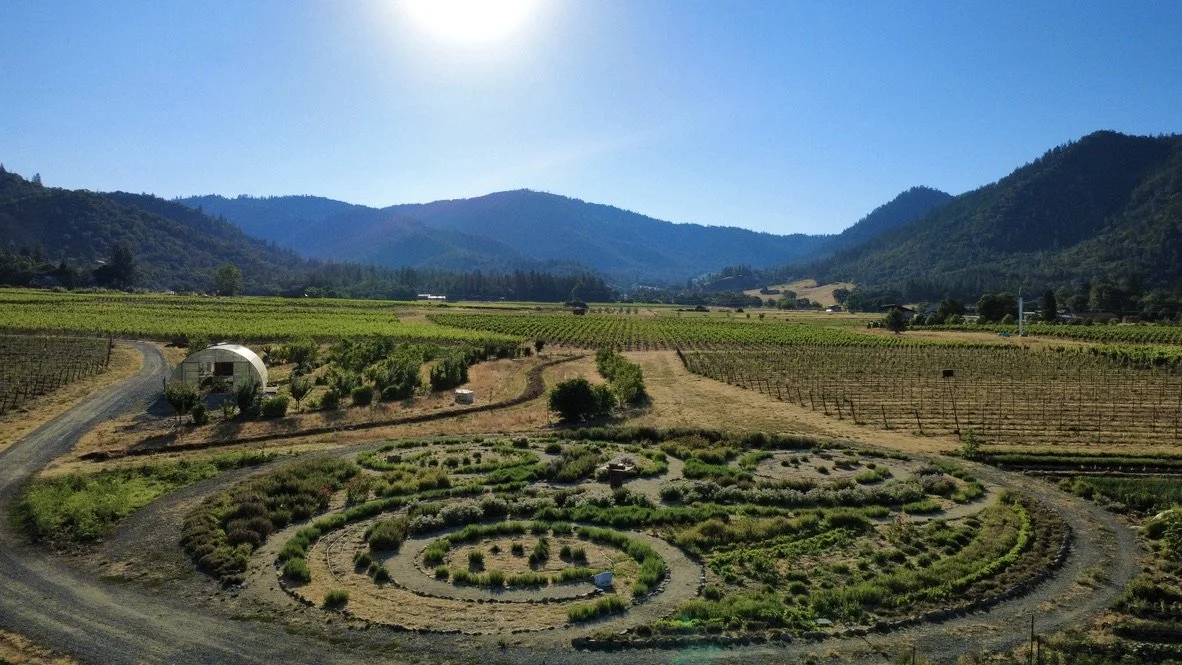
Troon Vineyard is located on the Kubli Bench, high above the Applegate River in the Siskiyou Mountains of Southern Oregon. Troon Vineyard is a biodiverse farm of ~100 acres that includes cider apples, a permaculture-style food forest, vegetable and herb gardens, re-wilded honey bees, sheep, chickens, dogs, wildlife, humans and, of course, grapevines planted on about half of the total acreage. We are located 20 minutes from Grants Pass and 30 minutes from Jacksonville, OR where you will find groceries, dining, and small town amenities.
Troon’s farm team (seven full-time employees plus one apprentice) manages 61 acres of crop production - 45 acres of winegrapes (with support from a vineyard mgmt company), 2.5 acres of cider apples, 1.5 acres of gardens plus food forest, 4.5 acres of hay, and sheep and chickens that rotationally graze pastures. The garden work is almost entirely done by hand due to limited tractor access. We strive for 100% no-till, although undervine cultivation occurs within the vineyards. Every fall, we plant cover crops across the entire farm, continuing to diversify, building soil health and feeding wildlife.
Troon wines are sold on-site in our tasting room and distributed nationally. Our produce is sold to local chefs and restaurants. We work primarily with Chef Carl Krauss (Wilder Cooking) who prepares meals for guests in our tasting room kitchen every Sunday, year round. Additionally, he preserves, ferments, and adds value to our produce, providing terroir-driven dining experiences. Lastly, we sell our produce in an on-site farm stand, which is especially busy on Sundays when we host a farmer’s market at Troon, featuring other farmers, artisans and vendors.
Mentor Farmers Garett Long started his farming journey as a WWOOFer at Apricot Lane Farms in Ventura Co., CA in 2012. After fulfilling his three-month commitment, he was hired full-time to run the Volunteer/Apprentice program. He hired, lived with, and directed the daily activities of more than 50 volunteers/apprentices in his 2.5 years in the position – and absolutely loved sharing these formative experiences with the next generation of farmers.
Garett then attended UC Davis for his M.S. in Soils & Biogeochemistry, continuing to research the practice of compost tea he first learned about at Apricot Lane. After completing his Master’s degree, he returned to Apricot Lane as the Research & Outreach Coordinator. He continued to learn about Biodynamics from incredible mentors, and fell deeply in love with farming.
After a brief stint establishing another biodynamic farm in St. Helena, CA during the pandemic, Garett agreed to take on his current position at Troon Vineyard in 2021. As a certified farm, organic is the foundation.
TRAINING AND EXPECTATIONS
Our Apprentice’s main focus will be supporting production of vegetables, fruit, herbs and flowers from our various gardens and food forest on 1.5 intensively managed acres. These tasks include seed saving and sowing, to bed preparation, transplanting, trellising, irrigation, weeding, fertilization, pruning, thinning, dead-heading, pest control, harvest and processing/packing.
Apprentices will receive training in gardening, fruit orchard management, continual development of a permaculture food forest, irrigation installation and maintenance, livestock husbandry, post-harvest value-added product development, biodynamic preparation making and application, compost building and turning, native plants / biodiversity, and other special projects.
This position will start out Monday-Friday for a couple of weeks, to support a thorough onboarding and acclimatization period. Once the apprentice is fully trained, they will be moved to a Sunday-Thursday schedule. After the dedicated training period, the Apprentice will also be responsible for the greenhouse, livestock and poultry care on Sundays, allowing the rest of the farm team one day off. As Sundays are the day we host a market on-site, this is an opportunity for mentorship in marketing and sales, VIP engagement, and a more complete picture of a vertically integrated business.
Farm design and plans are provided by the director of agriculture, which are performed by the rest of the farm team. Garett provides ultimate oversight and accountability for all aspects of agriculture, as well as the primary training and onboarding of all new staff. Weekly farm team meetings where the week’s priorities and plans are discussed. Farm managers are available for additional meetings and/or field walks throughout the week, and prioritize holding space for improving our apprentice’s experience. Instructions on new or specific tasks are given on a daily basis (or as needed).
Troon’s Safety Committee has created and enacted a Heat Illness Prevention Plan and Wildfire smoke plan, ensuring all employees - but especially those who work outdoors in the field - are safe during the most challenging environmental conditions. We provide several temperature controlled spaces to escape smoke and heat, including their own apprentice quarters.
QUALIFICATIONS
Minimum Qualifications:
● Prior experience working in a physically demanding job.
● Prior farming experience with farming vegetables, herbs, flowers, fruit trees, compost, and/or livestock (preferred).
● Must be able to lift, push, and pull 50 lbs.
● Must be able to sit, bend, crawl, kneel, and reach.
● Must be able to climb ladders and stairs.
● Must be able to navigate and traverse uneven terrain in adverse weather.
● Familiar with Google Workspace (e.g. Gmail, Drive, Docs, Sheets). We use these products daily to communicate and keep records.
Skills & Attributes:
● Demonstrate a willingness to learn, as well as receive direction and feedback. ● Independently motivated, with a strong work ethic.
● Efficient and detail-oriented.
● Able to work in a physically demanding environment, modeling endurance and a positive, upbeat attitude.
● Good communication skills.
● Able to work independently and as part of a collaborative team.
● Able to work well with diverse groups of people and skill sets.
Transportation: Although not required for the position there is no public transportation or nearby services including taxi, ride share app services. If necessary an Apprentice who does not have a vehicle may be able to use the farm vehicle for necessities like groceries to be discussed at hiring.
Site Visit before hire is not required, but they welcome and gladly accommodate an in-person visit. Prospective Apprentice could “test drive” their accommodations by staying overnight, if they please.
COMPENSATION / ACCOMMODATIONS
Starting hourly rate for Apprentice is $15.00-$16.00 with housing or $19.00 - $20.00 without housing. Paid on a bi-weekly basis by direct deposit. We also offer optional overtime hours at a rate of 1.5x regular pay. Apprentices have access to “staff produce” from our gardens and a full kitchen to prepare meals. We would also strongly consider offering reimbursement of the OFC Apprenticeship fee amount as a bonus at the completion of the season. Lastly, we offer health, vision and dental insurance after 90 days of employment.
On-site housing is located in our “Solar Barn”. Fully permitted and ADA-approved, construction was completed in early 2025. The fully temperature controlled common area has a kitchen for food preparation, a lounge area with TV and couches, a pantry, and storage closet for personal belongings. There are two bathrooms and three bedrooms that can accommodate up to five interns, although we do not expect to ever house more than four at once; we expect our vineyard harvest interns will overlap with the Apprentice but strive to give our Apprentice the private bedroom. Wifi is available, The farm team shares this common area during break times. As such, a weekly chores rotation was created for the Apprentice/Interns and farmers all share the responsibility of cleaning the shared space. No pets or overnight guests are allowed, we will review other Solar Barn House Rules if an offer is made. Sharing the land is Troon’s Director of Agriculture, his partner and their toddler son. We enjoy cultivating community by sharing good food and our favorite local experiences.
EQUITY AND INCLUSION
At a basic level, our farmers are progressive and socially conscious individuals. Everyday, we strive to be impeccable with our words, respect individuals and their personal identify, and welcome all at Troon.
In a more formal pursuit of social justice, we sought out ERGO certification by the Equitable Food Initiative (EFI), which helped us attain ROC at the Gold level. ROC and Demeter Biodynamic are two of the only farming certifications globally that incorporate farmworker fairness into their regenerative agriculture framework. ROC requires additional social fairness standards beyond EFI certification to be met, that include paying a living wage to all employees.
We have established a labor-management collaborative (LMC) team. The LMC allows management and workers to collaborate and share responsibility for complying with the ERGO Standards. The LMC is always available for employees to express concerns if they are uncomfortable approaching their direct supervisor or management.
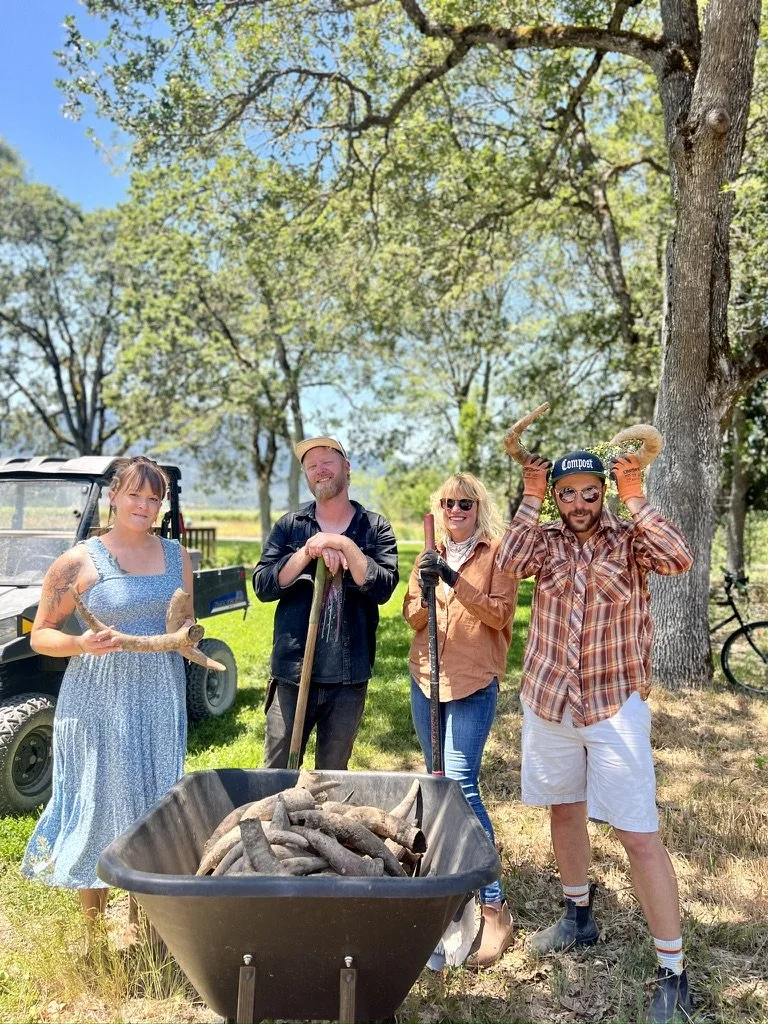
Far right Garett and Jennifer working on biodynamic installations with 2 others
Edible Stories Market Garden- Full for 2026
Edible Stories Market Garden-Full for 2026
1 APPRENTICESHIP
PART TIME average of 20 hours (hours can fluctuate between 15-25 hours per week over the course of the season)
APPROX START/END DATES: March - November
$17/HR
LOCATION: Hillsboro (Portland Chapter)
YEARS IN PRODUCTION: 13
PREVIOUS YEARS HOSTING: New Host Farm
PRACTICES: Organic Practices (not certified), Low-till
ACRES IN CULTIVATION: 1/3
Vegetables, Fruit, Culinary herbs, Medicinal herbs, Nursery stock, Crops with Cultural Significance to Asian Cuisine
ON-FARM HOUSING? No
VEHICLE REQUIRED? Yes
LANGUAGES SPOKEN: English, Hindi, Tamil, Marathi
BIPOC-Owned/Operated, Women-Owned/Operated
Edible Stories Market Garden is a ⅓ acre hand-tended Market Garden devoted to nurturing land and community. We use organic, no-till growing methods to produce specialty crops used in Asian cuisines. For us, food is more than nourishment—it carries memories, emotions, and a deep sense of belonging. Every crop we grow tells a story, connecting us to the South Asian immigrant community (to which we belong) and its cultural traditions that continue to shape our lives. These stories live in the sights and smells of our market garden and in the flavors of its harvests, reminding us of home, heritage, and the shared joy of growing and eating food.
https://www.helvetia.us/FARMPAGE-Edible-Stories
https://www.instagram.com/ediblestoriesmarketgarden/
https://www.pbs.org/newshour/show/family-farm-in-oregon-grows-crops-to-share-south-asian-cuisine-with-its-community
FARM OVERVIEW
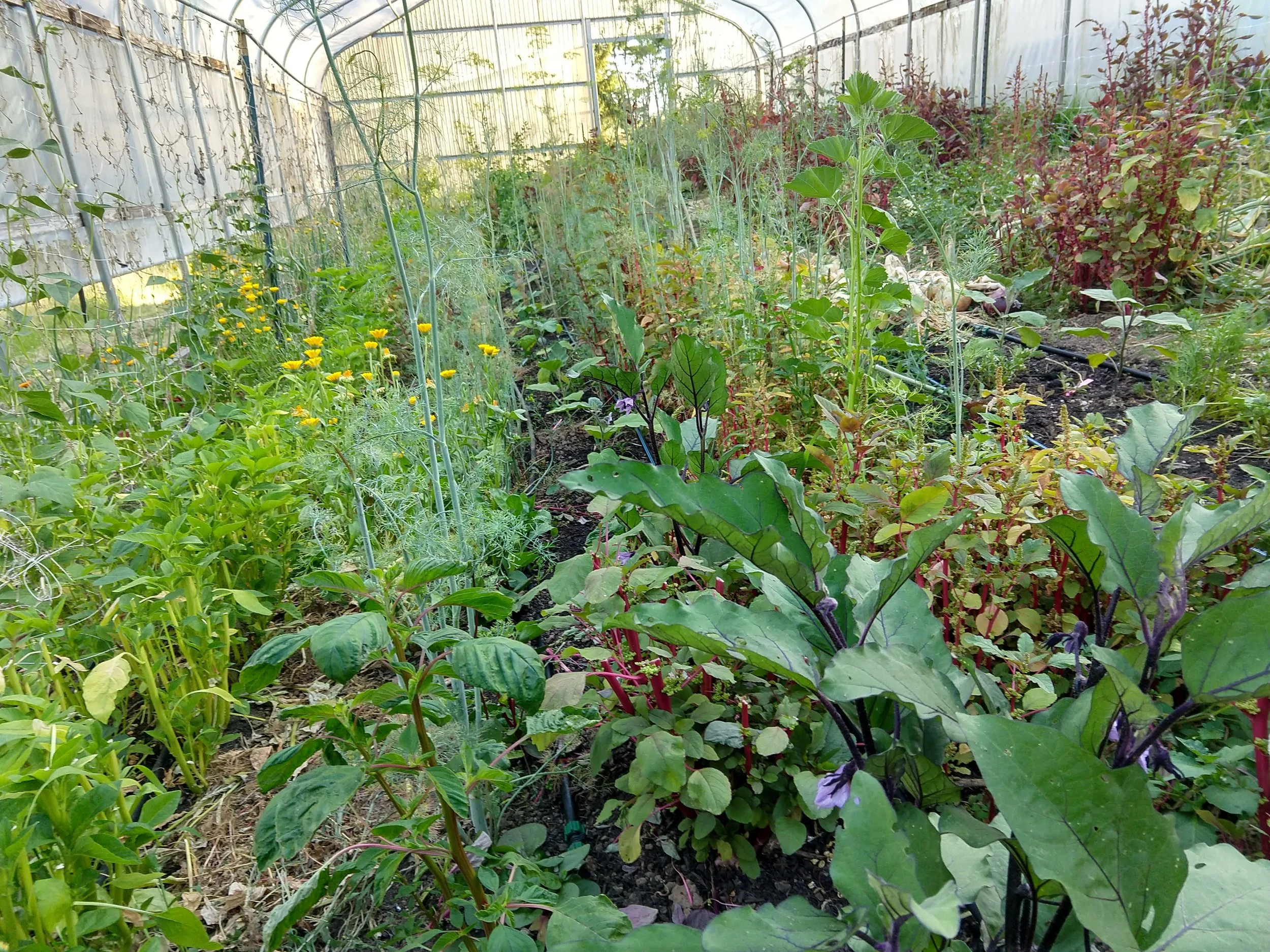
Edible Stories Market Garden nestled in the scenic Helvetia area of Hillsboro, Oregon, is just five miles from Highway 26. Our growing space spans approximately one-third of an acre, with all cultivation taking place inside six high tunnels. We also have a greenhouse dedicated to seed starting and transplant production. The terraced garden sits on a gentle slope—hence the name ‘Edible Stories’ - a reflection of both the land’s contour and the many stories created and evoked by each crop we grow, harvest, and share. The garden is part of a five-acre property bordered by an undisturbed expanse of Douglas fir, maple, western cedar, and ferns, which enrich the garden landscape both visually and biologically.
At Edible Stories Market Garden, we employ organic growing practices—using no synthetic fertilizers or pesticides, and relying on compost and natural soil amendments. We also minimize tillage to nurture soil health and biodiversity, rely on drip irrigation to conserve water, and maintain pollinator habitats to support a thriving community of beneficial insects. Our work is primarily done by hand—using hand tools for seeding, transplanting, weeding, bed preparation, and harvesting—to ensure care and attention in every step.
We cultivate a diverse range of vegetables, with a special emphasis on crops that hold cultural significance to the Asian community. Using high tunnels allows us to extend our growing season and create ideal microclimates for these specialty crops. Growing them year after year is our way of celebrating our Asian heritage while contributing to the cultural diversity of locally grown produce in the Portland metro area.
Our growing season extends from March through November. We sell directly to our customers using a pay-as-you-go CSA model. We also sell our produce at local Indian grocery stores and to select Portland restaurants.
TRAINING AND EXPECTATIONS
The apprentice will participate in all stages of vegetable production, from seed starting to harvest and post-harvest handling. Responsibilities will include starting seeds in the greenhouse or directly in the ground, preparing and amending garden beds, applying compost, managing weeds in beds and pathways, operating the drip irrigation system, transplanting seedlings, harvesting, and packing produce for sale. All tasks will be demonstrated, and the apprentice will receive ongoing mentorship and guidance to develop practical skills and a deeper understanding of small-scale vegetable production
Our growing season begins in early March 2026, and we are seeking an apprentice to work an average of 20 hours (hours can fluctuate between 15-25 hours per week over the course of the season) extending through mid-November 2026. The apprentice will receive a 10-minute paid break every 1 hour and a one-hour unpaid lunch break each day. The work is physically demanding, and applicants should be prepared for tasks such as moving and spreading compost, as well as standing, bending, and squatting for extended periods.
The apprentice will begin by working alongside us as we demonstrate each task. They are welcome to ask questions during the work or afterward. We will check in and meet as often as needed to provide the apprentice with the required guidance and support.
QUALIFICATIONS
We are seeking an apprentice who is reliable, eager to learn about growing food and small-scale farming, with an interest in various plants and a keen attention to detail. The work is physically demanding, requiring the ability to stand, kneel, squat, and bend for extended periods. All tasks take place in high tunnels, which can become very hot during the summer, so the apprentice should be able to work safely in warmer conditions while taking reasonable breaks.
Safety and appropriate attire are essential: close-toed shoes must be worn at all times, and the apprentice should dress suitably for farm work. We encourage apprentices to adjust their work hours based on the season and weather, such as starting earlier on hot days. We value a respectful and professional work environment.
Employees are expected to treat team members courteously, remain sober while on the farm, and refrain from smoking or using drugs during work hours. Apprentices are also responsible for taking care of tools and returning them to their proper places. While much of the work may be independent, employees are welcome to bring a radio or music to listen to while working. Previous gardening or horticulture experience is a plus, but a willingness to learn and a strong work ethic are most important.
COMPENSATION / ACCOMMODATIONS
We offer $17/hour as compensation. Additionally the apprentice can take home a reasonable amount of produce for personal consumption.
We do not offer on-farm housing, but there are many rental options in Hillsboro and nearby towns such as Forest Grove, Cornelious, and Beaverton.
Apprentice needs to have their own transportation to get to and from the farm, as our farm is not accessible by public transportation system.
EQUITY AND INCLUSION
Edible Stories Market Garden welcomes and respects individuals of all genders, gender identities, sexualities, ethnicities, and ages, and strives to foster open and respectful communication.
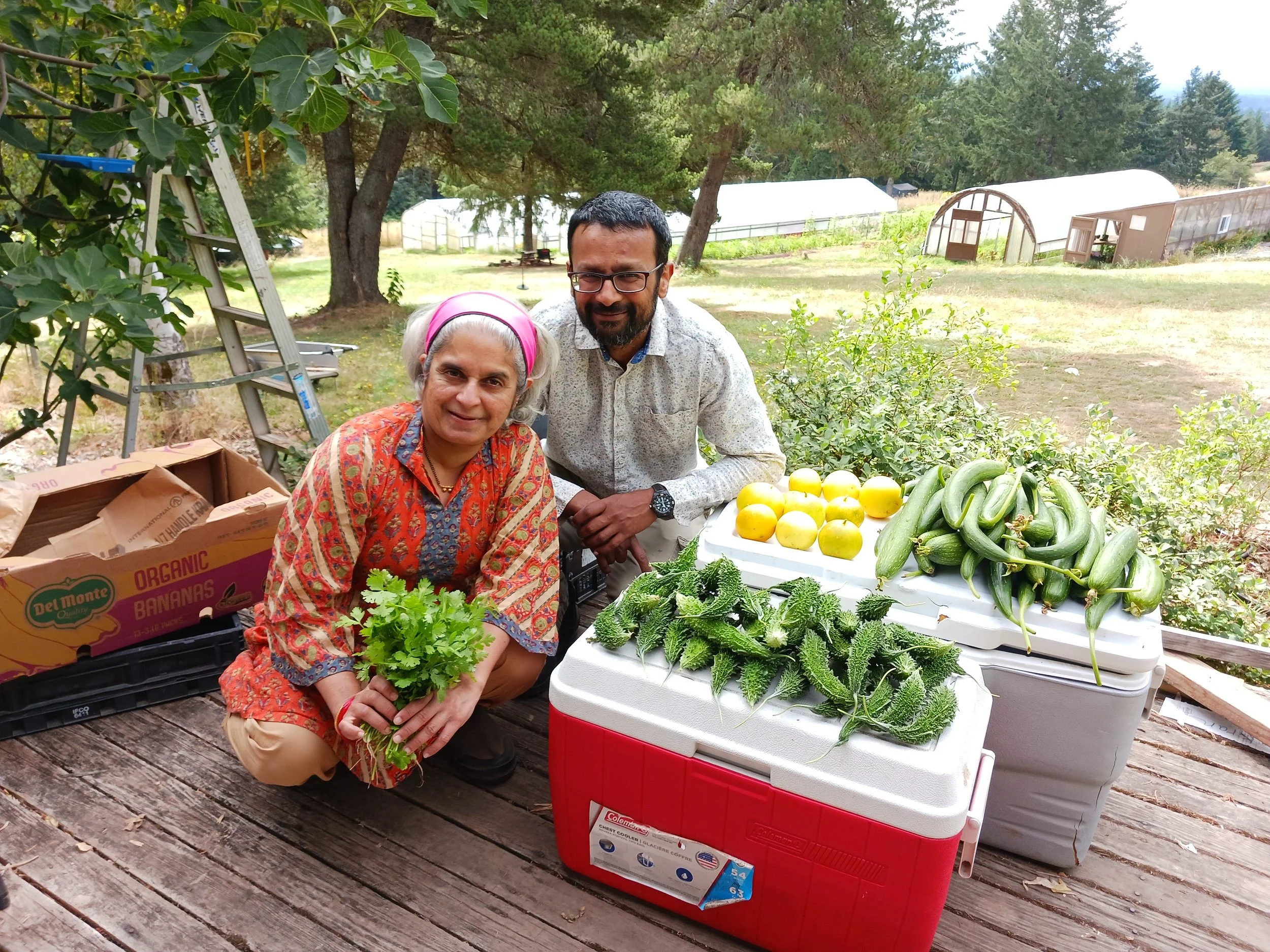
Farmers Lakshmi and Ganesh

PCC ROCK CREEK LEARNING GARDEN-Full for 2026
PCC ROCK CREEK LEARNING GARDEN-Full for 2026
1 APPRENTICESHIP
PART TIME (14 hours/week)
APPROX START/END DATES: March - November
$16.30/HR
LOCATION: Portland (Portland Chapter)
YEARS IN PRODUCTION: 14
PREVIOUS YEARS HOSTING: 2
PRACTICES: Low-Till, No-Till, Organic Practices (Not Certified)
ACRES IN CULTIVATION: 3/4
Vegetables, Fruit, Culinary Herbs, Medicinal Herbs, Seed Production, Vineyard
ON-FARM HOUSING? No
VEHICLE REQUIRED? No
LANGUAGES SPOKEN: English , Spanish
Educational Farm
The PCC Rock Creek Learning Garden is part of a network of 5 gardens across the PCC district designed to create safe, welcoming, educational spaces that were built for and by students. The gardens promote interdisciplinary academic achievement, leadership development, curricular and co-curricular opportunities and model sustainable food systems through dynamic and responsive hands-on education. These living classrooms work to offer equity-centered learning opportunities, cultivate a sense of belonging and promote community on campus in our support of food sovereignty.
https://www.pcc.edu/sustainability/on-campus/rock-creek/rock-creek-learning-garden/
FARM OVERVIEW
Portland Community College is the largest higher education institution in the state of Oregon. The Rock Creek Campus rests on 250 acres of Tualatin Kalapuya land in Washington County, 20-30 minutes outside of downtown Portland. The Learning Garden is nestled near the main buildings on campus and consists of 3.5 acres with 50 fruit trees, 50 blueberries, grapes, brambles and many fruits and vegetables. Our campus is also home to wooded trails, the riparian habitat surrounding Rock Creek, a large recreational public park with sports fields operated by Tualatin Hills Park and Recreation District, as well as the 5 Oaks Museum.
The Learning Garden produces thousands of pounds of food each season, which are primarily donated to the food pantry on campus. We rely primarily on hand work, but also keep a new BCS walk-behind tractor just in case! We are no-spray, practice extensive cover cropping and are moving towards the production of our own usable compost. Our farm crew is always in flux - we have volunteer hours 10am-1pm Tuesday-Friday and we meet whoever is volunteering where they're at and re-prioritize based on inclusion.
The Learning Garden in its current iteration was established in 2012. Miriam has served as the Rock Creek Campus Learning Garden Coordinator since 2017. She ran her own 8-acre farm from 2011-2016, co-owned/operated a 25-acre production from 2006-2011, and worked on other peoples' farms from 1999-2003. She is interested in seed-saving, seed stories and the dignity of all living creatures.
TRAINING AND EXPECTATIONS
Crop-planning is collaborative. Greenhouse work begins in February. We plant, cultivate, harvest, wash and deliver food together. Efficiency does not dictate here! However, Miriam can offer insights based on her 15 years of production experience.
Our production is highly unpredictable because of our ethic of working in community, where building trust and creating learning opportunities are valued more highly than task completion. That said, because the majority of work is by hand, it is possible and probable that work will be physical and conditions may not always be easy.
The goal is to co-create a schedule that allows for 10-12 hours of labor in partnership, 1-2 hours of solitary labor pursuing a special project, and 45 minutes to an hour a week for check-ins, questions, and reflection.
QUALIFICATIONS
Willingness to learn, honest communication, reliability, and attention to detail
Considerate communication skills
A genuine delight for people and plants
COMPENSATION AND ACCOMMODATIONS
$16.30 per hour. The Apprentice can share in the harvest, seeds and entry into the PCC hiring system and diverse community of students, staff, faculty and campus neighbors.
The PCC Rock Creek site is located in a semi-urban area of Portland with various options for housing close by. There is low-cost housing in the area, and the campus is served by public transportation.
EQUITY AND INCLUSION
As LG coordinator Miriam has been building relationships for years with colleagues in Accessible Education and Disability Resources, the Dreamer Center, English for Speakers of Other Languages, and so many other departments on campus. This has guided the direction of the garden and created a welcoming space for everyone who wants to be in the garden.

Miriam, Learning Garden Coordinator